



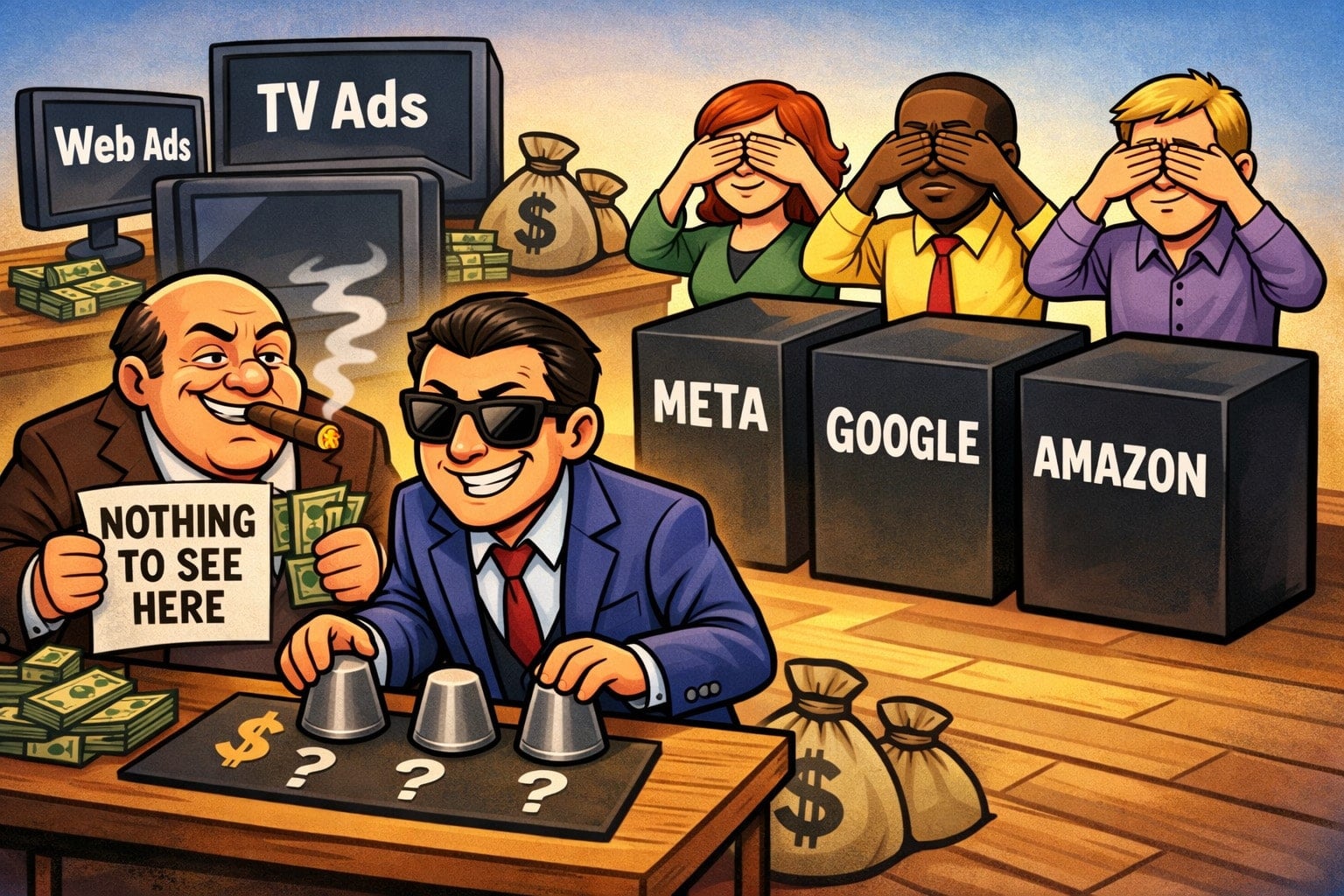
Nearly all marketers say they are concerned about principal media, but far more have used it in the past year, according to a new report by the Association of National Advertisers — America’s peak marketing body.
In Australia, agencies have become more open about the use of principal media arrangements, according to one local expert with knowledge of how agency and client contracts are structured.
And the motivation is not purely financial; agencies are bundling in tech and data services—often line-itemed as ‘non-working media’—without having to directly charge clients for these services.
Principal media refers to the practice of media agencies, often those within holding company structures, purchasing advertising inventory and reselling it to clients.
The key findings
In ‘The Continued Acceleration of Principal Media’, which builds on a 2024 ANA study, 58 per cent of marketers used principal media in the past year (up from 47 per cent in 2024).
Furthermore, 56 per cent expect to use principal media in the following year compared to 41 per cent in the earlier study.
The study also found that principal media is most commonly used in large-scale environments such as television (74 per cent), and the digital open web (43 per cent) via programmatic trading.
The usage of principal media is up by 23 per cent between the two studies, in spite of growing concern from marketers.
Nine in ten marketers said their top concern is whether principal media is in their best interest, up from 79 per cent in 2024.
For those that engage with principal media arrangements, 76 per cent cite reduced costs as the primary benefit.
The report, which polled 114 ANA members with knowledge of their company’s media investment strategies, highlights two key findings.
Firstly, that skepticism about principal media is growing faster than the adoption, although that growing skepticism is not enough to prevent the allure of cheaper inventory.
Secondly, principal media is mainstream and now a common practice rather than an exception.
The ANA’s latest report arrives 11 years after former Mediacom CEO Jon Mandel lit a transparency firestorm by claiming that media rebates and kickbacks were commonplace in the US. The practice of principal media trading hasn’t gone away, it has jus become more accepted.

‘She’ll be right’
In Australia, principal trading is also on the rise, according to TrinityP3 founder and global CEO Darren Woolley.
“Eighteen months ago we had a group of senior agency people on stage basically denying that principal media trading occurred much in Australia. The big thing that we’ve seen here is that more are actually saying that they have it, but that it’s on an opt-in basis that clients choose to be part of it,” he said.
“I think the big problem here is the fact we still call them agencies. They no longer, and haven’t been for a long time, actually contracted as agents.
“I know for more than probably 20 years, contracts have been no longer an agency contract. It’s now a principal/supplier or vendor contract. In that case, enforcing transparency becomes more and more problematic.”
Woolley believes that most media agencies would be looking at principal media arrangements to some extent, but the holding companies are far more efficient at it.
There are some media agencies, such as Match & Wood, that say they flatly refuse to engage in principal media trading.
When asked why principal media arrangements are on the rise, Woolley told B&T that greater scrutiny of media budgets and procurement teams trying to drive down costs has led to agencies trying to mask non-working media fees into principal media arrangements.
“What they’re able to do is sign up the client for a non-transparent principal media trading agreement, and then provide all the data and tech services that the client wants, but can’t afford to make it appear (to their CFO) that they’ve paid for them,” Woolley continued.
“Most marketers say they are uncomfortable with the way it’s framed around lack of transparency.
“When you deal directly with Meta, Google, Amazon, there is no transparency in that, you just pay a fee. How do you know it’s a good fee or a bad fee or a discounted fee, or whatever? You know they market, when they mark their own homework.”


