
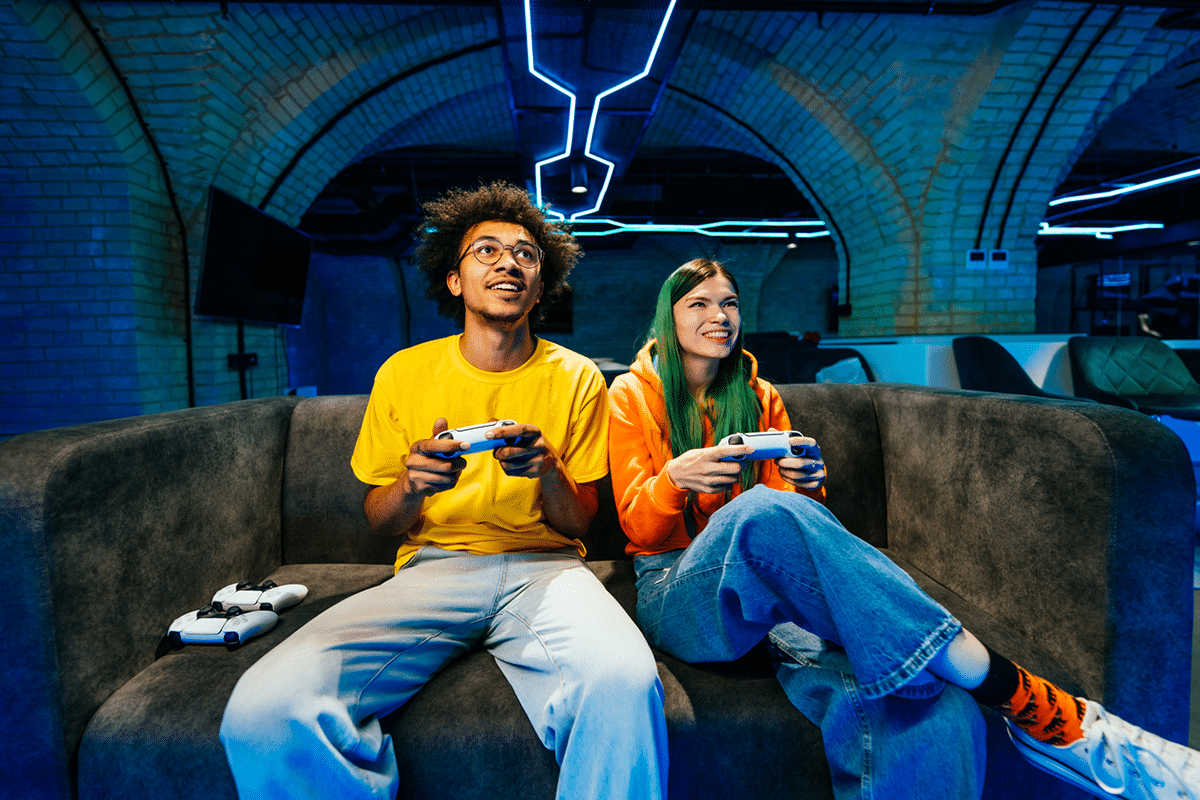
Marketers need to reset their approach to Australia’s 21 million-strong gaming community if they want to maximise engagement and effectiveness, according to landmark new research by Livewire.
The term ‘gamers’ was once worn as a badge of honour worn by the gaming community in the 90s and 2000s.
Back then, gamers were stereotypically perceived as teenagers either isolated in their bedrooms playing video games all night long, or with a group of mates enjoying pizza, snacks and bad jokes.
Such simplistic perceptions still prevail, even though ‘gaming’ as a pursuit has rapidly evolved and gained in popularity.
The fact is, 65 per cent of gaming takes place on a smartphone, followed by consoles (42 per cent), PC’s (29 per cent) and tablets (25 per cent).
While gaming has moved on, many marketers’ perceptions have not, and this is a challenge for brands that want to engage with this vibrant and diverse community.
Mads Cunich, the national director of partnerships and content at Publicis Sport and Entertainment Australia, told B&T that some clients may still hold the perception that ‘gamers’ sit in a dark room, 24/7, exhibiting hardcore gaming behaviour, when the reality is vastly different.
“The majority of people casually game in one way or another, even if they don’t describe themselves a ‘gamer’,” she says, later revealing that her video games of choice are a battle between Call of Duty and The Sims (and what a battle that would be).
“Whether someone is really deeply into a franchise game, like League of Legends, or someone is just casually playing Wordle with their friends, we can’t segment gaming as one homogenous behaviour; it’s many behaviours, and it’s much more nuanced than that.”
“Our role within the agency is to help educate our clients on the different subcultures and franchises within gaming, and the opportunity for them to engage those audiences. But they need to do that in a very personalised and nuanced way for it to be authentic.”
Gaming is no different to other forms of entertainment and culture.
Livewire’s chief strategy officer Gareth Leeding, who helps brands effectively navigate the gaming universe, says brands need to think of gaming in a similar way to music and football.
“Let’s say I’m a fan of grime and Stormzy, I wouldn’t say that I’m a ‘music’ fan. It’s the same with sports. I’m a Spurs fan, not a football fan,” the Football Manager and Fortnite player says.
“When you think about the term ‘gamer’ as a blanket term, it doesn’t work in the context of my 60+ mother-in-law, who plays Candy Crush four times a day for 10 minutes in bite-sized moments of relaxation and freedom. Based on those numbers she’s technically a ‘hardcore gamer’ but would definitely reject the term ‘gamer’ .”
It’s time to embrace the ‘player’
New research by Livewire, The Power In Play, which polled 2,400 respondents across Australia, Canada, UK and US, backs this up.
Eight in ten Australians regularly play video games, whether it’s on their mobile device, console or desktop computer, but nearly two-thirds (64 per cent) do not identify with the term ‘gamer’.
There are several reasons for this shift.
Aside from potential social stigma attached to the stereotypical ‘gamer’, most players only have a casual interest in gaming and limited time to play games. Many use gaming for relaxation, rather than competition, and are conscious of a balanced lifestyle.

The preferred forms of self-identity are ‘casual gamer’ and ‘player’. While the term ‘player’ may not have positive connotations in the dating scene, brands should embrace these terms in gaming.
For women, the situation is even more nuanced. Forty-four per cent say they strongly identify with the term ‘gamer’, but only 22 per cent are comfortable being described as one.
Players are more likely to identify with a specific genre of game, whether it is a first-person shooter, a sports simulation, an RPG game or a franchise.
Irrespective of how casual or serious gamers or players are described, gaming habits remain similar for the whole community.

Gaming is a ‘lifeline’
Another misconception about gaming is that it is predominantly competitive, loud and stressful. Perhaps this might be the case for ‘players’ of Call of Duty and Red Dead Redemption II, but it’s not the experience of younger demographics.
More than eight in ten (82 per cent) players say they use gaming to help with stress and anxiety, a proportion that rises to 90 per cent for Gen Z and 92 per cent for millennials.
The scale gradually declines as gamers age—it’s 61 per cent for Boomers, who grew up with Pac Man, Space Invaders and Pong.
Nonetheless, gaming is still used as a positive coping mechanism for when life changes, according to 60 per cent overall.
During life changing moments, players choose less strategic games and focus more on escapism.

“When you think about gaming in the context of Wordle, EA FC or Animal Crossing, these are all moments of escapism” Leeding explains.
“Whether it is mobile gaming during a quick ten-minute break, an hour spent building your dream house in The Sims, scoring a goal on EA FC, or flying around New York as Spiderman, they’re offering players a way to escape their challenges and discover something else.”
IKEA provides a recent brand example of offering ‘escapism’ in an organic way. It opened a pop-up store in Bloxburg on Roblox that allows players to add IKEA products and designs to their virtual homes (see below).

As many in the gaming population use games to cope with stress and anxiety, brands need to be mindful of how they show up in gaming environments.
“Understanding these behavioural shifts is a lot more valuable than just tracking hours spent, because it helps brands engage players in a more relevant way,” Cunich says.
“The approach should be more about brands looking to enhance moments of escapism in a responsible way. So, how can we bring communities together and drive social connection? Whether that’s through creating in-game events or challenges, or enabling brands to facilitate community engagement without taking over.”
Gaming is so deeply entrenched and valued in culture that during the cost-of-living crisis, players would rather cut spending on eating out, the cinema, concerts and streaming subscriptions than gaming hardware and software.
“When players buy a video game, they are likely to play up to 90 hours of that game. When you go out for a meal, you might spend 90 minutes at the dinner table. In that sense, games become a high value item,” Leeding explains.

Players want to be seen
The final major finding that marketers and media planners should note is that players increasingly want to see themselves and their cultures represented in games.
Gaming publishers are aware of this. Franchises like Assassin’s Creed and The Sims have always featured multicultural characters baked into the experience. While in 2022, Fortnite worked with Dove to create characters that female players can relate to.
Xbox set a benchmark with the Xbox Adaptive Controller, designed for players with limited mobility. It’s a major example of diversity and inclusion through accessibility, expanding who can participate in gaming culture.
Livewire advises brands to consider the ‘triangle of gaming marketing’ framework when looking to engage with the gaming community.
The first pillar that brands should consider is the franchise and understanding the lore and culture of that game. The next part is understanding how the gaming audience interacts with that franchise. And the final point is working out how a brand can effectively show up – how can they genuinely add value.
“Where we really find that sweet spot is when that cultural understanding across all three of those elements comes together and there’s authenticity at the centre of the piece,” Leeding says.
Within that framework, it is often the case that campaigns which use gaming talent that reflects the target audience are often more effective.
“Players are seeking games that reflect their own identities and values. Brands that champion diverse creators in their approach to advertising have an advantage in making sure that they’re engaging meaningfully,” Cunich says.
“If we get this right, we can help shape the culture of gaming itself, making it more welcoming, authentic and relevant to all players.”

Taking gaming to a different level
Gaming provides a much larger opportunity for brands to reach incremental revenue if they overcome the lazy stereotypes and stigma often attached to ‘gamers’; have cultural representation baked into the campaign; and if marketers are mindful that gaming can help people cope with stress.
The Power In Play report provides valuable insights to help brands overcome any nervousness about playing in the gaming space, beyond toe-dipping tactical activations.
Brands that get it right—such as Samsung, Maybelline and Nike —are committed to gaming on a multiyear, multi-title strategy.
Leeding noted, “You wouldn’t set up a TikTok channel, do one campaign and say you’ve completed social, so why would you do one integration into a game and then not think about gaming again? An always-on approach that thinks ‘multi-year, multi-title, and bigger picture’ is far more effective. You can reach those audiences with smart targeting as well — the opportunity is huge.”
Livewire says it is seeing a real shift in cultural convergence. For example, clients are asking for briefs that combine gaming and music, gaming and sports, and gaming and film. Combining cultural tentpoles can often have a multiplier effect on campaign success.
Cunich has also observed that while most briefs do not ask for gaming specifically at present, the brand opportunity to level up in gaming is huge and largely untapped.
“Gaming is not just a media channel, it’s a huge part of our culture in Australia and so it helps if we shift how we think about our involvement,” Cunich says.
“It’s not just about placements or impressions, rather a long-term strategic partnership approach to be a part of the gaming community and understand their behaviours and their motivations.”
A good start is blowing up the term ‘gamer’ and for marketers, planners and buyers to transition to a much more nuanced understanding of the gaming community.
The era of ‘gamers’ is over. Smart marketers will embrace the ‘player’.
Request a copy: The Power in Play