



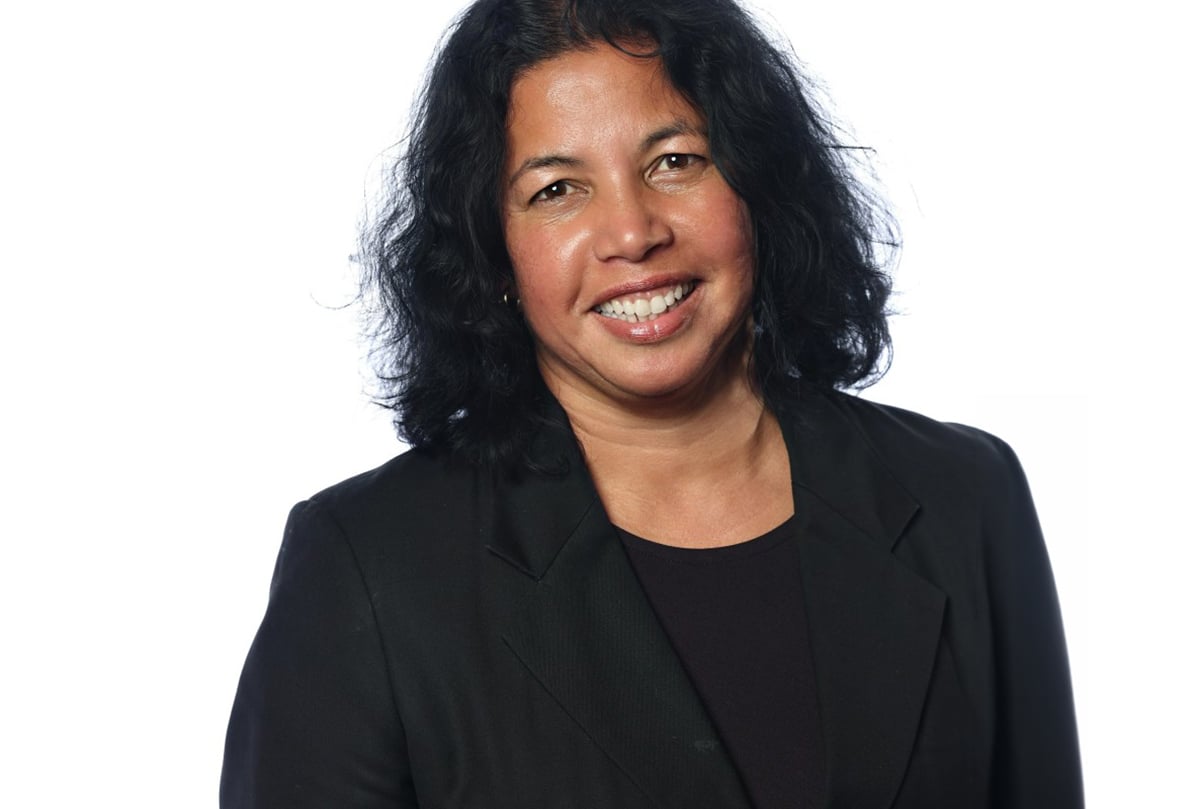
AI’s effect on the talent pipeline in marketing is a growing concern in the industry. For SAP’s VP of marketing ANZ, Rushenka Perera, it’s something she is spending a great deal of time thinking about in her own business and beyond.
This is the first of a new series on B&T, ‘The Machine & The Marketer’ looking at how B2B technology marketers, in particular are turning AI challenges into opportunities.
‘I fear for the younger generation’
While Perera said she isn’t concerned about AI replacing marketing itself, she does “fear for the younger generation”.
She said interns at SAP use AI for data interrogation, but are not yet at the level where they can interpret the information like a senior marketer.
“I worry that we aren’t going to have those career pathways for young people to start from scratch and understand all aspects of marketing as they move up,” she said. “If AI replaces all those graduate roles, then what are they going to do?”
Her concern is that graduates could eventually enter the industry without the experience traditionally gained in those first roles.
“At what point do they come into marketing? They come in at a point where they don’t really understand the basics,” she said. “These graduates will come out, and they won’t have that base understanding. That’s my view.”
She added that young people might have to pursue other work before entering marketing at a mid-level position.
“I honestly don’t know what they are going to do,” she admitted.
What is SAP’s marketing team using AI for?
At SAP, one of the biggest applications is data analysis and audience targeting, particularly through an internal program the team calls ‘Crystal Ball’.
The program brings together external buying-intent signals with SAP’s own customer data, helping marketers understand what organisations are researching, which events they are attending and what solutions they already have.
“We’ve done a lot of work around the analytics piece, and that is to look at, for example, where our target accounts are, what their buying intentions are, and then to use external intent engines to marry that along with that data internally,” Perera said.
The information is then used to sharpen targeting, rather than sending out broad marketing messages.
“It’s all automated, and so it gives me a very good idea of how to target properly and allows me to hone in very specifically on the prospects,” she said.
Previously, pulling together those insights “would take months”.
Now, she said, the team can connect those signals to identify potential opportunities.
“Making those connections would have been very, very difficult before,” she said.
AI is also being used to automate marketing reports, track the customer journey and give the team greater visibility over its pipeline.
Through its Customer 360 approach and account-based marketing, SAP also uses AI agents to research individual businesses, drawing on publicly available information such as annual reports and company communications.
“If I was investigating Qantas, it would look at all of their available data and show us what’s contained in there,” Perera said.
The agents can also help identify organisational structures and potential members of a purchasing committee, giving marketers more information to shape relevant campaigns.
“It’s giving us a lot more information about also who’s in the organisation, the organisational structures, who might be part of the buy committee,” she said.
Why brainstorming is staying human
Perera said she still wants the creative thinking behind campaigns to come from her team, rather than AI drawing on existing information to generate ideas.
“The brainstorming is definitely not something I rely on AI to do because it’s just pulling on existing information,” she said.
“At this point, what I want is the human intervention in terms of thinking about what could we do differently from what we’ve done before.”
Instead, SAP uses AI to help turn brainstormed ideas into presentations for internal stakeholders.
“Using PowerPoint before, like adding bullet points, creating little boxes, all of that used to take hours and hours,” she said.
“Now we just put the prompt in, and it creates us this fantastic PowerPoint presentation.”
The team could eventually use AI to analyse previous campaigns and combine elements of successful work, but has not done so yet.
Perera said SAP’s prompts are deliberately lengthy to ensure AI captures the team’s ideas, and brainstorming, without adding its own.
“I want to be very specific about the fact that we want to use this idea. We only want to use this idea. We want it to come out in this format. We want it to sell to this audience,” she said.
Prompts outline the intended audience, KPIs, objectives, budget and desired outcomes, as well as the structure of the presentation.
The team might even specify exactly what should appear across a five-slide deck, “rather than leaving the technology to make those decisions.”
What SAP is not using AI for
While AI is helping with research and production, Perera said SAP remains cautious about using AI-generated human imagery in advertising.
“I’m not a fan of the fake humans. It’s not good, I don’t like it,” she said.
The team does use AI to create shorter versions of existing agency-produced videos and some animated assets, but Perera said it has no plans to replace its creative agencies.
“I wouldn’t be replacing my creative agencies with AI, and I don’t,” she said.
SAP works with OMD globally, as well as local agency Splendid Group and smaller B2B partners.
Content writing also remains human-led, with AI primarily used to support research rather than generate material for publication.
“We can certainly use AI to do all of the research and pull in that information. But then the actual writing part, you can tell usually at this point if AI has written something as opposed to a human writing it,” she said.
Despite the noise around AI adoption, Perera believes many businesses are further behind than they let on.
“If there’s four stages, everyone says they are at stage three. Most people are really at stage two,” she said.
While SAP has rolled out its AI assistant Joule across the business, Perera said the marketing team is still building its adoption.
“For us, I would say adoption is towards the lower end still,” she said, adding that the next step will be to “ramp up significantly”.


