



Founding a business might look exciting from the outside, but the reality can be a lot less glamorous, with repeated rejection, deafening silence and nobody waiting to chase you out of bed in the morning.
Sorrel Kesby, co-founder of EvenBetter.ai, knows about some of those realities more than most after she left behind the security of a senior corporate role to build a business of her own.
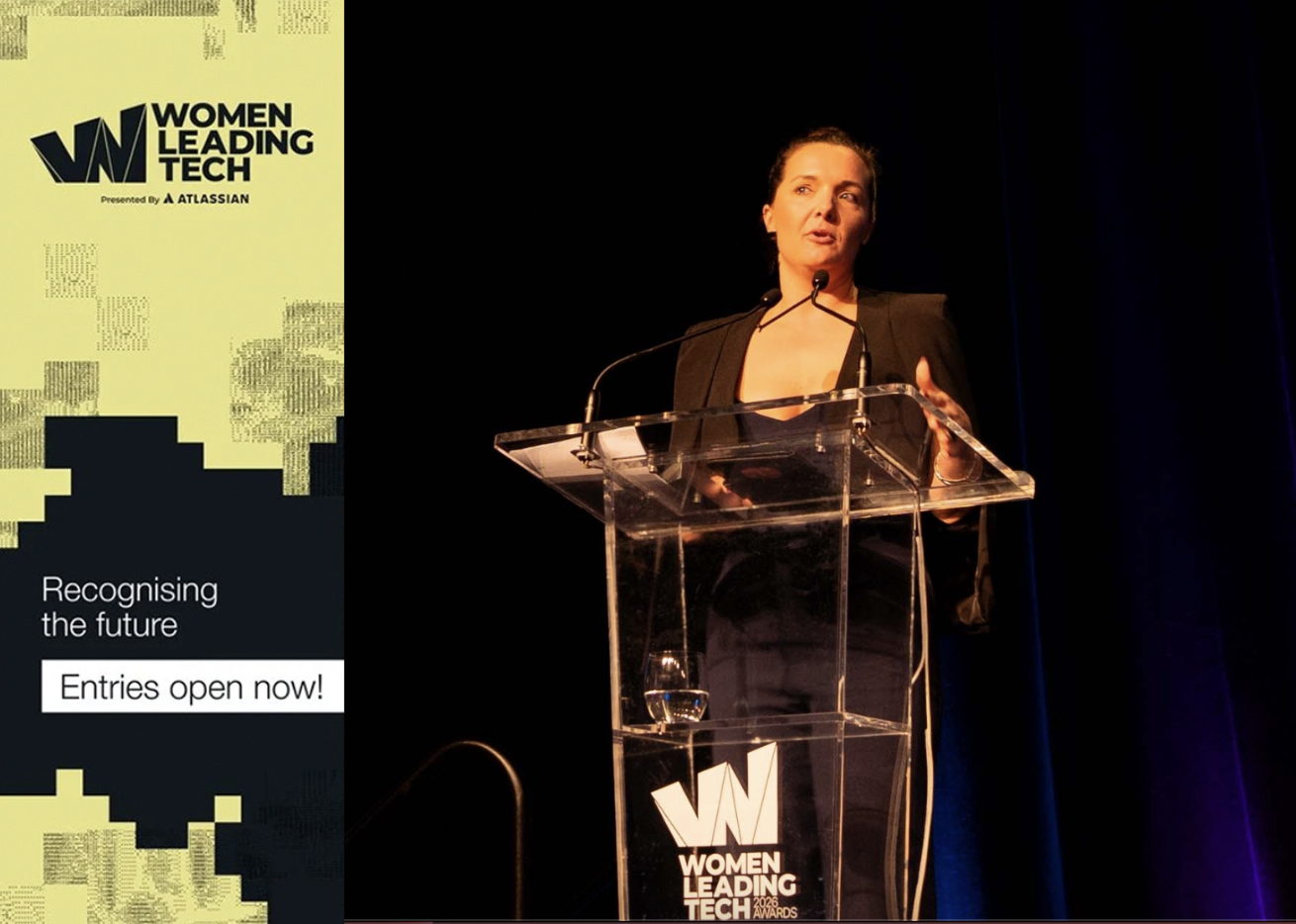
Ahead of the Women Leading Tech Awards, presented by Atlassia, B&T caught up with Kesby to reflect on her winning of the Entrepreneur/Founder Award at last year’s ceremony and get her views on why aspiring entrepreneurs must prepare for the mix of uncertainty, persistence and self-motivation that comes with the territory.
Entries for B&T’s 2027 Women Leading Tech Awards are open now, enter today!
Having moved from journalism into digital publishing, advertising and eventually commercial and business operations, Kesby co-founded EvenBetter.ai with former Outbrain chief revenue officer Ayal Steiner.
The pair, who had known each other for around 15 years, brought their shared interest in data and workplace equality together to launch the SaaS platform, which uses AI and market benchmarks to help organisations better understand and close their gender pay gaps.
Kesby said EvenBetter.ai “wasn’t the result of one big lightbulb moment”, but rather the intersection of two interests that had followed her throughout her career: technology and workplace equality.
Having spent much of her career in technology businesses, Kesby regularly found herself in leadership rooms where women and other underrepresented groups were few and far between. Her roles in business operations, commercial finance and growth also made her see “the real struggle” organisations faced in improving workforce diversity through her involvement in human resources and talent acquisition.
The idea for EvenBetter.ai began to take shape following the release of Australia’s workplace gender pay gap data, which gave organisations greater transparency around their results.

By the second year of reporting, Kesby and Steiner noticed many businesses were still failing to make meaningful progress, with some even recording worse results despite efforts to address the issue.
The pair began exploring whether they could apply the data analysis and attribution principles commonly used in advertising technology to workplace equality, moving beyond simply reporting the numbers to understanding what was driving them and what organisations could do differently.
“Can we take that same concept of attribution contribution into the world of gender pay gap, not just reporting but analysis, to produce analytics, metrics, action plans for organisations wanting to do something about this that were data backed?” she said.
And that’s when EvenBetter.ai was launched.
Entries for B&T’s 2027 Women Leading Tech Awards are open now, enter today!
‘Leaving the safe harbour for a dinghy’
While the idea had been taking shape, Kesby initially ran EvenBetter.ai as a side hustle alongside her role as global head of commercial operations at GumGum.
For the first six months, she was balancing both, but it soon became clear that the business needed her full attention.
The decision to leave “wasn’t an easy one”, she recalled. Kesby loved her role at GumGum, the people she worked with and the financial security that came with a senior position.
She also had a young family to consider, describing the timing as far from ideal.
“As a single mother of a three-year-old, there’s never a good time to do this. That was possibly one of the worst times,” she said.
Nevertheless, she felt the opportunity to bring together her professional experience and personal passions was unlikely to come around again.
“Leaping off that safe harbour into a dinghy with one other person was super scary,” she said.
“But I just knew that very unlikely to have that intersection of my two lives just land in my lap again. So I had to do it.”
One of the biggest surprises, however, wasn’t necessarily the workload that came with founding a business, but the sudden absence of the corporate world she had left behind.
Kesby said she went from managing a four-person global team supporting around 120 sellers and account managers across 20 countries to weeks without a single meaningful inbound email.
“I think I went from on average, 100 inbound emails a day, to weeks without a single email that wasn’t someone’s newsletter,” she said.
“And that was a very scary, very lonely and very quiet place.”
She said the transition was particularly challenging because her professional network had largely been built around advertising, while her new business operated in the human resources space.
“The deafening silence of the first couple of months of being a founder is certainly the scariest part.”
Entries for B&T’s 2027 Women Leading Tech Awards are open now, enter today!
‘No one’s chasing you out of bed’
For those considering following a similar path, Kesby said there are a few realities worth understanding before making the jump.
First, founders “need to be comfortable selling themselves”.
She said early-stage businesses often rely heavily on founder-led sales, meaning the person behind the business must be able to confidently communicate its value, build relationships and convince customers to take a chance on something new.
“If you don’t think you can sell yourself, don’t start a business,” she said. “Because when you start a business, the first thing you’re selling is yourself.”
The second is self-motivation. Without a manager, team or workplace structure to keep things moving, founders need to be able to create their own routine and hold themselves accountable.
“No one is chasing you out of bed to be at your desk at eight or nine or whatever you’ve decided,” she said.
But perhaps her biggest piece of advice is to become comfortable with rejection.
“If you’re not prepared to graft, back yourself, and accept that there are days where you just hear 100 no’s, then it’s not for you,” she said. “You must prepare to go to bed, and then have to wake up the next morning and be like, ‘Well, time for 100 no’s again.'”
Kesby believes founders should try to avoid navigating the experience entirely alone. Kesby described building a network of people who can offer advice, make introductions and provide support as “an important part of the journey.”
“A founder always asks. They ask for advice. They ask for help. They ask for an intro. There’s always an ask from a founder, and getting comfortable with that is a crucial part of building a business,” she said.
She also highlighted the importance of recognising that, particularly in the early days, a founder’s personal reputation and the reputation of their business are closely connected.
“You are – you will be one and the same for quite a while,” she said.
Despite the uncertainty, workload and repeated rejection, Kesby said she has no regrets about making the move.
In fact, she described founders as “professional adrenaline junkies”, drawn to the excitement of building something themselves, making decisions and pushing towards an idea they believe in.
And for those prepared to back themselves, graft and “get comfortable hearing no”, she believes the leap can absolutely be worth taking.
Entries for B&T’s 2027 Women Leading Tech Awards are open now, enter today!


