





The news that DDB, one of the most storied names in advertising, looks set to be dissolved as part of Omnicom’s acquisition of Interpublic Group has sent shockwaves through the creative community.
While regulatory approvals are still pending, Omnicom said that it is reviewing the brands.
“As regulatory approvals are still pending and until the transaction is closed, we are still operating as two independent companies. However, we can share that, as it relates to our brands, we are undertaking a rigorous and considered process to ensure we have the very best solutions for the future for us and for our clients,” the statement read.
“This sentiment is informing everything we do in our go-forward plans. Once they are finalised and ready to be shared, communicating them to our clients and our people will be our priority. We will then make that information available publicly. We look forward to the close of our transaction and to moving forward as a combined company.”
That statement, calm and corporate in tone, stood in stark contrast to the emotional reaction that followed from the industry. For many the erasure of this historic agency marks the end of an era.
‘Bill Bernbach Created Modern Advertising’
DDB’s founding principles of creativity, humanity and persuasion have long been considered the bedrock of modern advertising. It is the reigning Cannes Lions Network of the Year. To see its name struck from the map has felt, to some, like an act of cultural vandalism.
“So DDB has been dissolved with a stroke of a pen,” wrote veteran creative Andy Flemming, who worked at the agency early in his career. “Bill Bernbach created modern advertising. His work and philosophy made us what we are today. And a holding company worth $25 billion decided, ah, screw him.”
Flemming’s fury captured a sentiment echoed across the industry: that for a business built on brand-building, it’s astonishingly cavalier in how it treats its own. “Nobody would destroy a Rolls Royce. A British Airways. A Nike, it would be unthinkable” he continued. “But we’ll hack our own brands to pieces in seconds if it means increased shareholder value.”
That frustration was echoed by Cindy Gallop, founder and CEO of MakeLoveNotPorn, who summed up the hypocrisy bluntly. “Another storied agency brand bites the dust. For an industry that purports to be all about the power of great brands, we sure as hell aren’t demonstrating that when it comes to our own.”
The sentiment underlined what many feel is a painful irony, that the same holding groups selling clients on the value of heritage and distinctiveness are dismantling their own in the pursuit of efficiency.
“I feel so sad for the DDB teams across the world who woke up to this. But even sadder for the legacy of progressive creativity that was just wiped off the advertising map”.
A Legacy Larger Than Its Parent Company
Simon Lee, CCO and partner at Enigma, has never worked at DDB, but he said its influence is woven through every corner of the industry.
“The philosophy the agency was built on, the rigorous culture of creativity that stemmed from it and the iconic work that it spawned over decades… as a lover of good taste, good art and good writing that’s good at selling, I’d just like to say Thank You DDB for blazing those trails”.
That cultural reach is precisely what makes its disappearance so hard to comprehend. DDB represented a creative mindset that shaped generations of creatives.
As Catherine Lautier, Danone’s VP of global brand communications, put it: “DDB was my favourite agency experience, the place where I met the most brilliant people, and where I truly fell in love with advertising.”
“DDB is a place where Bill Bernbach’s spirit is celebrated, in the work, in the passion, in the belief that creativity could change everything… That heritage still inspires generations of creatives and marketers, me included,” she said.
“To lose the name of Bernbach for the soulless label of a network would be criminal”.
“The Copywriting Was on the Wall”
Not everyone was surprised by the move. Shann Biglione, SVP of intelligence at Signal AI in New York, called it inevitable but heartbreaking nonetheless.
“Of course Omnicom killed DDB. Do I like it? No. But pretending to be surprised is like gasping when the magician saws the lady in half. You know it’s coming… you just hope this time it won’t.”
Biglione likened DDB’s absorption to a plankton swallowed by a whale, “that now calls itself ‘Omnicom Global Transformation Whatever’, part of a broader trend of holding companies devouring their heritage.
“We can mourn, we should mourn. These names were part of the myth of advertising: tastemakers who made lemon so sweet. Now they’re case studies in corporate digestion”.
Henry Innis, co-founder of Mutinex, took a more data-led view. “When you attract less customers (and brand signals show that) it’s going to be harder to justify keeping the brand alive,” he wrote. “Is it a shame? Of course. The history and heritage are sad. Should we expect it? Of course”.
“Brands are there to attract customers, not nostalgia”.
Uncommon Creative Studio founder Nils Leonard questioned whether brands should be kept alive at any costs
“Sometimes its better to recognise the scarcity, be grateful for the gift of its part in your life,” he wrote on LinkedIn. “We all love Apple but is it really what it was when Steve Jobs drove it? Really what Im asking is that we inquire as to whether the brand being alive is a life worth living, and one that would really push the game forwards or be a sad heavy reminder of a moment passed around the neck of an industry already adept at beating itself up.
“Make no mistake Omnicom don’t get better by killing DDB, but the answers we are looking for in our industry aren’t theirs to give.”
Michael Farmer, the author of Madison Avenue Manslaughter, believes retiring the DDB brand is a “managerial decision” that could have been in the works for some time.
“Wren needed a strong executive team to run Omnicom Advertising Group. TBWA had the strongest team. Once Troy Ruhanen (who was CEO TBWA) was appointed by John Wren to be CEO of Omnicom Advertising, and Troy brought on board his TBWA team of executives to work as his staff, including Denis Streif as CFO, TBWA’s future was assured, and DDB was headed to the history books.
Troy executed appropriately. That’s why he was appointed,” he wrote on LinkedIn.
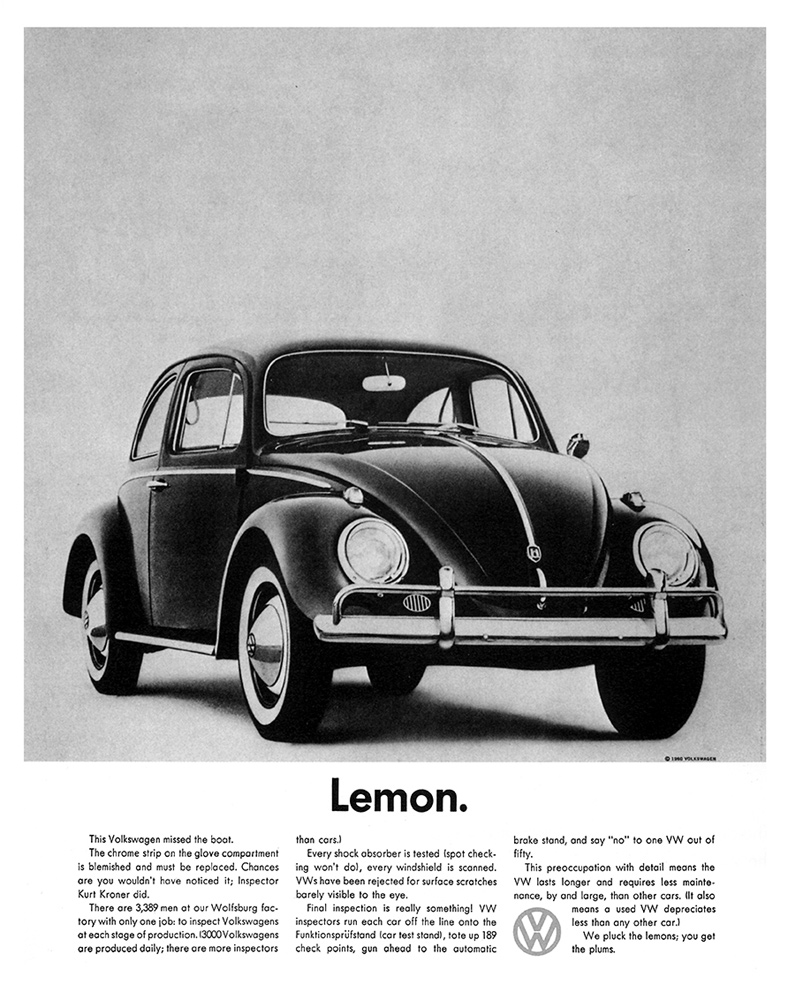
Nostalgia is precisely what makes DDB’s demise so painful. The agency that gave the world Think Small, We Try Harder and Lemon rewrote the rules of persuasion.

What Dies With DDB & What Might Rise From It
For Andrew Tindall, SVP global partnerships at System1, DDB’s demise represents the vanishing of one of the few agency brands that still stood for something.
“Many agencies have become increasingly ineffective at marketing themselves,” he said. “DDB is one of the few legendary agency brands that still stands, and it has a wicked brand… Bill Bernbach, was legitimately a trailblazer… Modern DDB is marvelous. The work is stellar and the people are modern legends”.
But Tindall also sees an opportunity in the fallout: “There’s positive in all this. The industry is poised for the next Bernbachs. There’s a few already doing it. Small and mid-sized creative shops could be cleaning up right now”.
While DDB’s Australian operations have remained silent since the news broke, the agency’s influence far outstripped its market share. Even Adam Ferrier, founder at Thinkerbell couldn’t resist weighing in: “ThinkerbellDDB – we’ll take it if you don’t want it Omnicom?”
It’s a thought that the godfather of effectiveness, Les Binet, also pondered: “I wonder if Omnicom would be willing to sell the DDB brand, now that they have no use for it.”
Whether Omnicom’s “rigorous and considered process” will make room for the legacy of DDB to live on in some form remains to be seen. But for now, the industry is collectively pouring one out for Doyle, Dane and Bernbach.


