




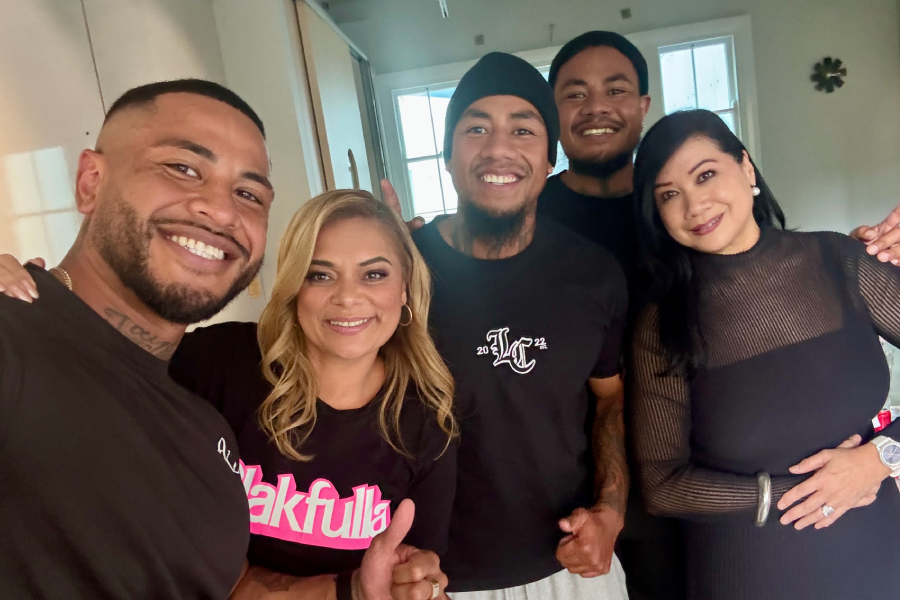
A year ago, Malik Nikua was in prison. Today, he and his two brothers are recording their podcast in the iHeart studio in North Sydney. Now, they are fielding calls from NRL stars who want to come on the show and turning down major gambling brand partnerships.
The Bros and Cons podcast, hosted by Polynesian Australian brothers Malik, Ron and Jaylek Nikua, launched on ARN’s iHeart through the First Nations-led BlakCast network after 35 self-produced episodes.
What started as something closer to a personal record became one of the more unlikely success stories in Australian podcasting.
Ron Nikua said: “It was mainly just to leave our experience behind for children.
“But then we found that over time, a lot of adults were relating to a lot of the content we were pushing out.”
The brothers have pointed out that Sydney is not doing well right now. Shootings, stabbings, gang activity have become somewhat of a norm. What hasn’t become a norm is someone choosing to stand in front of young men and plainly say that violence leads nowhere good.
Jaylek Nikua said: “It’s harder for them to listen to people that haven’t been through what they’ve been through. But because we’ve lived that life, a lot of the kids and the youth who used to look up to us because of the gang violence, now we can kind of turn their interests in a different route.”
Before Bros and Cons existed as a podcast, the brothers had already built a following through music, specifically rap music that reflected a very different set of values to the ones they hold now.
Mundanara Bayles said: “We own our mistakes, we own our past.
“They’re not shying away from what they’ve done in the past, because it’s who they are. I’ve never come across anyone, especially on social media, that are trying so hard to encourage young people to look at other options, look at other alternatives.”
What brands keep getting wrong
The question of how to reach young Australian men, particularly those from Pacific Islander, Indigenous Australian and culturally diverse backgrounds, is one brands consistently fumble.
Jaylek Nikua said: “Not a lot of people were talking about the men’s mental health stuff that we were getting into.
“Our base supporters from when we first started were a lot of men that felt like they didn’t have a voice and they weren’t heard before. When they heard us talking about it, they felt like it was okay to talk about it.”
Bayles added what the big brands are missing: “There’s got to be a connection. These fellas have the lived experience.”
That authenticity has also shaped how the brothers approach commercial partnerships. Gambling brands, alcohol brands, quick promotional deals are all declined publicly.
Jaylek Nikua added: “We said no from the very beginning and we were transparent about it.
“We posted it on our stories and said this is not something that aligns with us. There’s no price on it that we’ll accept.”
It’s a position that sounds commercially risky but has turned out to be smart.
Oxyshed, an energy supplement brand, came on board when Bros and Cons had only a few thousand followers.
“They could see the trajectory from when we first started, that this was something new, something different, something unique.
“We’re not as polished as other podcasts. It’s very raw, unfiltered, and we talk about real life.” Jaylek Nikua added.
The BlakCast Deal
The partnership with BlakCast didn’t come through an industry pitch or an agency introduction. Mundanara Bayles, the network’s founder, stumbled on the podcast through her own children.
Bayles recalled: “I was monitoring my kids’ Instagram and I saw a story on Sione Kotoa.
“I got on YouTube to watch an episode and I was like, oh my god, this needs to be a podcast.”
Bayles sent a cold DM and got a reply within an hour. Her kids couldn’t believe it.
Bayles added: “My kids look up to them. “And for me that means a lot, because I’m raising young boys that are young men. I want them to have role models like these fellas, that not everything’s going to be good in life, not everyone’s perfect.”
BlakCast exists because mainstream networks, as Bayles puts plainly, won’t back something like Bros and Cons.
“That’s why we set up BlakCast. To make sure that people like Bros and Cons had a platform to share their stories that mainstream media giants would not normally back.” said Bayles.
For ARN, coming on board through iHeart represented something the brothers are quietly aware of: they are now in rooms and studios that haven’t had people like them in them before.
Ron Nikua said: “In the last two months, we’ve made the iHeart studio in North Sydney home.
“That’s a big thing, bringing guests into spaces that have not had people like us in their space before.” Bayles added.
Work Beyond The Mic
Outside of podcasting, the Nikua brothers have visited Parklea Prison to run a program. The response from prison staff afterwards, the brothers say, was that inmates were getting off drugs, calling their families, wanting to change.
They’ve been to Redfern Youth Connect, to sit with young Indigenous men from the Glebe and Waterloo communities, groups currently in conflict with each other.
It’s worth noting that all of this happens around full-time jobs and family commitments. All three brothers are fathers. All three are employed. The podcast and the community work happen on the edges of their lives.
Jaylek says. “But we’re still in the teething stage. We’ve only been out for a year and I feel like we’re growing faster than we can even evolve ourselves.”
What comes next
Their ambitions are clear. More guests from more backgrounds, female voices on the show, speaking tours, school visits and eventually, the ability to do the community work full-time and for free.
Bayles believes the bigger picture is a media empire in the making including a podcast network, merchandise and the next generation of voices backed by brothers who were once the people those voices were trying to escape.
For now, the Nikua brothers are doing what they’ve been doing since the beginning: showing up, being honest, and trusting that’s enough.
“Right now, Sydney is a mess.
“We’re trying our hardest to clean it up, but we can’t do it by ourselves. A lot of these big brands want to give back — they just don’t know how. And we’re here saying: this is how you help. Get behind us.” Jaylek Nikua said.


