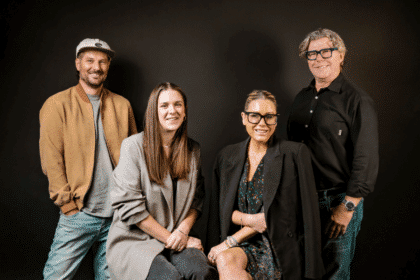

In this latest instalment of the Keep Talking series, Chris Murphy, head of creative at G Squared, 2022 Marketing Academy Scholar and proud advocate for Dyslexic Thinking reflects on his neurodivergence and why a dyslexia diagnosis need no longer be damaging to anyone’s mental health.
Some days, I still don’t feel good enough. Not smart enough. Not quick enough. Not polished enough.
I’ve built a solid career in advertising at a relatively young age. Still, if I’m honest, there’s a voice that’s never really left me. The one that started in primary school when I couldn’t tell the time, couldn’t read the way others did and kept falling behind no matter how hard I tried.
At 15, I was diagnosed with dyslexia. I remember the moment clearly because it came with a sentence that’s stuck with me ever since. My psychologist said, “You can own it, or let it own you”.
That one line changed everything (and nothing). I wish I could say it fixed me. But that’s not how being neurodivergent works.
Whilst this diagnosis gave me clarity, what followed was a decade of trying to mask it. The nature of our industry demands speed, structure and craft, and unfortunately, dyslexic thinkers are often square pegs in a round hole.
I constantly felt like I had to work twice as hard to prove I was just as good. I’d stay late to triple-check my decks for typos. I’d memorise pitches word-for-word so I wouldn’t trip up. I’d avoid whiteboard sessions where I couldn’t spell on the fly.
Despite being knotted up inside with imposter syndrome, most people saw unshakeable, rehearsed confidence.
Mostly because I’d already had the conversation in my head by rehearsing every line, memorising the spelling and faking my conviction. I wasn’t confident. I was performing.
Then came AI. And suddenly, everyone around me was speeding up even more.
While I was still scribbling ideas in a notebook, my peers were feeding prompts into ChatGPT. While I was wrestling with my fifth draft of a deck, others had slick decks delivered in seconds.
It hit me hard. I spiralled for a bit, thinking maybe this is where I fall behind for good. But then I realised something… AI is an amplifier of intelligence.
It can’t struggle with a lofty problem and then crack it whilst in the shower. It can’t have a moment of brilliance when your back is against the wall.
It can’t persist when you’ve been told something will fail time and time again.
Dyslexia has forced me to do all those things, not despite it, but because of it.
Here’s what I now know:
1. The mess is the method.
I don’t think in neat lines. My thoughts zigzag, and sometimes they don’t land cleanly. But they land differently. That difference is where new ideas come from. The creative process isn’t linear – so why should our brains be?
2. Mental health is a daily negotiation.
There are still moments I feel slow, unsure, or behind. But I’ve learned to recognise that pressure, and not punish myself for it.
3. Dyslexia isn’t a limitation.
It’s a lens. I don’t want special treatment. I want understanding. I want creative leaders to recognise that the best ideas won’t always come from the fastest thinkers. They come from the most original ones.
So, to the neurodivergent thinkers out there, own your difference. Share your process. Say the thing that doesn’t sound like everything else. And to those managing teams, don’t just ask how people are. Create space for how they really work.
Let’s stop pumping out polished, automated sameness. Let’s stop pretending mental health doesn’t impact creative output. Let’s build an industry where thinking differently is valued over speed.
Now more than ever, we need bolder, braver thinking (even if it comes with a few typos).