

For over a decade, American Eagle was hailed as a trailblazer for inclusive fashion. Its #AerieREAL campaign became a cultural touchstone, pioneering unretouched photography, celebrating diverse body types and featuring models with disabilities long before the mainstream embraced body positivity.
Aerie went on to become a billion-dollar sub-brand, and American Eagle positioned itself as the retailer that made young women feel truly seen.
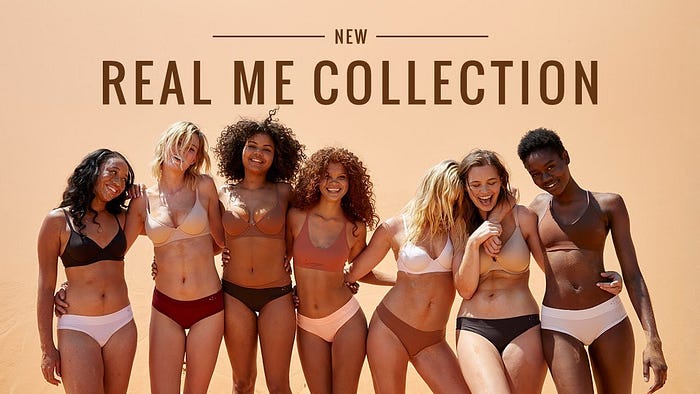
That equity was undone in a matter of weeks.
The Sydney Sweeney-fronted Great Jeans campaign swapped empowerment for innuendo. Sweeney appeared in full denim, talking about her “great genes” while the camera panned suggestively to her chest before she asked it to zoom back up to her face. What may have been intended as cheeky wordplay landed as something much darker. Critics called it “racist, sexist, and eugenics-coded.”
The Metric That Matters Most
Tracksuit data shows why the fallout was so severe. In the clothing category, where 94 per cent of adults in the United States already purchase, and product quality is largely commoditised, one question drives conversion 5.3 times more than any other: “Is this brand for people like me?”
On this all-important metric, American Eagle scored just 24 per cent, compared with Gap’s 28 per cent for its Better in Denim campaign. While a four-point difference may look small, it proved decisive. Gap’s campaign, fronted by global girl group Katseye, leaned into cultural celebration with choreography set to Kelis’ Milkshake, a diverse cast, and a message of individuality and unity.
That edge in authenticity triggered what Tracksuit describes as a “cascade effect” across brand health. Gap’s brand preference rose by +4 points, while American Eagle dropped –5 points, creating a nine-point swing between the two. Trust followed the same pattern, with Gap earning 39 per cent on “is a brand I trust” compared to American Eagle’s 33 per cent.
In a world where emotion drives behaviour, the “is for people like me” measure captures that gut-level response, the emotional alignment that actually shapes buying decisions. Gap reflected its audience back to themselves; American Eagle abandoned the very connection it once owned.
Speaking on the matter in a blog post, Isaac Peiris, founder of Pistachio.so and Brand Chemistry, said: “In a saturated market where product quality is relatively comparable, emotional alignment becomes the primary differentiator. Brands win by reflecting their audience’s reality back to them”.
“Their [American Eagle’s] audience didn’t just reject the campaign; they felt personally betrayed by a brand they’d trusted to represent their values”.
The Cultural Backlash
The campaign inflamed cultural conversations, and within a few days of its release, it was basically impossible to find a single person who hadn’t watched the ad.
Dr. Anastasia Kārkliņa Gabriel, author of Cultural Intelligence for Marketers, called it “one of the most outrageously racist marketing outputs I’ve seen in quite a while.”
She drew direct connections between the “good genes” pun and eugenicist codes of racial supremacy: “When read semiotically, this marketing campaign parades the same symbols and codes long used to prop up eugenicist fantasies of racial supremacy and—by extension—MAGA”.
Inclusive marketing strategist Lola Bakare echoed that alarm: “Did we all forget about WWII? We all get the word play around jeans/genes…I’m surprised to see so many of my colleagues celebrating this without seeing the extremely harmful connotations.”
“If Sydney Sweeney has good genes in Magamerica 2025…tell me, pray tell, who has bad genes?” she added.
Progressives were largely opposed, with some suggesting the ad is racist and a nod to eugenics theory. Conservatives were supportive, including Donald Trump. And then there were those in between, like marketing professor and brand consultant Mark Ritson, who said the ad is average and cannot understand what all of the fuss is about.
He described it as “an average ad for a fading brand featuring a hot celebrity”.
He added: “And the relatively minor status of the American Eagle brand for most current fashion buyers means that whatever the company loses in sales from a few super radical trendies, it will surely win a hundred fold back from consumers who don’t care, don’t see any of the nonsense but who are suddenly aware and readily salient for a brand that they never thought of before.”
For Peiris, the campaign completely “missed the mark” for a brand that already over-indexes on females aged 25-44 and caucasians.
“Their core customers are young women seeking authentic representation and cultural connection. The Sydney Sweeney campaign suggests they were trying to double down on their existing audience, but ultimately missed the mark by prioritising male fantasy over female empowerment. They alienated their core demographic while failing to meaningfully expand into new ones.
“The disconnect becomes obvious when you look at the data. American Eagle’s audience is predominantly female, yet their campaign was designed around male-gaze aesthetics and messaging that felt exclusionary rather than celebratory.
“What makes it even more devastating is this wasn’t just any brand making a tone-deaf choice. This was a company abandoning the progressive identity they’d spent over a decade building,” Peiris explained.
Viral Doesn’t Equal Valuable
On launch, the campaign delivered a short-term spike. American Eagle’s stock price surged 12 per cent, adding over US$200 million in market cap. Website visits jumped 60 per cent according to Consumer Edge.

But the data tells a harsher truth. Pass_by found that American Eagle’s in-store traffic fell by 3.9 per cent the week after the campaign, and a further 9 per cent the week after that. Consumer Edge confirmed that despite the online buzz, jeans sales stayed flat.
Consumer Edge VP head of Insights for the CEIC Michael Gunther said that the American Eagle Sydney Sweeney story is “a useful reminder that viral moments don’t necessarily translate into immediate consumer behaviour change. Interest may spike, but unless that attention converts into spending, the business impact remains limited.”
Gap, by contrast, turned cultural fluency into advocacy. With Katseye fronting its Better in Denim campaign, choreography went viral for the right reasons, dance classes teaching routines, social media filled with recreations, and a +4 point bump in preference.
American Eagle’s stumble is more than a creative miscalculation. It’s a warning. In categories where products are interchangeable, the only durable differentiator is identity alignment. Consumers forgive misfires, but not betrayal.
Gap leaned into culture and came out stronger. American Eagle abandoned the progressive identity it had spent a decade building and paid the price in trust, preference, and foot traffic.