



With the Cairns Hatchlings, presented by Yahoo, wrapped for another year, we’ve been taking a look back at the work produced by the Round 2 runners-up, live in Cairns.
Round 2 tasked entrants with responding to a real challenge from the UN Foundation and OCHA, to raise US$23 billion (AU$32.8 billion) and save 87 million lives in 2026. The task had to be built around the single unifying platform idea of ‘Reunite for Humanity.’
Entrants had 24 hours to respond to the brief and submit their final work.
Get your ultra early bird ticket to Cairns Crocodiles, presented by Pinterest 2027 now.
Last week, we looked at the Digital category. This week we’re looking at the Video category.
Lucie Bladinieres and Hettie Headford, HAVAS Red
Bladinieres and Headford identified skip culture as their central obstacle. They discovered that most audiences will scroll past almost anything and traditional appeals asking people to stop, watch and feel are being skipped.
Their insight: we can skip anything, but millions can’t skip crisis. The same reflex that lets someone skip a song, ad or story is the reflex fundraising has to fight, so rather than fighting it, they built the ask into it.
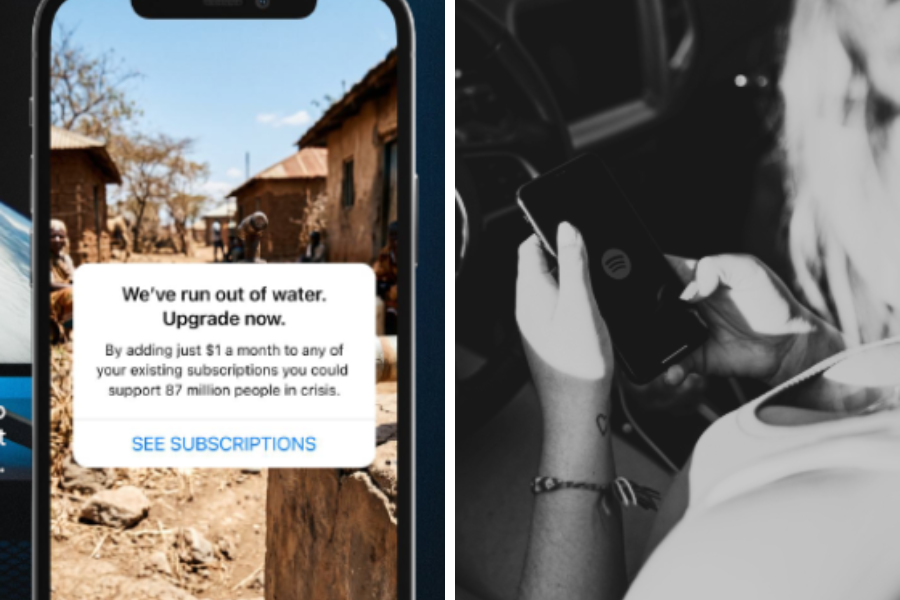
Their response was ‘Don’t Skip on Humanity’. A campaign that turns a passive daily habit into an emotional, immediate call to action, using Spotify as the mechanism. Told in social-first POV with inner monologue, the film puts viewers in the driver’s seat, as a hand reaches for the skip button. Partnering with Spotify, a $1 subscription uplift becomes the conversion moment: users must actively choose to stay in, or consciously “skip helping humanity.”
The execution leans on that friction deliberately. The campaign aims to make not giving a visible, deliberate act, forcing the decision into daylight rather than letting it happen automatically.
Its goal is to motivate the private sector, brands and the general public across APAC to side with solidarity, helping raise billions to save 87 million lives in 2026 and beyond.

Rhys Delios Callanan and Liam Ratliff, Freelance
Callanan and Ratliff identified donation fatigue as the central obstacle. They noted that humanitarian crises increasingly feel distant, overwhelming and impossible for individuals to meaningfully impact.
Their insight: nearly every part of modern life has been upgraded and yet the basics still haven’t reached millions of people.
Their response was ‘Upgrading Humanity’. A campaign that borrows the familiar language, design and behaviours of subscription upgrades including resolution, storage, delivery, coverage, plan-tier comparisons. It then reapplies them to humanitarian aid, reframing a recurring $1 add-on as something as personal as upgrading a streaming plan or storage tier.
The media strategy runs in two parts: video-on-demand placements that contextualise the creative and make subscribing to humanity a click away through integrated links and the hero creative reworked into TikTok and Reels-native cutdowns.
Its goal: motivate both public and private sectors to “subscribe to humanity,” proving that one small recurring action, scaled collectively, can help protect 86 million lives in crisis.

Winners: Tayla Orr and George Hulley, Nine
Category winners, Orr and Hulley identified emotional distance as the central obstacle. They noted that in order to turn global crisis into something personal, humanity needs to become as familiar and habitual as a monthly subscription.
Their insight: family isn’t just who you’re related to but who you share your Netflix password with. The ‘Who’s Watching?’ profile screen already functions as a household’s informal roll call.
Their response was ‘The Humanity Plan’ and ‘Reunite for Humanity’. A $1 Netflix add-on that inserts a person in crisis, Nyaphan, into every Family Plan, sitting alongside the household’s own profiles, under the line “now with something for everyone.” By hijacking the “Who’s Watching?” interface, the idea turns one of the world’s most familiar screens into what the team calls a life-saving portal.
The strategy leans on proximity rather than persuasion. Instead of asking people to donate to a stranger, it puts that stranger’s profile picture next to their own kids’ and partner’s.
The goal: prove that the same instinct that makes people ready to share a password with the people closest to them can be redirected into making room for someone the world has left in crisis.

Click here to view all the 2026 Cairns Hatchlings, presented by Yahoo winners across every category!


