



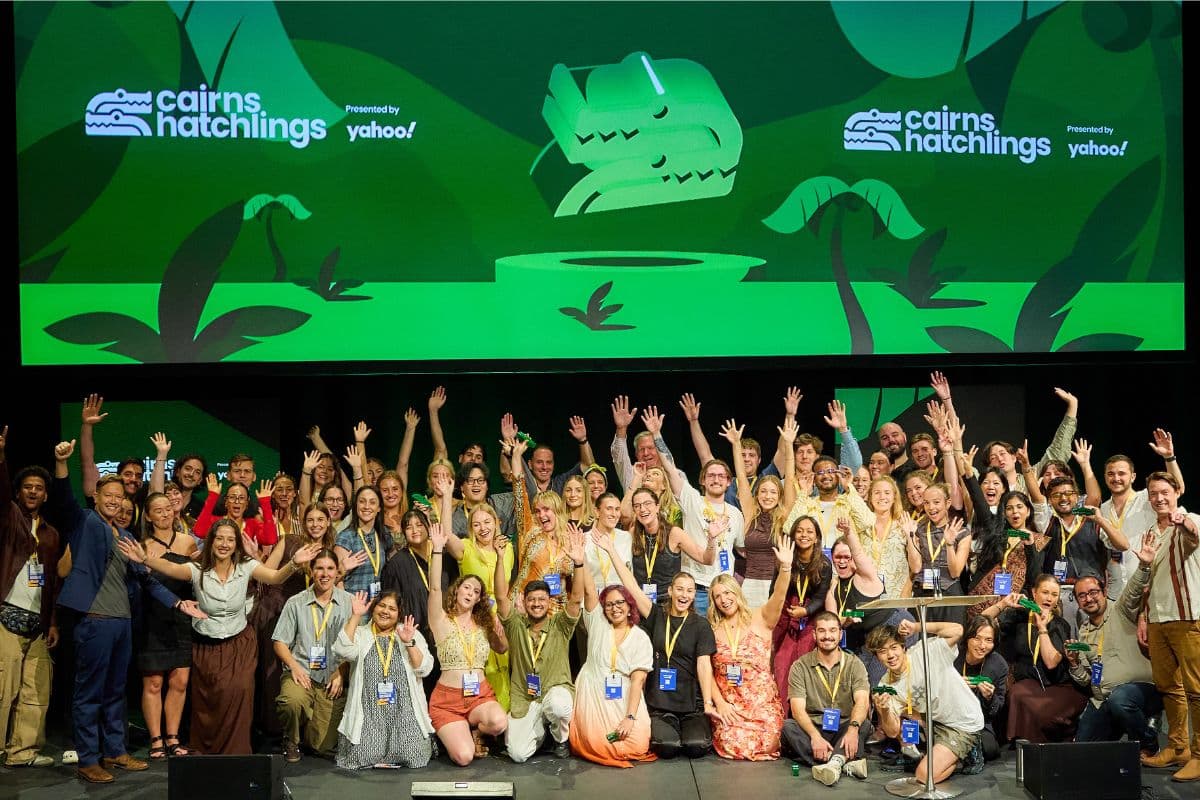
When the UN Foundation handed a group of emerging APAC creatives, media professionals and marketers a brief to help save 87 million lives, the stakes couldn’t have been higher.
The Cairns Hatchlings competition, presented by Yahoo, has always been about unearthing the region’s sharpest young minds. This year, it asked them for not just a great idea, but a genuinely world-changing one.
The brief was built around a single reframe: Humanity+. What if the subscription economy could be redirected toward human survival? What if a monthly commitment could mean something? Turning that concept into a campaign capable of moving people from passive awareness to active giving was no small ask.
Check out the full Cairns Hatchling finalists lineup HERE!
Now, the results are in. From an array of bold, boundary-pushing entries spanning disciplines and mediums, the winners of the 2026 Cairns Hatchlings competition have been crowned.
If their work is any indication, the next generation of APAC creativity is more than ready for the moment the world needs them most.
Meet the campaigns that answered humanity’s biggest brief.
Audio, sponsored by CRA
Winners: Shilpi Dey and Raj Thakkar – VML India
Dey and Thakkar developed an Audio campaign titled ‘The Sounds Of Humanity’ to turn the world’s most universal language, music, into a living, breathing act of solidarity. Rather than asking people to donate, they invited them to contribute something far more personal.
The idea was simple: a living track on Spotify, built in real time from human moments uploaded by people around the world. Every laugh, word of comfort and cheer became part of an evolving anthem that grew with every contribution.
Powered by real-time API integration and an interactive Spotify scrubber that displayed each contributor’s name and country as their sound played, the campaign made the abstract feel intimate with one judge saying they feeling an “immediate emotional connection”.


Design
Winners: Oscar Kennedy and Luke Sikora – Thinkerbell
For Kennedy and Sikora, the answer to humanity’s biggest brief was sitting locked to a bike rack on every city street corner in Australia. Their entry, which took out the Design category, proved that the most powerful design doesn’t create new behaviour. It borrows from the behaviour that already exists.
The insight was razor sharp: Australians have automated their commute with Lime, but kept their charity donations on manual. Kennedy and Sikora identified that gap not as a weakness, but as an opportunity.
Their solution was LimePrime with Humanity+, a subscription tier embedded directly into the Lime app. It would raise funds for the United Nations with every single ride. Journey updates, a donation tracker, and a dedicated Humanity+ route turned an everyday mindless transaction into an act of solidarity.

Digital
Winners: Priyanka Pradeep Gohil and Aman Ganesh Aragonda – Schbang
For Pradeep Gohil and Aman Ganesh Aragonda, the winning insight of the Digital category was buried inside the technology that is reshaping the world.
Every month, billions of dollars in AI subscription value quietly disappears. In a $1.5 trillion global subscription economy, the waste is staggering. Gohil and Aragonda saw it differently.
Their idea, ‘The Humanity Subscription’, proposed something simple: AI platforms turn a share of every unused credit into an automatic donation to OCHA’s Reunite for Humanity fund. Lives reached. Communities supported. One subscription. Two beneficiaries.
The strategy was built around an open invitation to every major AI platform to participate, timed to land at the AI for Good Global Summit in Geneva. The executions including social ads, retargeting and Claude-integrated display ads, made the invisible visible, turning something no one notices into a lifeline they never expected to provide.

Marketing, sponsored by Adobe
Winners: Bradley Johnston and Magenta Porter – Nine
Johnston and Porter, developed the winning campaign for the Marketing category, which judges felt “captured everyone in the room”. It started with the one thing everyone has in common.
While we can opt out of a streaming service, we cannot unsubscribe from human necessities. Toilet paper. Tampons. Nappies. Tissues.
‘Wipe to Unite’ proposed a first-of-its-kind D2C essentials subscription service built around Kleenex, Huggies, and Kotex, with 10 per cent of every subscription going directly to the ‘Reunite for Humanity’ campaign.
To launch it, they did something nobody expected, They reunited Julia Gillard and Tony Abbott, two of Australia’s most famously opposed political figures, around the one truth that transcends the aisle. Everybody wipes.


Media, sponsored by Yahoo
Winners: Leah Franco and Ben Breden – Initiative and Accenture Song
For Franco and Breden, the problem wasn’t apathy. It was the algorithm.
Algorithmic social feeds have spent years dividing users, degrading trust and desensitising audiences to suffering. The duo didn’t try to fight the scroll. They taxed it.
‘UNDoomscroll’ flipped one of the most destructive digital behaviours into a funding mechanism. For every minute scrolled above your personal screen time goal, you donate one cent to the United Nations Foundation.
The mechanics were three steps: Reclaim, Reunite, Repeat. A commitment contract app that tracks screen time and converts excess into microdonations.
What distinguished their work wasn’t just the channel thinking. It was the honesty of the diagnosis. We can’t reunite humanity without addressing what divided it.


Out of Home
Winners: Sophie Whitehead and Sophie Harper – Saatchi & Saatchi
For Whitehead and Harper’s winning OOH campaign the brief wasn’t to create awareness. It was to create the moment Australians finally connected their spending to their power.
Their insight was that despite feeling “too poor to give,” the average Australian under 30 spends $178 a month on subscriptions they barely use. Money already leaving their wallet, just not changing any lives. Whitehead and Harper didn’t ask that audience to give more. They asked them to notice what they were already spending.
‘Unlock Humanity+’ took the familiar UX, language, and psychology of subscription culture and turned it into the most important upgrade Australians have never been offered. Deployed across motion-enabled DOOH, programmatic contextual screens powered by live OCHA data, and a Transit DOOH partnership with Transport NSW, the campaign met Gen Z and Millennials exactly where their money and attention already were.
In a category where presence is everything, Whitehead and Harper proved that the most powerful billboard isn’t the one that shouts the loudest. It’s the one that makes a $1 donation feel exactly like pressing play.

PR
Winners: Anastasiia Nazarenko and Tina Kandelaki – Palin Communications
Nazarenko and Kandelaki, the PR category winners, asked a deceptively simple question: what if humanity was the default?
Traditional fundraising has always relied on people actively choosing to give, a model built for a world with more attention and less fatigue. The duo identified that model as the problem.
‘Default Humanity’ flipped the architecture entirely. On World Humanitarian Day, participating platforms including Netflix, Spotify, Disney+ and Amazon Prime Video automatically add a $1 contribution to users’ next subscription payment, unless they actively choose to opt out.
For every user who stays opted in, participating brands match the donation. The PR mechanic was equally sharp with platforms interrupting normal activity with a film, a moment, a choice. The story wrote itself, and the earned media potential was enormous with one judge labelling it the “most newsworthy idea”.

Publishing
Winners: Kota Ikebe and Yusuke Wakata – Hakuhodo
Ikebe and Wakata, turned a simple insight into a winning Publishing campaign: the most memorable places in the world are often the ones the world rarely looks at.
Travel has always made us feel connected to people we’ve never met. Algorithms and guidebooks have made that feeling increasingly uniform. The pair identified that gap between where people are pointed and where humanity actually lives.
‘The Unguided Guide’ is a UN travel magazine unlike any other. It’s one that reveals humanitarian realities through the hidden destinations people actually want to explore. Not donating out of pity, but subscribing because it’s interesting. The strategy reframed generosity, making curiosity the entry point rather than guilt.
The execution brought it to life through travel magazine tie-ins, social media, banner ads, and OOH, with photo essays and longform travel stories introducing overlooked places like Humla, Nepal.
In a category built on storytelling, Ikebe and Wakata found the most elegant possible answer: don’t ask people to care about a crisis. Show them somewhere beautiful. The caring follows naturally.

Strategy, sponsored by Navigare
Winners: Elizabeth Nan Tie and Darshan Pawani – Starcom
Elizabeth Nan Tie and Darshan Pawani were the Strategy category winners. For their campaign, the answer wasn’t to change human behaviour. It was to change the system that behaviour already runs through.
What if the 30 seconds you were going to skip could actually save a life? Every day, billions of dollars in media value evaporates through skipped ads, wasted impressions, and inefficient inventory.
‘Play It Forward’ proposed an opt-in through YouTube’s 2.7 billion active users. Watch a 30-second ad, and that viewing funds humanitarian impact through brand investment. The goal was to unlock $23 billion by making the global feel doable, one ad view at a time.
The strategy operated across three pillars. A partnership with YouTube connecting people to the cause at genuine scale. The ‘Play It Forward’ mechanic turning passive viewing into active impact.
In a category that rewards thinking over execution, Nan Tie and Pawani delivered both. They rewired the infrastructure so that simply being online already meant you were.


Video
Winners: Tayla Orr and George Hulley – Nine
Orr and Hulley didn’t look to a billboard or a social media feed to win the video category. They looked at the screen so many Aussies stare at every single night before they press play.
The pair found that family isn’t just who you’re related to. It’s who you share your Netflix password with.
In a world where a streaming Family Plan is one of the most intimate digital commitments, they saw an opportunity to expand the definition of who belongs in it.
‘The Humanity Plan’ proposed a $1 Netflix add-on that inserts a real person in crisis directly into every Family Plan. By hijacking the “Who’s Watching?” UI, the campaign became a portal for genuine human connection.
The strategy was as elegant as the execution. A $1 monthly commitment reframed not as charity, but as adding someone to the family.
In a category where emotion and storytelling is everything, Orr and Hulley found the most quietly devastating version of the brief — proof that the most powerful thing video can do isn’t tell people about a crisis. It’s make them feel like they already know someone living in o


