



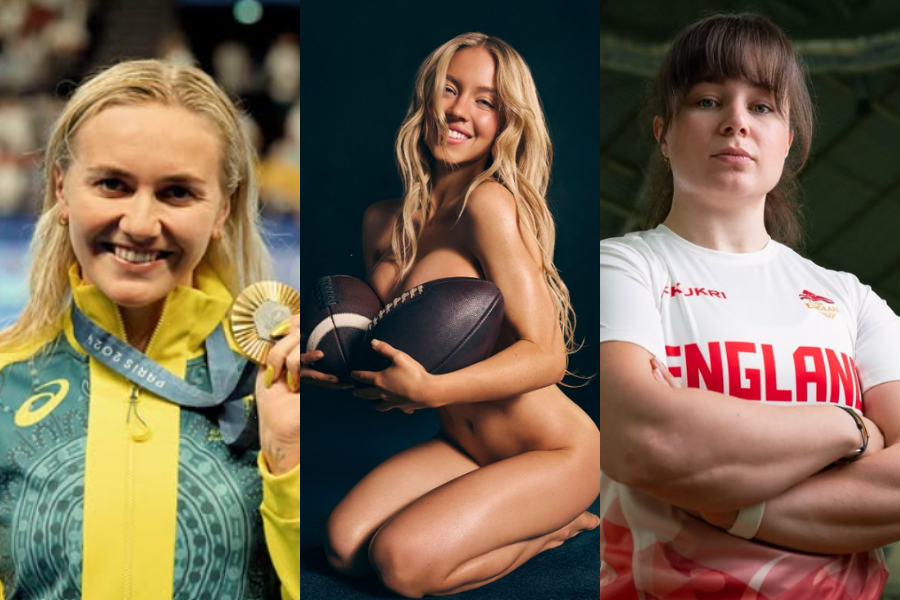
It’s been five days after Sydney Sweeney’s latest advertising campaign for sports trading platform Novig was released. What began as a provocative piece of marketing has developed into much broader backlash from female athletes across multiple sports and countries.
At least 15 athletes have now publicly criticised the campaign, with wider reporting describing the number of athletes taking aim at the spot as being in the dozens.
Among those to speak out are four-time Australian Olympic swimming champion Ariarne Titmus, British Olympic cycling champion Sophie Capewell, Australian water polo Olympian Tilly Kearns, British sprinter Amy Hunt and former US gymnast Gracie Kramer.
Further response has also included Australian Olympians Lani Pallister, Bree Masters, Lauren Ryan and Liz Clay, as well as world champion boxer Skye Nicolson and athletes including Ellie Boatman, Lisa Neumann and Joc Bartram. Australian surfer Felicity Palmateer has also criticised the campaign, describing its potential impact on young girls entering sport as particularly concerning.
Rather than simply criticising Sweeney directly, many of the athletes have chosen to respond by showing what their own sporting lives actually look like.
The backlash has turned into something of a social media movement.
Kramer was among the first to establish the format, posting footage of herself performing gymnastics alongside the message “idk what Sydney Sweeney was doing, but this is what a woman in sports looks like”.
@graciekramer8Because it really is that deep.♬ orijinal ses – 𓍯𓂃
Her post triggered an onset of athletes from different sporting backgrounds to share their own training sessions, competition footage and achievements.
Hunt delivered similar sentiment in a post-race interview with BBC Sport at the World Athletics Ultimate Championship in Budapest.
The British sprinter turned the attention back to performance, pointing to the physical strength and years of work behind elite athletics.
“Sydney Sweeney, this is what women in sport look like,” Hunt said.
Titmus, meanwhile, expressed her disappointment in a rather blunt statement on her Instagram story.
“I wasn’t going to share this as I didn’t want to give this any more attention. But I can’t keep my mouth shut,” she said.
“I can’t describe how infuriated I feel when I watch this,”
“Not only is this a kick in the face to every woman who has dedicated her life to perfecting her craft, but every woman who enjoys sports for what it really is – teamwork, friendship, dedication, excellence, unity, the list goes on.”
“I thought we were genuinely moving past this bullshitt. What is this teaching the young men and women of today?”
“Sydney Sweeney, do better.”
For many of the athletes, the objection appears to be less about nudity itself and more about context.
Female athletes have previously appeared nude or semi-nude in publications and campaigns to celebrate their bodies and sporting achievements. That distinction has become central to the criticism of the Novig campaign: athletes have argued there is a stark difference between choosing to showcase an athlete’s body as part of a celebration of sporting performance verses using a sexualised female body as the primary device to sell a sports-related product.
That distinction also sits at the heart of Sweeney’s supposed response to the online criticism.
Following the backlash, the actor shared various images from ESPN’s Body Issue featuring athletes who had previously posed nude to her Instagram story, including Serena Williams, Megan Rapinoe and Caroline Wozniacki with no caption.
The campaign has generated tens of millions of views in less than a week, giving Novig an enormous amount of attention.
But the increasingly prominent question is whether that attention will ultimately benefit the brand — particularly among women — or whether the campaign has positioned the company on the wrong side of a conversation that female athletes have spent years trying to change.


