



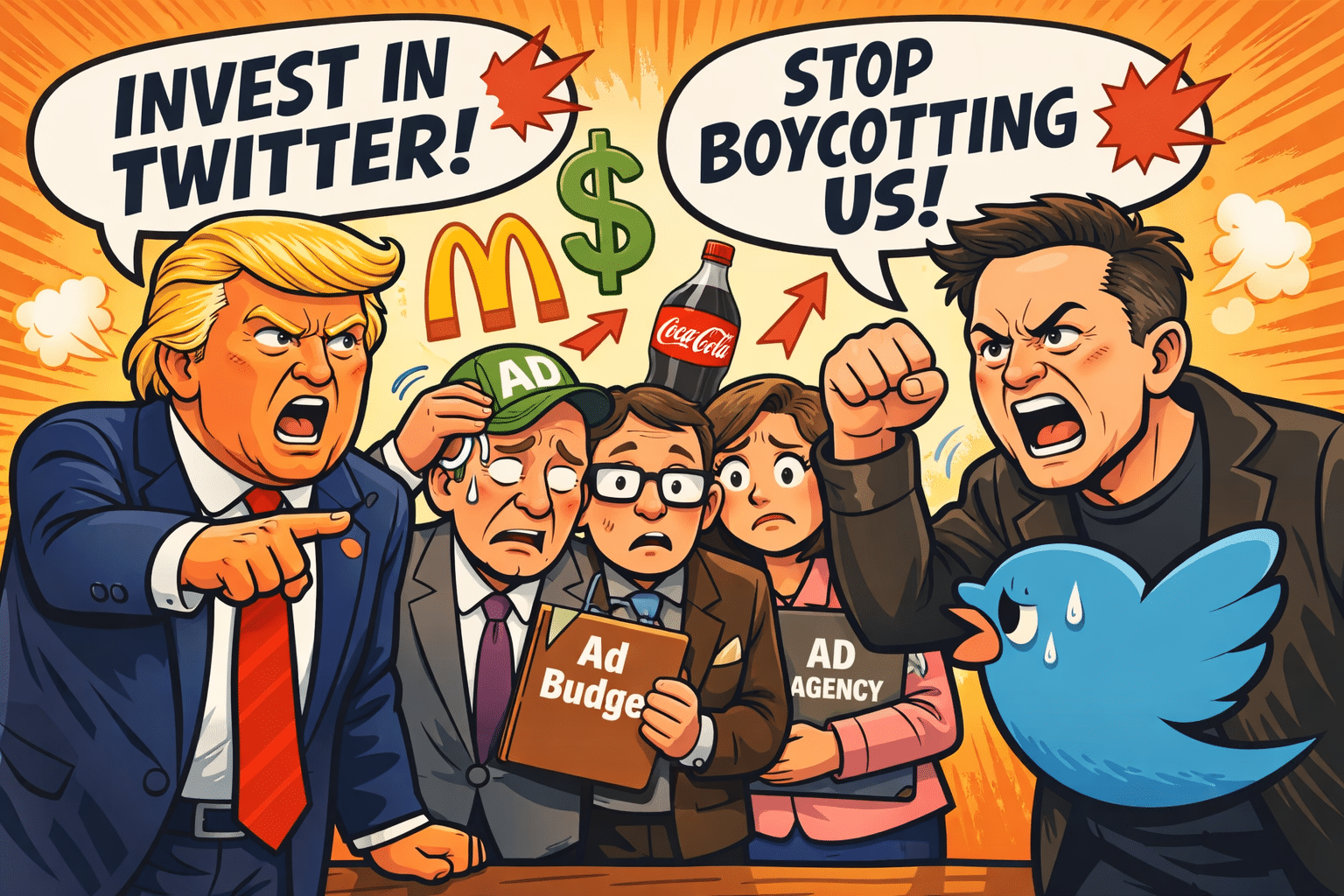
The Federal Trade Commission and eight states have settled with advertising companies over an ‘antitrust’ lawsuit brought by X owner Elon Musk.
Last year, the American consumer watchdog, in an unpolitically motivated claim, began an investigation into holding companies and lobbying groups who it claims co-ordinated boycotts against X (formerly known as Twitter) because advertisers decided they didn’t want to spend money on the platform.
After Musk acquired Twitter, he slashed the company’s brand safety team, leading to major advertisers steering clear of the platform.
Agency bosses told B&T at the time that they wouldn’t recommend brands to advertise on X because it was no longer a brand safe platform and Musk’s erratic behaviour on the platform had made it undesirable. Twitter rarely had a large part of media budgets but was previously liked by brands who wanted to tap into the zeitgeist of live events.
The FTC’s investigation focused on whether the companies, along with various groups that help brands keep their ads away from controversial content, acted anticompetitively by coordinating to stop spending advertising money on specific online platforms.
The FTC’s complaint, which was filed in the US District Court for the Northern District of Texas, argued that the ad giants worked with third-party groups to keep their ads away from misinformation or objectionable content.
It is common practice for advertising agencies to avoid running ads against controversial content or platforms, irrespective of their political leaning.
The FTC’s complaint said that entities, including NewsGuard and the Global Disinformation Index, unfairly disfavored conservative news and commentary sites. There has never been an FTC probe into brands avoiding progressive news and commentary sites.
Dentsu, Publicis Groupe and WPP, have agreed to a proposed consent order that, if approved by the judge, would restrict ad placements based on biased and politically motivated criteria.
According to a report in the Wall Street Journal, WPP said that it reached an agreement that reflects its commitment to clients with “unbiased advice as they decide where to place their media.”
Dentsu echoed these views while Publicis Groupe did not comment in the WSJ report.
The proposed settlement comes a year after the FTC reached a similar agreement with Omnicom Group as part of its $13.5 billion acquisition of rival Interpublic Group.
That deal barred the merged outfit from coordinating with others to direct advertising away from media publishers based on the publishers’ political or ideological viewpoints.
Advertisers have always had the ability to choose to blacklist websites and platforms that they do not wish to advertise on.


