
Around the world governments are tightening the rules around advertising. From restrictions on gambling and junk food promotions to crackdowns on fossil fuels and out-of-home entirely, the scope of what advertisers can and cannot say is rapidly changing.
Whilst the severity of these regulations varies between countries and even cities, the traffic seems to only be moving in one direction.
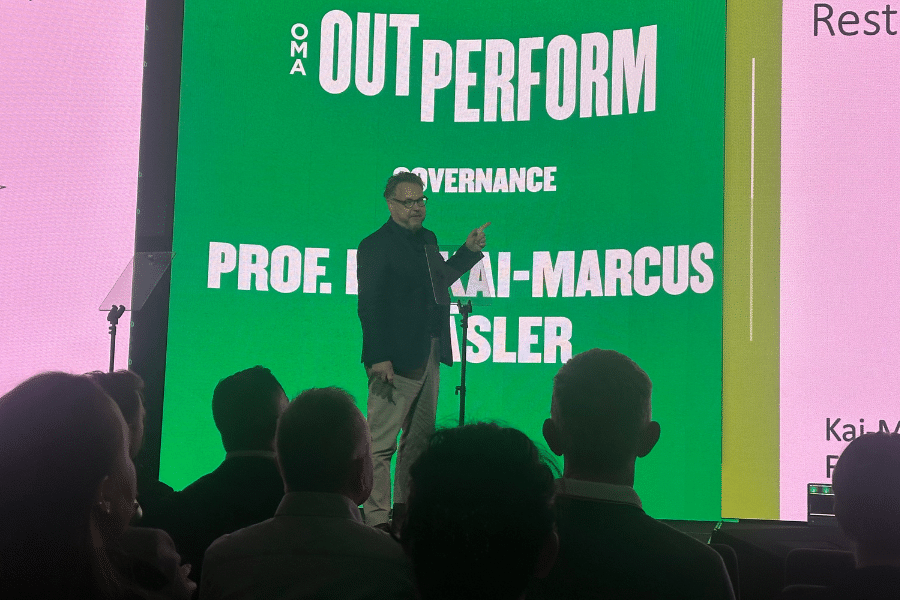
According to World Out of Home Organization (WOOH) board member Dr. Kai-Marcus Thäsler, the industry is now witnessing a “domino effect” of advertising bans—one market announces a restriction, it sparks policymakers in another to explore similar changes.
“Once it starts in one country of the world, it might happen in the next country and over the next country,” he said to 300 marketers at OUTperform—the Outdoor Media Association’s 2026 industry conference.
“We’re looking at this from an international perspective, we have to do something against it, because this domino effect has to be stopped, and we have to take a close look at what happens in which country and which country can help other countries to prevent what is happening.”
At the moment, Berlin residents are taking part in a ‘Berlin Werbefrei’ initiative, which is calling for a complete ban on outdoor advertising in the German capital. If the State Electoral Office receives 174,000 signatures by the end of today, a referendum will be held on the ban.
Closer to home, tighter restrictions on gambling adverts will come into force on 1 January. As part of the new restrictions, betting companies will be banned from advertising during live sporting events, on team uniforms and in stadiums. Gambling advertising on TV will also be restricted to no more than three clips each hour between 6am and 8.30pm, while there will be a total ban on wagering ads on the radio during 8am-9am and 3pm-4pm.
WOOH has taken it upon itself to make sure that these restrictions don’t continue to tighten.
“If it starts in Brazil or South Australia, it might come to to Germany or France the next day, if the Social Democratic Party in Germany had some ideas, it might go to the International Convention, and then as a result it comes to Australia. But it’s our project to stop this roll-on effect.” he said.
It does this through a four step process: “coordination”, going around the world to try and understand which countries are facing which problems; “knowledge transfer”, using the information it received on each country and applying the lessons other countries have had at successfully fighting a restriction; “early warning systems”, alert advertisers worldwide to new global regulatory developments; and “best practice”, applying a digital library if cases, studies, guidelines and legal tools to help fight regulations.
Thäsler went on to say that advertisers cannot deny that this domino effect exists. He argues there is a “pattern” of certain categories being banned in multiple locations around the globe, such as fossil fuels and tobacco.
Similarly, the UK banned junk food bans advertising online and on TV before 9pm. In, Amsterdam there is a ban on public advertisements for both meat and fossil fuel products. Last year, South Australia similarly announced plans to ban fast food advertising on its public transport network.
And Thäsler argues these restrictions are often introduced because banning advertising is easier than addressing the deeper societal issues at play.
“When you talk about expertise, you have to ask whether sugar-free advertising is really relevant to solving the issue. Children aren’t influenced in such a simple way by advertising alone — that’s an obvious argument. But when you speak to politicians, you need to frame it differently. That’s what I do in Germany. I talk to ministers and explain that the real issues are health, education and personal responsibility, not just advertising.”