




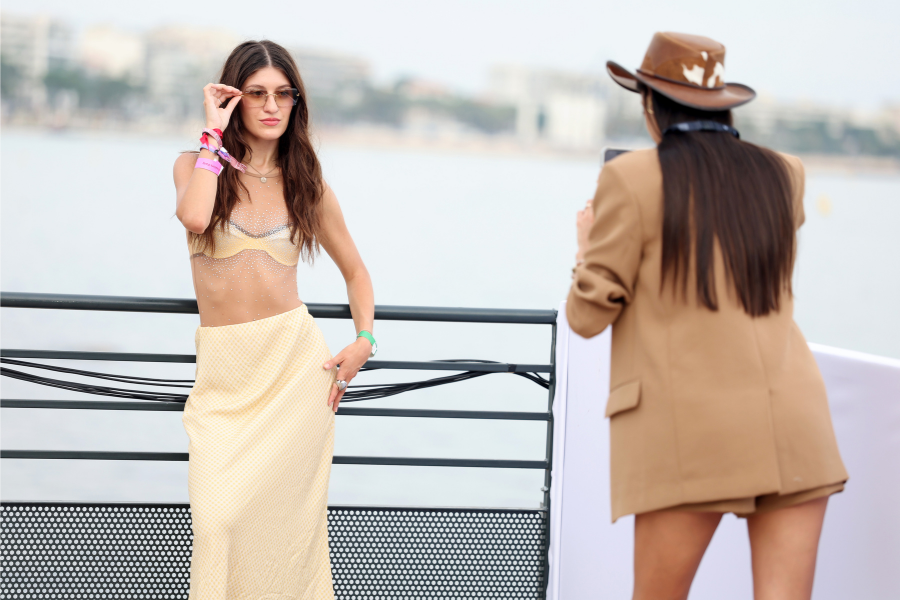
The Cannes Lions has always sold itself as advertising’s high church of craft. In 2026, it ran alongside a second currency entirely: attention, and the creators who know how to convert it.
Hundreds of creators, or influencers to give them their more passé collective noun, reportedly descended upon the French Riviera this year, jostling for brand deals, paid speaking slots and content opportunities alongside the usual agencies and marketers. But why Cannes and why now?
There’s an obvious pull here that has nothing to do with marketing strategy. The French Riviera is yachts, rooftop parties, beachside brand activations and a genuinely stunning stretch of coastline, all compressed into one week. For a creator whose business is built on content, that’s not incidental, it’s the job. A festival that photographs this well was always going to become a magnet once creators had the industry standing to be invited.
@gretalouisetome The best night with @Microsoft in Cannes #microsoftpartner ♬ original sound – Greta Louise
@avnibarman_what is it like to attend Cannes Lions most exclusive party of the week? come with I’ll show you!♬ original sound – 🤍🥥S•phia🐚🍨
Plenty of glamorous events exist. What makes Cannes different is that it sits at the exact intersection of glamour and industry access, which is a much rarer combination.
Cannes puts CMOs, agency leads and brand decision-makers in one physical location for a week. For a creator, that’s an unusually efficient way to meet the people who greenlight brand deals, without the layers of managers and pitch decks that usually stand between them. It has been reported that more than 250 “top” creators went to Cannes this year. Some 13,000 or so regular attendees went to Cannes this year.
Brands increasingly want to be seen working with creators, not just buying media from them and Cannes offers a stage for that visibility that a normal campaign rollout doesn’t. Being photographed at a creator’s activation, or having a creator host a brand’s beach event, has become its own form of content and credibility.
Influencer turned media entrepreneur, Alex Cooper made that dynamic explicit this year. The “Call Her Daddy” host used her time at Cannes to pitch marketers directly on her very own Unwell Creative Agency. It is the in-house shop built to work with brands without a traditional agency sitting in between. Her argument being that most influencer marketing has become tired and that real cut-through only comes when a brand is built into the storytelling from the start.
It’s a pointed pitch for a festival whose history was based around traditional agencies and says something about how confident the biggest creators now feel walking into that room and proposing to cut the middleman out altogether. That said, whether Cannes is about traditional creative agencies these days is up for debate.
Research produced this year suggests the underlying relationship between brands and creators is maturing into something more structural: longer partnerships, better considered briefs, more scrutiny on whether a creator actually fits a brand rather than just having reach. If that’s true, Cannes’ creator turnout might reflect a repositioning of where creators sit in the industry, worth being at the table for.
Alternatively, this could be a Cannes phenomenon. Is it perhaps just a category getting its moment because it’s suddenly fashionable, the way other trends have cycled through the festival before—remember the Metaverse? Time, and next year’s guest list, will tell which it is.
None of this year’s Cannes coverage spent much time on what any of it means outside the creator economies of the US and UK, which raises some open questions for Australian marketers and creators alike.
Australian brands have spent $830 million on influencer marketing over the past 12 months, up 13.5 per cent year on year, according to We Are Social’s Digital 2026 report. Other estimates put the figure even higher, meanwhile the global content creator economy is expected to be worth an estimated half a trillion US dollars by next year(!).
Is Australia’s creator scene, smaller, more tightly networked, and without the same Cannes presence this year, missing out on a genuine shift in how brands and creators are expected to work together? Or is the Cannes creator influx more reflective of the scale and celebrity culture of bigger markets than of any change local brands actually need to respond to?
There’s also a practical question for Australian marketers weighing where to spend their time and travel budget: does sending people to Cannes for the creator conversations actually translate into better local creator partnerships, or is the real work of finding the right Australian creators, ones whose audience genuinely fit a brand.


