
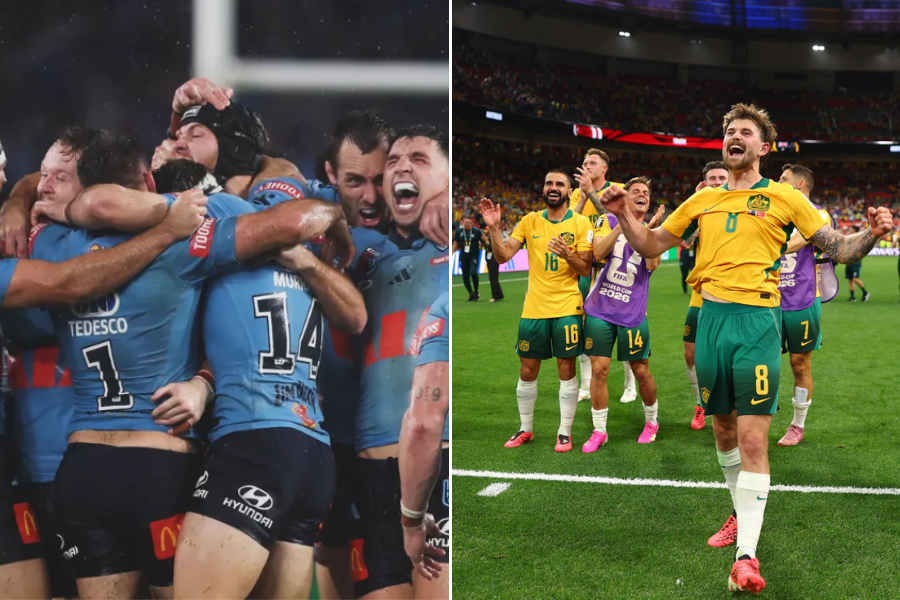
Game two of State of Origin kicks off tonight and if you go off game one’s audience numbers, nearly six million people are planning to watch it.
Which is why brands continue to flock to premium sporting moments, like rugby league’s ratings juggernaut. But while marketers are eager to secure inventory around the biggest events on the calendar, Magnite is urging advertisers not to exhaust their budgets too early.
The supply-side platform, which helps demand-side platforms buy and transact advertising inventory programmatically, believes marketers should lock in marquee moments while retaining enough flexibility to capitalise on unexpected opportunities later in a tournament, season or series.
“It is very much about picking out those key highlights, those moments where Australians are going to be having opportunities to excel, but also keeping some powder dry,” said Yael Milbank managing director, Australia and New Zealand at Magnite.
If Queensland beats it’s arch nemesis for the first time ever at the MCG tonight, then a decider will be in order to decide which state takes home the series and the winning shield. Deciders have previously been the most watched game of the ratings juggernaut.
Just last year, the decider in Sydney at the time was the most watched Origin clash of any kind since 2016, with a staggering total TV national reach of 5,657,000 and a national average audience of 3,904,000.
But, due to how popular ad space is for the major sporting moments like State of Origin and the current World Cup, Milbank explained media buyers should still “lock away” ads early on with publishers.
“Buy the bits that you really want, get them locked away. And then there’s the operational additional opportunities that come on and arise as we get closer to the tournament and series and as they go one, that they can really tap into from a programmatic perspective.”
But securing premium inventory is only part of the equation. Milbank said marketers are missing out on taking full advantage of sport due to “operational mistakes”. As well as exhausting budgets before “cracking games” (like deciders) Milbank went on to say that the conversations start before kick off.
“I do think there’s also that shoulder content that can be really valuable, that pre-game, post-game, where people can be tapping in. The live sport moment is good, but there is opportunity there for them to be operating in as well.”
For the State of Origin tonight, this for brands could be looking to purchase ad space in the pre and post game broadcast on 9Now. Which he says could be looked more favourably than during the games because brands don’t have to compete with the major partners who will be owning half-time and mid game breaks.
All of the above also applies to the current World Cup. If anything, the biggest sporting tournament in the World is currently more relevant to programmatic buyers than ever before.
This is because of the timing of Australian’s tuning in is set to drive a surge in streaming and second-screen engagement.
Unlike previous tournaments that forced Australians into late-night viewing habits, this year many World Cup matches in North America will and have aired during the Australian mornings and workday.
The Socceroos played its first match at 2pm (against Türkiye on 14 June). The other two two group stage games are played at 5am (US, 20 June) and midday (Paraguay, 16 June).
And after the Socceroos impressed a large portion of Australia’s population with an underdog 2-0 victory over Türkiye more eyes will be the team as the world cup progresses.
The match drew a total TV national reach of 4,783,000 and an average audience of 3,035,000, making it the second largest TV audience of the year after Nine’s State of Origin game one fixture.
And for programmatic buyers it is also important to highlight that the Socceroos victory on Sunday had 1,258,000 people stream it. This could be a rising number as more people look to watch the Aussies during work hours on traditional working days (which the match against Paraguay is).