
In an attention economy flooded with AI-generated ‘junk’ content, long-form vulnerability-driven storytelling is becoming more valuable for both audiences and brands. And now that AI-generated content has flooded social media feeds, holding attention is even tougher.
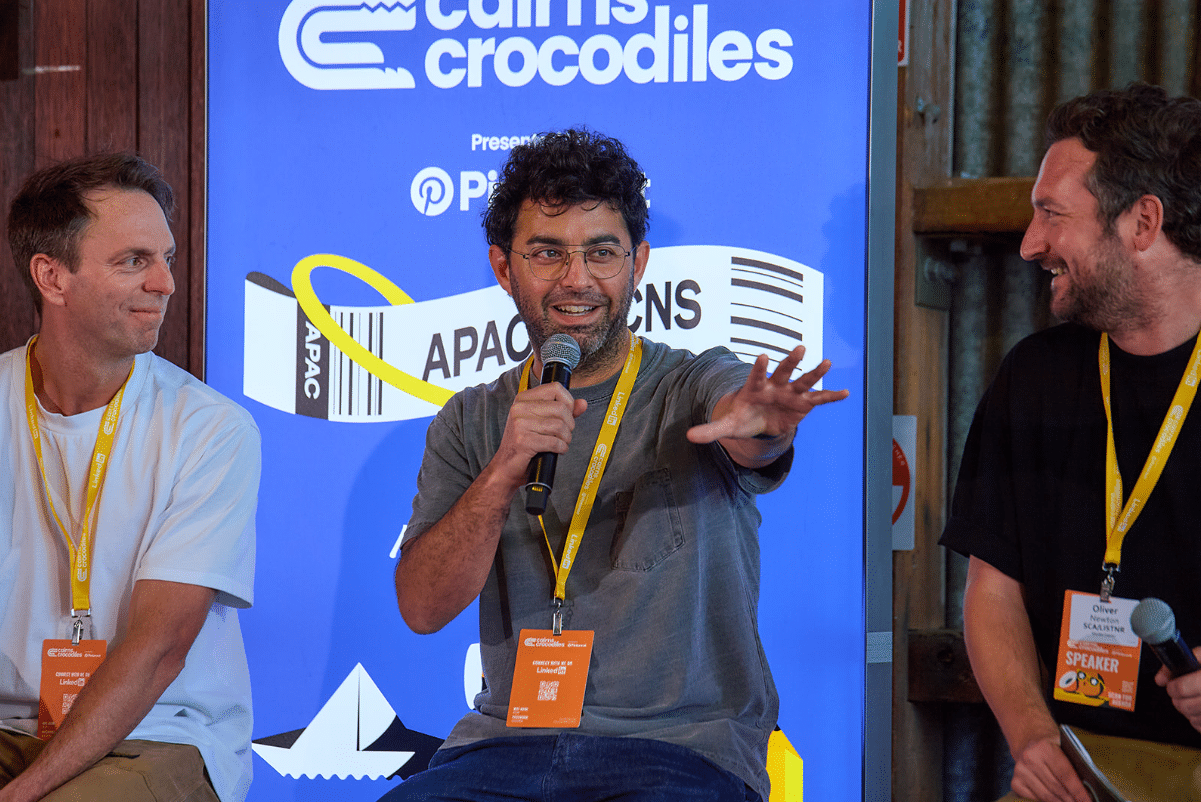
But at Cairns Crocodiles, Hugh van Cuylenburg and Ryan Shelton, co-hosts of The Imperfects, argued that depth, vulnerability and long-form storytelling can outperform clickbait and optimisation. The pair explained that audiences are increasingly searching for something real, rather than “rot”, and by staying authentic to themselves they can deliver this to audiences.
“The algorithm is just as everyone knows it, it just rewards rot, junk and shit, and we just have to try and hopefully be the opposite of that,” said van Cuylenburg to a room full of marketers at Hemmingway’s Brewery on Tuesday afternoon.
This can be depicted by the new AI fruit trend. For those of you who aren’t stuck in the brain rot realm, The AI fruit trend refers to the wave of bizarre, hyper-colourful short-form AI-generated videos flooding social media feeds. Often featuring talking fruit, surreal characters, nonsensical storylines and distorted voiceovers, the content is intentionally chaotic and low-context, designed to instantly grab attention and keep users scrolling.
van Cuylenburg said that even though they aren’t directly competing against this new phenomenon, watching this form of content only has a negative impact on people.
“With Instagram you can spend a lot of time on the platform and watch a lot of videos, and I don’t think anyone’s ever been on Instagram for half an hour and said, ‘that felt great. That was nice. I’ll do that again later’,” he said.
Which Shelton quickly jumped in and added, ” regret is the most common emotion in your experiences after spending time on social media.”
This is why, from the outset the boys have always tried to add something to their viewers lives.
“That’s always been, what we’ve worked really hard on is trying to make people feel in order to learn, in order to cope better in challenging times, but also to feel happier,” said van Cuylenburg.
Their show focuses on vulnerability, mental health, relationships and personal growth, with guests openly discussing their struggles, insecurities and imperfections.
The podcast blends serious conversations with humour and has become known for its long-form, emotionally honest interviews. Guests range from psychologists and authors to athletes, comedians and celebrities like Chrissie Swan.
While this type of content may not attract the same viral numbers as the latest AI trend, the pair left the room full of marketers thinking carefully about the kind of content they want their brands to be associated with.
“I get that something might have 300 million views, but I don’t know if you’d feel good after watching it. And whatever brand is attached to that, well you can draw that link. But when something makes you feel good, the depth of connection is far more important.”