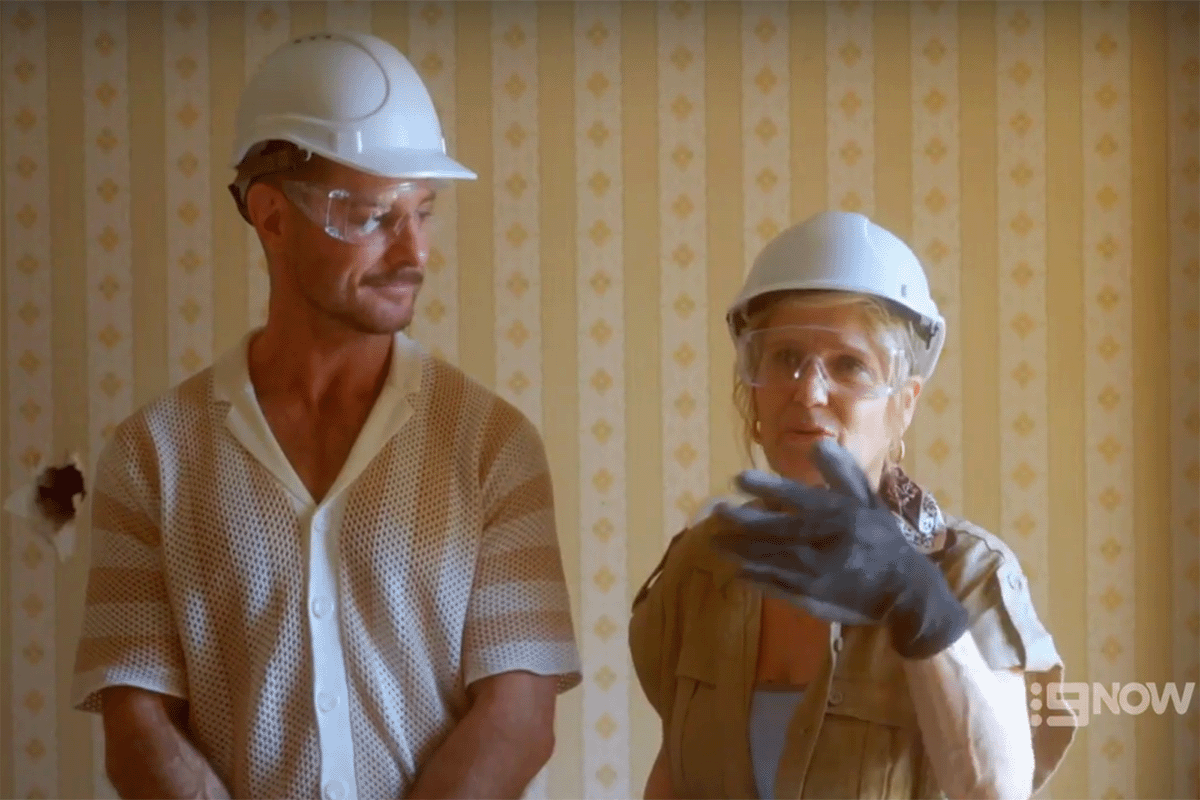

Spark Foundry Australia’s Hot Takes is an editorial series exploring the cultural shifts shaping consumer behaviour through conversations between strategists and industry voices. In this edition, Joshua Green, strategy director at Spark Foundry Australia, speaks with Eleanor Baillieu, founder and co-host of Formula 1 podcast Paddock 43, about how modern sports fandom is evolving beyond the game itself.
Up until recently, the experience of sports fandom has been stubbornly linear: buy the ticket, find your seat, watch the action, go home.
But that version of fandom has quickly become outdated.
Today, fandom is user led – a ‘choose your own adventure’ shaped by identity, budget, schedule and the multitude of ways people seek joy.
Speaking with Paddock 43’s Eleanor Baillieu, she summed it up perfectly: major sporting events are now competing on fan experiences, not just the sport itself.
From watching sport to ‘designing a day’
Eleanor’s take on the annual Australian Grand Prix was clear-eyed. Yes, plenty of people still go for the racing. But there’s also a huge cohort that now goes for the festival – the music, food, culture and overall sense of occasion. And rather than ignoring this, F1 has learned to engineer for it.
She pointed to the deliberate layering of experiences: STEM and education programs for kids, driver and team interviews, live podcasts, brand activations and an array of food options.
In other words, you can come for the cars, the culture, the community or all three at once. Fandom is expanding beyond the gatekept definition of enthusiastic viewer.
Why F1 is the perfect ‘modular fandom’ machine
F1’s growth story is often, at least in part, attributed to Netflix’s Drive to Survive. Eleanor agrees it’s been a major gateway, because it made a historically ‘closed’ world feel accessible. But the bigger, more durable shift is that fans are increasingly following F1 for the stories, then staying for the racing once they’re hooked. Fans don’t have to start with mastery of the rules. They can start with personalities, rivalries, behind-the-scenes drama, a creator they trust, a watch party with friends, or even just the energy of being there.
Community is the glue
If the future of fandom is about choice, community is what makes those choices sticky.
Eleanor explains how Paddock 43 keeps Australian fans engaged year-round. Live races often land at difficult hours, so the community stays connected through consistent
online connection, organic social (rights restrictions mean no paid content), and watch parties.
These watch parties are a masterclass in lowering the barrier to entry. Diverse crowds, made up of people coming solo, friend groups and families, offer fun vibes, dress-ups and race simulators. You can show up as you are and belong immediately.
Importantly, she contrasts this with the vibe many women still feel around traditional sports pub culture. Spaces like those created by Paddock 43 are intentionally more welcoming, wholesome, and less coded as ‘for the boys’.
This matters because participation requires psychological safety — something F1 increasingly provides. The Global F1 Fan Survey reports women now account for three in four new fans, with nearly half of Gen Z respondents identifying as female.
Democratisation by design
One of the most tangible ‘pick your own adventure’ insights from Eleanor was actually operational.
She noted that at the Australian Grand Prix, fans can bring their own food and drink, refill water bottles at drink stations, grab sunscreen, and picnic in shaded areas. A design choice that makes the day more accessible for families and people watching their spend.
That’s fandom infrastructure doing what it should: inviting more people in, without demanding they pay extra at every step.
The new frontier for brands leaning into fandom
These shifting behaviours demand a re-think of how brands connect with fans. The conversation with Eleanor highlighted three key opportunities:
- Design for choice, not control: Create activations that let fans opt in at different levels, from ‘quick touch’ moments to deeper engagement. Westpac’s NRL sponsorship is a strong example, providing opportunities to engage across both stadium and broadcast environments. From ‘Catch & Keep’, where anyone who catches the match ball gets to keep it, to the Westpac Red Zone, a TV integration focused on the most intense moments of play, the sponsorship meets fans wherever and however they choose to participate.
- Build for community feedback loops: Understand what the community wants, get direct feedback, and keep improving. Revlon recognised that fans spending a summer’s day at the Australian Open (AO) may need a touch up. This came to life through a partnership with Chemist Warehouse, where AO attendees had the opportunity to try new Revlon products with the guidance of brand ambassadors as they explored the precinct.
- Enable participation with utility: The smartest brand ideas solve a fan problem. For example, F1 helps people follow what’s happening when they can’t see a screen on track via portable radios.
- Don’t chase ‘awareness’, pursue belonging. The winners now are the brands that tap into specific niches and add something meaningful to the experience.
Because in the new era, fandom isn’t marked by a seat you buy.
It’s a story you step into in the way that suits you.