In this latest Hot Takes column, Spark Foundry strategy director Natalie Sareff caught up with former wrestling champion Jordan McTeare, AKA ‘Unsocial Jordan’, to discuss why brands should tap into escapist fiction.
Trust in the ability of organisations and institutions to tell us the truth has perhaps never been lower.
The ABS reports that between 2020 and 2025, trust declined across every major institution, from government, the justice system and medical professionals, to brands and even among our fellow Australians. Fewer than half of us now believe that most people are trustworthy, and brands are faring even less favourably, routinely undergoing scrutiny of their authenticity, not just from consumers but from the law.
In a world where social media often simulates authenticity, is the solution just radical transparency? In some cases, sure. But another solution has grown in response, rapidly becoming a cultural movement.
From Romantasy, to Mobile Online Battle Arenas, to intentionally anachronistic ‘slow’ crafting, we’re increasingly searching for hobbies that defy reality to the greatest extent possible. Our desire for ‘conscious escapism’ has now reached an unlikely place – sport.
Who won the 2025-2026 NBA season? Most would say the Knicks, and that would be true. But there was another, even less predictable winner. A man, present in every game, dressed like a villain from The Exorcist.
His name is Danhausen, and he was representing the WWE. But not the buff, John Cena-esque WWE that might be possible after a few weeks (decades) at the gym. He’s a cartoonish, campy ghoul, who wins by ‘cursing’ opponents. His contribution to the Knicks?
Fan-commissioned Cameo videos where he first ‘cursed’, then ‘uncursed’ them.
While most brands that partner with the NBA pursued authenticity, the WWE committed, wholeheartedly, to transparent fiction.
And yet, when 2026 MVP Jalen Brunson was asked if the wrestler had ended the Knicks drought, he responded, “You have to believe it now”.
The relationship has since continued, with Brunson and fellow Knicks star Karl-Anthony Towns appearing at WWE’s Madison Square Garden live event. As recently as September 7th, Brunson appeared to accept a custom title. The world’s ‘fakest’ sport had dominated one of the most serious sporting moments of the year by committing, wholeheartedly, to transparent fiction.

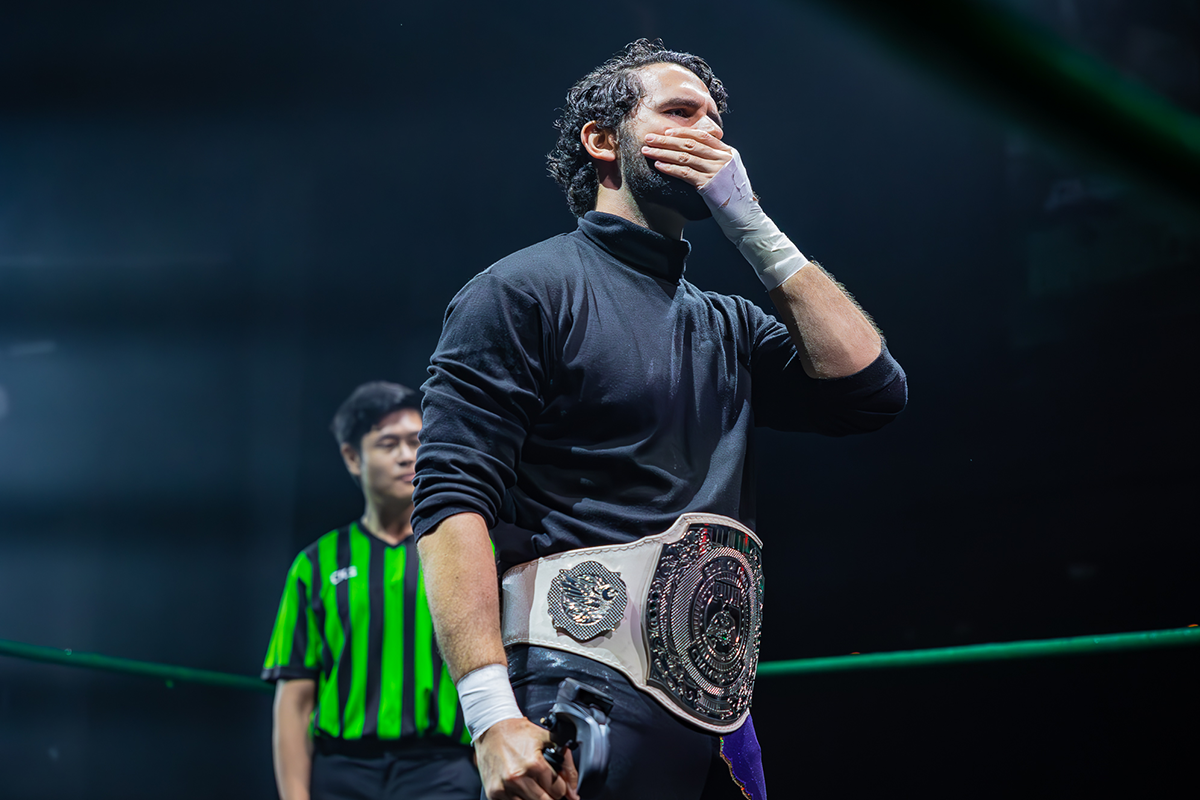
To find out how they pulled it off, I consulted Jordan McTeare, head of international growth and performance for Eucalyptus Health. McTeare is a previous Pro-Wrestling Australia Soul of PWA Champion and two-time tag team champion, known in the ring as ‘Unsocial Jordan’.
He suggests that escapist fiction is needed more than ever.
“We live in a time where there is so much doom and gloom, that people are desperate for escapism. There’s real emotion that happens, because you’re completely bought in and engulfed in this world,” he said.
He distinguishes feigned authenticity from escapist fiction, suggesting that while one pulls the wool over an audience’s eyes, creating distance, the other draws them closer, with a story in which they’re invited to participate.
McTeare wonders if this longing for consistent fiction has brought wrestling to the fore. After all, most entertainers in public are themselves. Wrestlers, though, often appear in character.
“If Johnny Depp is at a game, (he doesn’t pretend to be) Jack Sparrow,” McTeare notes. “Danhausen – everything he does is authentic to his character, anywhere he is.”
McTeare further suggests that brands could learn from wrestlers’ mastery of distinctiveness. To create Unsocial Jordan, McTeare layered a catchphrase, black turtleneck, and signature pose.
“You need to build consistency for people to have recall and buy-in” he argues. “If you can’t be drawn as a cartoon and recognised instantly, you haven’t done enough to differentiate yourself.”
The world of pro-wrestling can teach brands a surprising amount about the pursuit of authenticity. Both where it’s crucial, and where it might cloud genuine connection.
1. Consumers don’t mind fiction. They mind deception.
Authenticity isn’t the only path to trust. In fact, obvious fiction often feels more honest than carefully manufactured authenticity. The danger isn’t fantasy; it’s pretending that fantasy is reality.
Even regulated categories can embrace this. Imodium recently went viral with creator Maddy MacRae, contrasting an attacking spicy taco with refreshingly plain-English disclaimers. The joke was obvious. The honesty was too.
2. Build characters, not campaigns.
The strongest brands don’t just have one distinctive asset. They create characters with clear personalities that behave consistently over time. People don’t just remember them; they build relationships with them. On Instagram, consumers now address television show requests to the Paramount+ goat. If he’s reading this… more MobLand, please!
3. Invite participation, don’t demand belief.
The Knicks weren’t asked to literally believe in curses. They were invited into a story everyone could enjoy together. The most effective brands create worlds that audiences want to play inside, rather than messages they simply consume.
Perhaps we’ve been asking the wrong question all along.
Rather than asking how brands can appear more authentic, maybe we should be asking how they can become more memorable, more distinctive and more emotionally generous. Because in a world increasingly sceptical of anything claiming to be ‘real’, the most honest thing a brand can sometimes do is stop pretending and give people a story worth believing together.