As budgets increasingly reallocate to retail media, the channel settles into its role as a central player in holistic media planning. Yet with scale comes frustration; advertisers want better and more consistent metrics across networks.
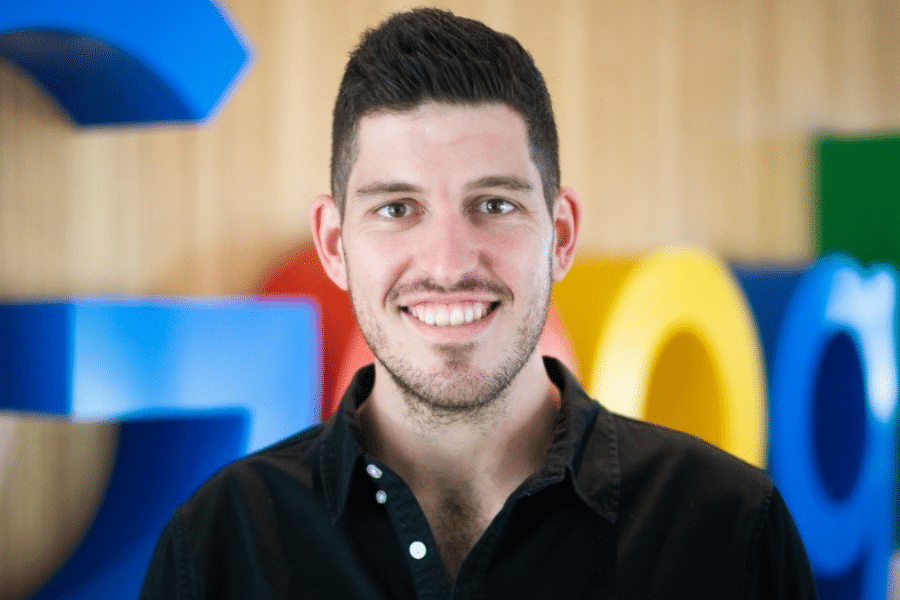
Raphael Hodes, retail media lead at Google, suggested at this year’s IAB Commerce and Retail Media Summit in Sydney that “we need to move away from last click”. For a company known to rely on last-click attribution in its analytics model, the comment prompted a flurry of gasps from the audience (and even a note from IAB CEO Gai Le Roy that that will be the trade press headline – oops).
Joining Hodes on the panel was Alistair Leathwood, head of analytics at Circana, who noted, “it seems like we should know everything—who’s seen what, where, when, for how long— but for a bunch of perfectly sensible technical, commercial, legal and philosophical reasons, we can’t”.
Echoing Hodes’ lamentation over last-click attribution, Leathwood added: “You’ve probably been influenced by 10-15 channels before you bought the thing that you bought. How do we ascribe and attribute meaning to each of those different channels?”
“The closed loop nature of retail media by its very essence means we can get closer to it. If you can tell me who saw what, I can tell you who bought what, and together, we can figure out whether that’s what made the difference,” he said.

How, then, to reconcile the gap between what marketers want to know and what is available to them?
“What’s interesting is that we’ve got this mix between media people and trade marketing people, and everyone brings their own thoughts on what we should measure. It needs to start with the objective we’re trying to solve,” Hodes said.
“There needs to be more nuance than just driving sales, for instance the things that contribute to sales in terms of customer behaviour a little bit further up the funnel.
“If we want to talk about retail media as a full funnel capability moving forward, then we need to move away from everything being measured on last click, 24 hour sales,” he said.
“Whether it’s search behaviour, brand lift, video consumption, all these other things that are going to establish media, not just as a line item on a media plan or just traditional media with data and measurement, but a really unique proposition for a brand as part of their retail partnership. I think that’s what we need to go but it starts with getting clear on what are we solving for at the outset,” he added.
Andy Ford, head of data intelligence and measurement at Coles 360, cautioned against “looking only at what is easy to work out – ROAS, sales, badly measured uplift over a two week period.
“We need to push a bit harder and live up to what advertisers aspire. The more sophisticated measurement tools, such as incremental or regression, are going to be targeted towards the people with bigger campaigns, longer time periods, which obviously correlates highly with higher investment levels,” he said.
“I don’t think that means that you can’t get use out of the measurement that’s available. It’s important to look at the pros and cons; if you understand what they’re good at, what they’re not good at, you can build out a pretty useful toolkit to answer the questions you want.
“Synthetic data will be the big push for the next year,” he added.
Now in its third year, the IAB Australia Retail Media State of the Nation 2025 Report found ROAS remains the most sought-after performance metric (78 per cent), followed closely by incremental sales (71 per cent), with 38 per cent of brand advertisers citing ROI demonstration as a key barrier to further investment.

Coles 360 works with a vast array of suppliers and advertisers, meaning the company is well-versed in taking a full spectrum approach. It certainly comes with its challenges, though.
Ford split these challenges into two areas: products and the way that they get into people’s hands.
“In terms of products, what we’ve been doing, beyond background, is building a roadmap of the measurement products we either have built, or are going to build. And the way I think about this is a grid. There’s a grid of all the channels we have, all the combinations of channels we have, and across the top, there’s a ‘basic,’ ‘better,’ ‘best’ in terms of the products that we need to do,” he said.
“From a ‘basic’ point of view, we could be looking at pre, post type methodologies that’s enough in certain situations, does scale across channels, can be automated, etc, and from a ‘best’ point of view, looking at more incremental techniques.
“If I look at Coles online, or if I look at Coles at a store, we have some great incremental techniques in the best box already tipped, and that’s been working with Socana and building those out.
“We are currently fully automating our ‘basic’ across channel as well, but we’ve got a few other gaps which we’re spending out as we go, whether we build them in house partner, it’s things that we’re working out at the moment.
“The other area is getting into people’s hands. We’ve been building up a logic and doing feasibility studies to work out which types of measurements suit which type of media channel and investment levels. There’s no point running an incremental test if it never stood a chance of getting a result.
“We’re trying to make sure that we’ve got the logic to then assign a piece of measurement, the right piece of measurement to. The agencies are increasingly playing a bigger role, and they’re more savvy in terms of quickly understanding these results. So it is shifting, though a majority is still spent working with freight teams”.
It’s important to note, though, that while marketers might not have access to the plethora of data they dream of, that might not even be desirable. As Leathwood noted, there are philosophical as well as technical, legal and commercial reasons advertisers can’t access full customer insights. It requires, then, a creativity and collaboration, key themes from this year’s summit.