




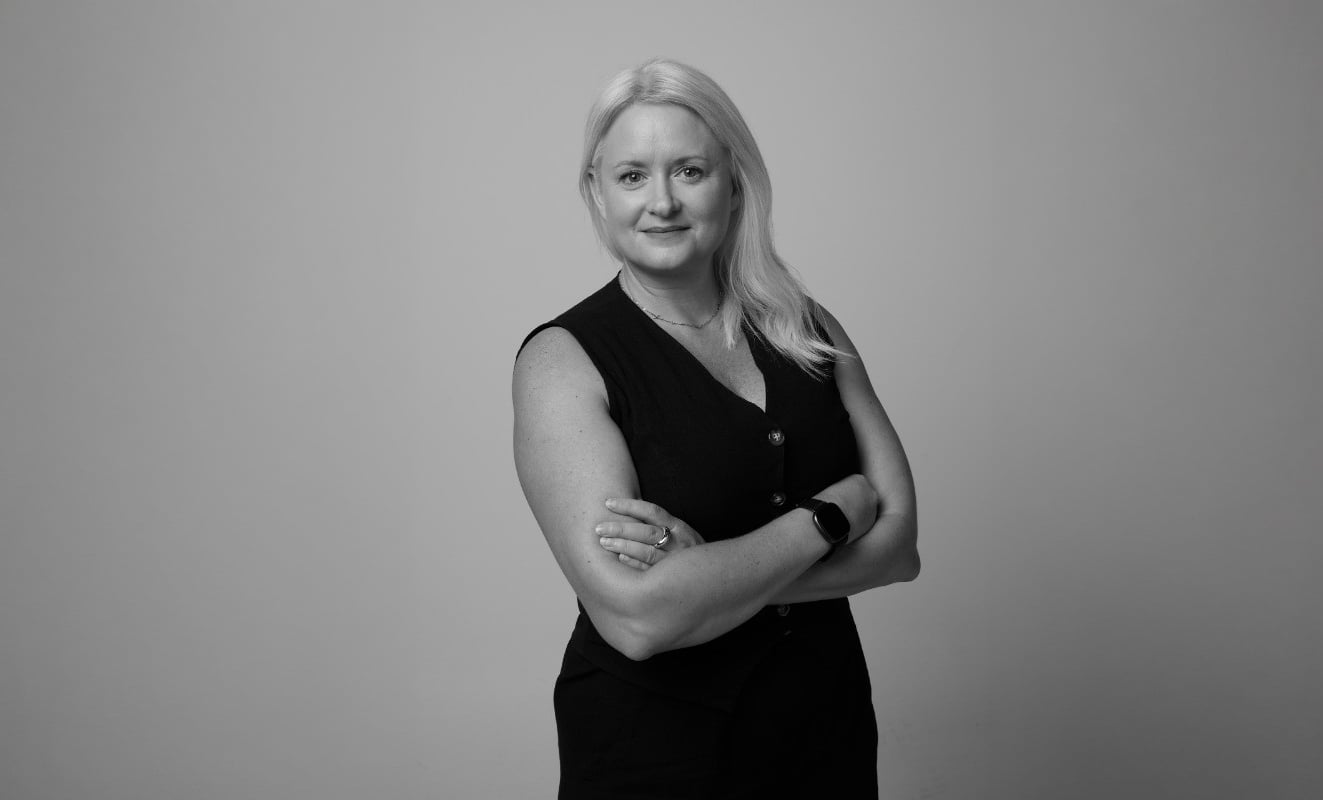
In this exclusive op-ed, Leo Australia’s CEO, Clare Pickens, shares from inside the Creative Business Transformation Jury room at Cannes. This year, one thing was made clear – the future of creativity lies not in making more content, but in ideas that change the world.
Being invited to judge at Cannes Lions is one of those career moments that makes you stop and reflect.
Not just because of the prestige of the festival, but because of the privilege of sitting alongside an extraordinary group of people from every corner of the globe – leaders with wildly different backgrounds and perspectives, all brought together by a shared belief in the power of creativity.
The conversations are as valuable as the work itself. You’re exposed to different markets, business realities and cultural lenses, yet united by one ambition: to identify the ideas that genuinely move our industry forward.
For me, there was another layer of significance. I was judging the Creative Business Transformation category – a discipline that sits incredibly close to my heart.
In many ways, it reflects why I returned to the industry after a hiatus.
Creativity has never been more democratised. With the right tools, almost anyone can make content or generate ideas. That means our value is no longer simply in making communications; it lies in applying creativity upstream to solve business problems, unlock opportunities and reshape organisations.
That’s also why it was particularly meaningful that Leo Australia won a Silver Lion in this category last year for our sustained transformation work with Suncorp, the foundations of which set us up to take home the Titanium Grand Prix at the festival this year.
Seeing creativity rewarded not just for changing perceptions, but for changing businesses, is an important evolution for our profession.
Now entering its sixth year, Creative Business Transformation acknowledges something many of us have recognised for some time: creativity is no longer confined to advertising. Increasingly, its greatest value is as a strategic capability that can reinvent products, services, business models and entire organisations.
The judging also highlighted that the category remains wonderfully – and sometimes frustratingly – open to interpretation. What truly constitutes transformation? Is it a brilliantly executed extension of an existing strategy, or something more fundamental?
As a jury, we consistently came back to a few principles.
The work had to demonstrate meaningful business impact and the potential for sustained change. The strongest examples unlocked new revenue streams, reached untapped audiences or fundamentally changed how a business created value. And perhaps most importantly, creativity had to sit at the centre of the solution. Technology can enable transformation, but technology alone isn’t transformative.
Once behind closed doors, a few themes emerged from the work itself.
First, true transformation rarely stops at the walls of an organisation.
The strongest entries reshaped entire ecosystems, using a brand’s resources and influence to tackle broader social and sustainability challenges. Partnerships between larger organisations and smaller suppliers or communities were a recurring theme.
Second, the line between innovation and creativity is becoming increasingly blurred.
Sometimes the most creative idea isn’t a campaign at all; it’s a new process, product or business model.
Interestingly, AI took a noticeable back seat. There were surprisingly few entries built around artificial intelligence, perhaps a reminder that transformation remains, at its core, a human challenge.
And finally, transformation takes time.
We saw brilliant strategic thinking and exceptional execution that had simply arrived at Cannes too early. PR metrics can demonstrate momentum, but they don’t yet prove transformation.
No piece embodied these themes more beautifully than our Grand Prix winner, The Wedding Rice from WikiFarmers.

It was unanimously loved in the room. A deceptively simple idea that transformed agricultural waste into economic value by repurposing imperfect rice grains for weddings.
Easy for farmers to adopt, highly replicable and already delivering impact, it was a powerful reminder that transformative ideas don’t belong exclusively to multinational corporations with vast resources.
Two other pieces stayed with me because of what they represent about the future of this category.
Santa Maria Pueblo Hotel reimagined hospitality as a vehicle for cultural and economic regeneration, demonstrating how business can help preserve and revitalise entire communities.
Meanwhile, Heineken’s Tocayos showed the power of using business models to create new forms of participation and shared value.
Collectively, these pieces pointed to a clear direction for Creative Business Transformation. The future of creativity lies not in making more things, but in changing how things work. And increasingly, the work that matters most is the work that creates value not just for a company, but for the wider world around it.

If there was one lesson I took away from judging at Cannes this year, it’s this: our industry’s future won’t be defined by who can make the most content or master the latest tool. It will be defined by who can apply creativity to solve the problems that matter most to business and society.
That’s where our greatest value lies – and where some of the most exciting work in the world is now emerging.


