

Cairns Crocodiles 2026 offered a sharp read on where the advertising industry is heading, writes Melinda Petrunoff, Pinterest’s Managing Director ANZ.
Across the program and in conversations with clients and partners, one message kept coming through: attention still matters, but it is no longer enough.
The bigger question is what happens next, how brands shape consideration, influence decisions, and help people move closer to action.
In a market crowded with more channels, more content and more competition for time, the winners will not be the loudest. They will show up earlier, in better environments, and in moments when people are open to ideas.
Here are the five things Cairns reinforced for me.
1. Conviction still cuts through
The opening conversation with Nedd Brockmann set the tone. What stood out was not just the scale of what he had done, but the clarity behind it.
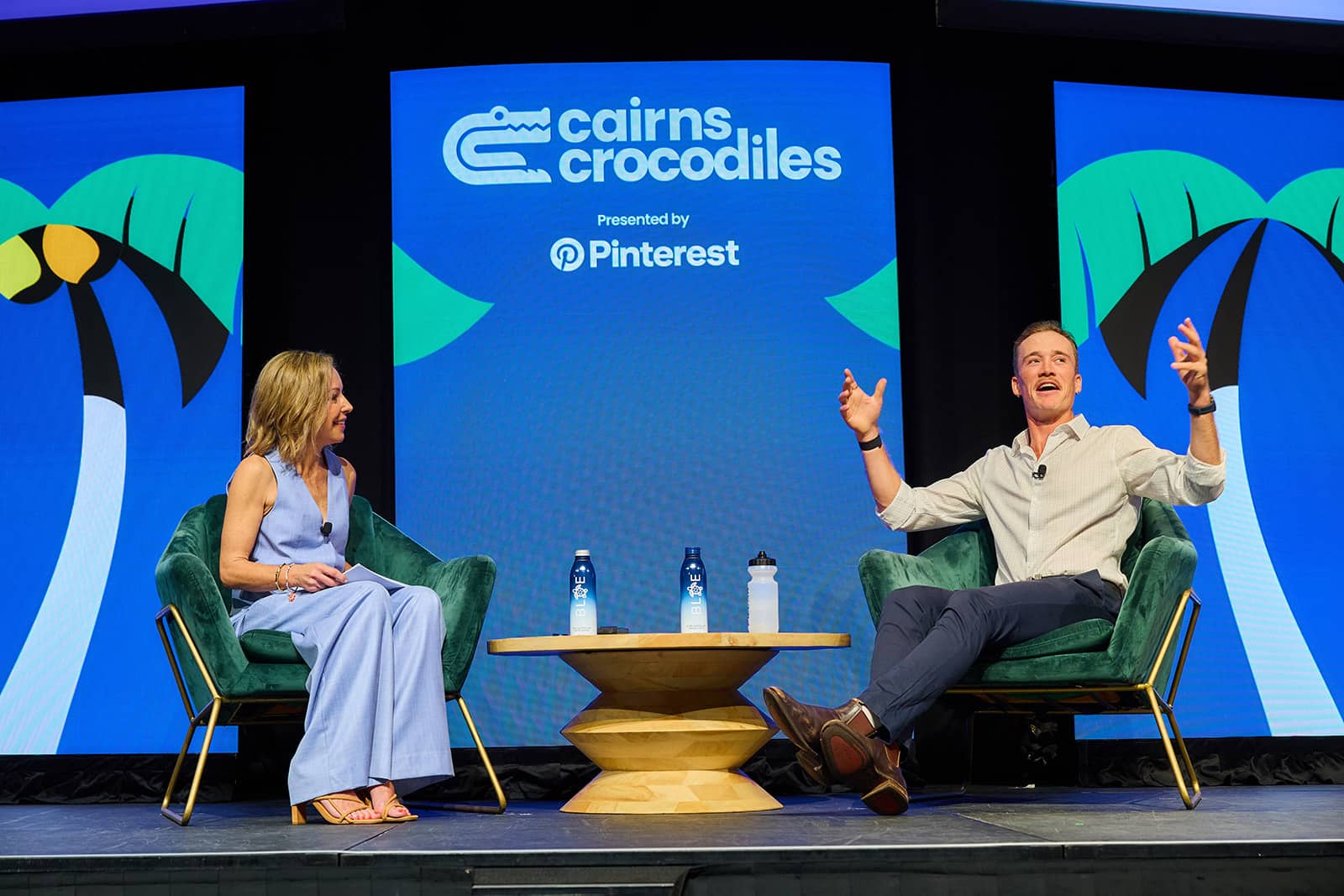
That idea came through in different ways all week. Jon Evans spoke about the best marketers acting more like founders than “walking press releases”. Taika Waititi made a similar point creatively: the best work often comes from discomfort, instinct and uncertainty, not from sanding off every edge.

Different speakers, same message: clarity and conviction still matter. They help people decide, move faster and take a position when the easier option is caution. In a noisy environment, decisiveness is a differentiator.
2. Attention is only valuable if it creates momentum
One of the sharpest ideas of the week came from Xanthe Wells’ keynote, Design the Exit.
We have spent years getting better at earning, measuring and optimising attention. At the same time, content has become cheaper, faster and more abundant, and AI will only accelerate that trend.

So the question is no longer just how to get seen. It is what happens after.
What do you help someone do next? Help them decide. Help them plan. Help them move closer to action.
That feels like a more useful test for creative work, media and platforms than attention alone. The work that will stand out will not just be visible. It will be useful. It will reduce friction and make the next step easier, whether that is saving an idea, discovering something new or pressing “buy”.
3. Influence starts well before search
Another theme that came up repeatedly in Cairns was how much of the industry still overweights the final moments of intent.
Our Hemingway’s Brewery panel touched on this well. Search matters, and performance matters. But by the time someone types a query, a lot has already happened. Preferences have formed. Options have narrowed. Intent is already taking shape.

If growth is getting harder to find, and Sir Martin Sorrell was clear about the structural pressure facing the industry, then shaping demand earlier becomes even more important.
People do not move from unaware to decided in a straight line. They explore. They compare. They imagine. They refine.
Influence happens in those earlier, less tidy stages, often before a brand sees a search term or a click. That is why context matters. Someone who is open to ideas, planning something or working out what fits is in a very different mindset from someone passively scrolling. Brands that show up in those exploratory moments earn a different kind of consideration.
4. Originality still matters
If there was one creative tension running through the week, it was this: too much of the work around us now feels similar.
Paula Bloodworth’s critique of homogenous advertising hit home because it recognised something many people are already feeling. Too many decisions are being made as insurance. Too much work is shaped by frameworks, optimisation and risk mitigation before it has had a chance to be interesting.

The result is often work that meets the brief, but does little to move people.
That is why moments like the drone show above the cane fields, thanks to AURA Drone Shows, stood out: it was specific, unexpected and kept showing up in conversations afterwards.
What several speakers pointed to, in different ways, was the need to let more humanity back in. More instinct. More specificity. More room for something less perfect and more alive.

The best work still needs rigour. But it also needs a point of view. It needs to feel like it was made by people, for people. Originality is not just a craft question; it is a business question, because familiar work rarely changes minds or creates new demand.
5. The most valuable platforms reduce the distance to decision
That was the clearest business takeaway from Cairns.
The platforms and brands that will create the most value in the next chapter will not be the ones generating the most content or competing hardest for attention. They will be the ones that are most useful when people are forming preferences, making plans and deciding what to do next.
If you only show up in conversation, you are managing perception. If you show up in visual discovery, you are shaping demand.
That calls for a different mindset from marketers. In a crowded market, usefulness matters more. Context matters more. Positive environments matter more. The best marketing does not just capture attention. It helps people make progress.
For advertisers, that raises the bar for where and how they show up. It is not just about reaching people. It is about reaching them in moments where they are open to ideas, weighing options and closer to acting on what they find.
That is where Pinterest has real strength. People come to the platform to explore ideas with purpose, refine their options and move closer to action. They are not just consuming; they are planning, saving and deciding.
____
If you’re thinking about how your brand can show up earlier, more positively and closer to decision, reach out to our team or visit business.pinterest.com.