
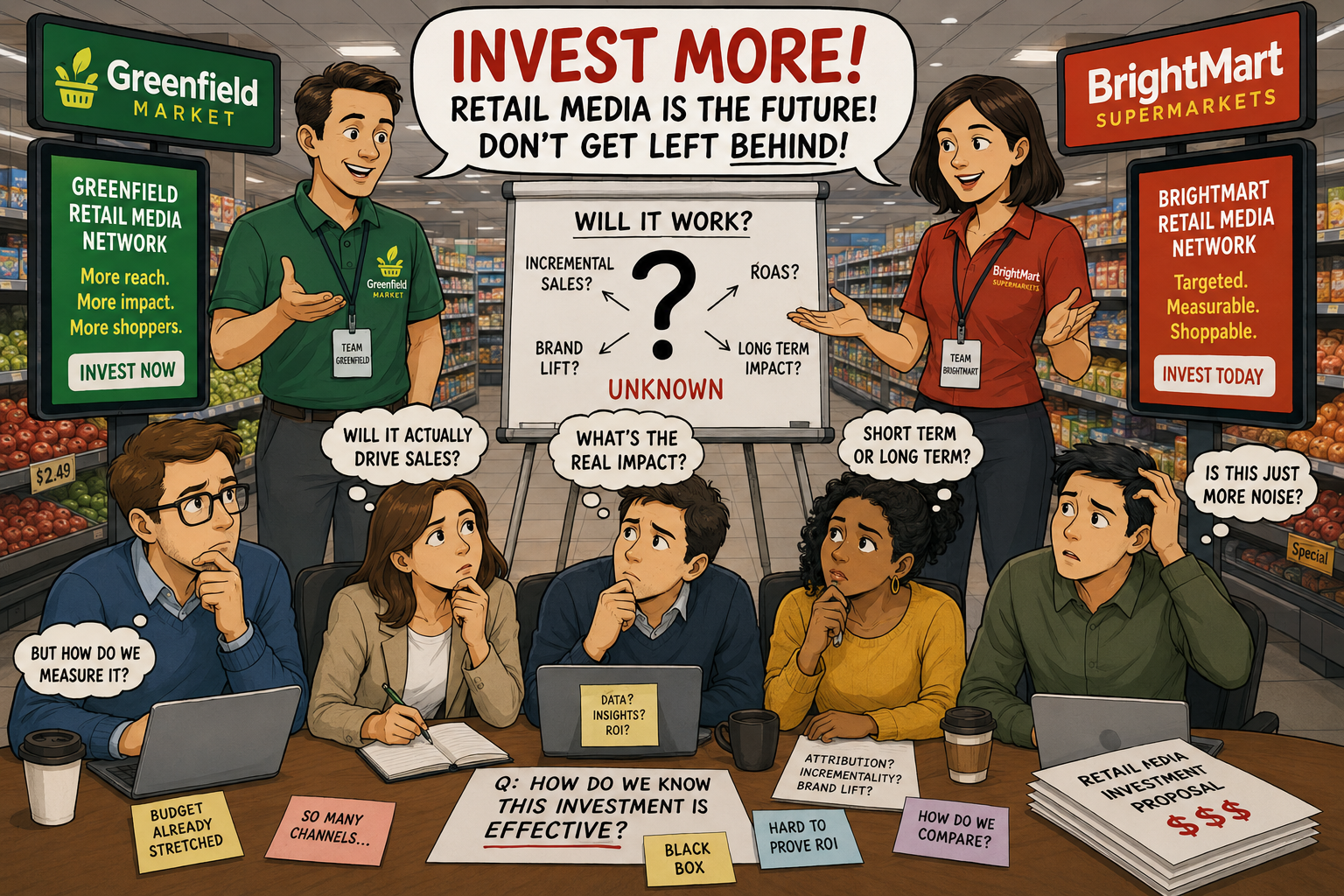
More than half of brands say they feel pressure from retailers to increase their investment in retail media despite mounting concerns about its effectiveness and trust in retail media networks, according to new research by Arktic Fox and Six Degrees.
In Australia, $2.6 billion was invested in retail media in 2025, with forecasts that investment is likely to grow by 10-15 per cent this year.
A study of more than 100 marketing, digital, eCommerce and retail media leaders found that 53 per cent of brands plan to increase their spend in retail media, despite only 5 per cent reporting high trust and 44 per cent reporting low trust in retail media networks.
Around 54 per cent of brand leaders feel pressured by retailers to lift their spend without sufficient budget or capacity, and nearly half of the brands polled manage five or more retail media channels.
A growing number of marketers are struggling to justify lifts in spend at a time when many marketing budgets are either on pause or being slashed.
Part of the problem is a lack of consistency in standards, formats and measurement across different networks, cited by 61 per cent.
Nearly three quarters (73 per cent) find it difficult to quantify the return, uplift and value from retail media spend.
“I talk with these brands every single day, and they are all telling me that they can’t see the return on investment, but they have to invest because if they don’t, [retailers are] going to go sell it to their competitor and it’s going to impact their relationship,” said Teresa Sperti, a director of Arktic Fox, a digital transformation consultancy for senior marketing and business leaders.
“What brands are saying is that they are investing in retail media because they have to because they have to maintain that relationship with a retailer, not because it’s actually effective.
“There will come a point where there’s a ceiling of how much brands can invest in retail media and retail media networks will need to be able to demonstrate the effectiveness piece of the puzzle. They can’t trade on relationships or FOMO.”
The Inside Digital & eCommerce 2026 report found that Amazon Ads has been the greatest beneficiary of increased spend on retail media.
More than half (52.8 per cent) of brands now leverage Amazon Ads as part of their retail media strategy, up from 33 per cent a year ago, which should signal a warning for retail media networks to sharpen their game.
Sperti told B&T that only a third of marketers report ‘very strong’ capability to leverage retail media networks in spite of throwing large sums of money at the channel.

An eCommerce surge
The report also found a strong correlation between organisational prioritisation of eCommerce and commercial performance.
Among retailers where eCommerce is viewed as integral to the business, 96 per cent reported more than 10 per cent year-on-year eCommerce revenue growth. In contrast, where eCommerce was not considered as an integral part of the business, half of leaders reported revenue growth of less than 10 per cent growth or even declining performance.
Owned marketplaces (a retailer’s eCommerce platform) continue to gain momentum, with 30.3 per cent of retailers now operating an owned marketplace model to expand range and unlock new growth opportunities.
Quick commerce (rapid delivery services like Uber Eats) is also becoming a more prominent part of the retail landscape. Nearly one in four retailers already leverage quick commerce platforms, while 28 per cent plan to trial the channel over the next 12–18 months and a further 12 per cent intend to increase investment.
“The data is unequivocal – retailers that treat eCommerce as core to their business are pulling away from the field. But what’s equally striking is how the growth agenda is evolving. Owned marketplaces and quick commerce are no longer emerging concepts; they’re becoming table stakes for retailers serious about capturing the next wave of digital growth.” Sperti said.