We’re getting older. Both as people and a society. While AI and the climate crisis dominate headlines and social media posts, the effects of an ageing population are not as widely discussed. The impacts on how people live and shop, however, could be just as significant.
From the rise of older influencers to the fashion week’s most age-inclusive runways yet, a new playbook is emerging, and brands need to catch on: ageing not as decline, but as evolution and opportunity.
Are Media’s recent ‘The Good Life’ event in Sydney explored the potential for brands and society of a pro-ageing mindset. Forget the ‘older generation,’ this is the longevity generation, and retirement just got a rebrand: rewirement, according to Michael Clinton, founder of ROAR Forward.
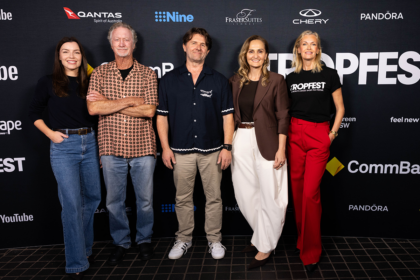
Toby Boon, Are Media’s head of client strategy, was joined on stage by Clinton, Jocelin Abbey Are Media’s GM of homes and lifestyle, and Susan Armstrong, GM of entertainment. B&T pulled Boon and Clinton aside after their session to learn more about the opportunities for brands amid shifting demographics.
View this post on Instagram
“Brands are lagging behind, and the culture has moved on without them,” Clinton said.
“Often, when older people are featured in ads, you see the stock image of an elderly couple walking hand-in-hand toward a sunset. The 20th century’s idea of ageing is linear, and it’s not only outdated, it’s inaccurate,” Clinton added.
But representation shouldn’t just happen in ads and on the screen. It needs to happen around the table; in brainstorms, the boardrooms, and the briefs.
“We’re now living in a five-generation workforce for the first time in history. Yet creative agencies are still overwhelmingly young, and that’s a problem. If you’re trying to connect with a 50-plus audience, but you don’t have anyone over 35 in the room, you’re going to miss the mark,” he added.
“I once worked with a 64-year-old creative director and a 24-year-old strategist. Watching them share ideas and learn from each other was hugely inspiring. That’s where innovation happens,” Boon said.
People turning 50 today realise they may live another 40 or more years, and they are challenging everything we have been told about the second half of life. This group of people is starting new careers, creating new lifestyles and finding love.
There’s a particularly potent opportunity for brands with older women. As the population ages, and women continue to outlive their male partners, women over 50 are set to inherit more than two-thirds of a nearly $5 trillion intergenerational wealth transfer in the coming years. This makes them the most powerful demographic by spending power. Plus, they have the time to use their money but are being ignored and missed by brands that prefer to feature younger women.
“We are in the early stages of a social phenomenon that we call The Power Shift, with women over 45 set to become the driving economic force in Australia. They are reshaping what it means to live, work, and spend. They are wealth creators, travellers, investors, and lifestyle leaders. The longevity economy is one of the most significant growth opportunities of our time, and brands that pivot early will gain an unparalleled advantage,” Jane Huxley, Are Media’s CEO, said.
Accuracy over ‘Authenticity’
Clinton honed in on the power of language and how words shape meaning and understanding. “Authenticity” has certainly become a buzzword in advertising, but what does it actually mean? The panel of speakers suggested “accuracy” might be a better way to look at the phenomenon.
The advertising industry has a history of performative gestures; an older person in a campaign as a token, rather than a reflection of reality.
“It should be organic, it shouldn’t be a stunt. You can do that through multigenerational casting, and by showing people of all ages living in contemporary, active ways,” Clinton said.
“People over 50 can spot inauthenticity from a mile away. They know when they’re being pandered to, and they reject that,” Boon said.
Some brands have already begun to retire the concept of anti-ageing. Campaigns such as Dove’s ‘Beauty Never Gets Old’ and Estée Lauder’s ‘Because of My Age’ are rewriting the narrative, replacing covering up with celebrating ageing.
Estée Lauder’s campaign featured Paulina Porizkova, who modelled for the brand in the 80s and 90s.
View this post on Instagram
The travel industry, too, is catching onto older consumers having greater spending power than ever before. Longevity wellness clinic retreats, longevity resorts, cruises, and fitness-focused adventure travel are all examples of how the industry is changing to accommodate those living longer.
“Retirement has to be completely reimagined in the next years. It’s not longer a passive time, but an active one, where people might go back to school, start a business, and travel,” Clinton said. He called it “rewirement”.
The global market projections for wellness tourism is project at $1.3 trillion in 2025. Offerings go beyond the traditional spa treatments combining medical science, holistic health and community engagement.
The Industry’s Structural Blind Spot
“There are still media planning tools that stop at 55-plus. This age group is lumped into one category, blurring them into a misunderstood demographic,” Boon said.
“That might’ve worked in the 1960s, when people retired at 65 and didn’t live much longer. But now? People are working into their 70s. They’re dating. Travelling. Launching second careers. And brands are still stuck selling them stairlifts and retirement plans,” he added.
Brands can, at times, be as powerful as the entertainment, film or media industries at sparking cultural trends, shaping language and influencing perception. But now it seems that many are lagging and this powerful, older segment of consumers is noticing that their lived realities aren’t reflected in advertising—a fact which could hurt the bottom line.