


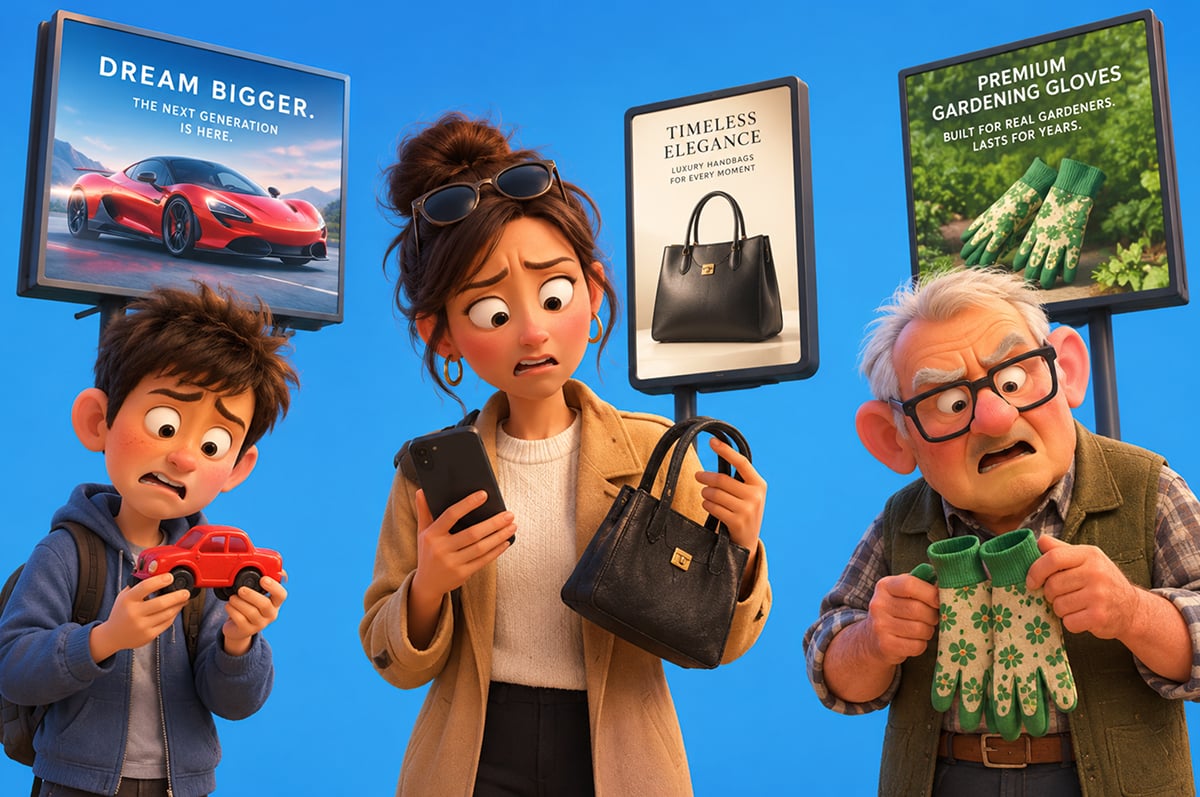
Almost half of Australians say they’ve been duped by a product advertised using artificial intelligence (AI), with new research warning that AI-generated marketing could be costing brands consumer trust.
Research from Auros.ai, based on a survey of 1,000 Australian consumers, found 42 per cent had felt misled by AI-advertised products, with 14 per cent saying it had happened multiple times.
The findings suggest brands face a growing challenge as AI-generated and AI-enhanced product imagery becomes more common, with consumers increasingly questioning whether what they see online reflects what they will actually receive.
Almost six in 10 Australians (59 per cent) said they did not trust products advertised using AI to arrive as described, while 44 per cent said they were less likely to purchase a product if AI had been used in its advertising.
The research also found 45 per cent of Australians actively go out of their way to do business with brands that do not use AI in their advertising, while 42 per cent believe products marketed using AI are lower quality.
Only 34 per cent of respondents felt confident they could distinguish a real product from an AI-generated one when shown an image, while 27 per cent lacked confidence in their ability to tell the difference.
The confusion was particularly pronounced when real products had been enhanced using AI. Just eight per cent correctly identified a real, AI-enhanced 3D waterfall rug, with 74 per cent believing it was entirely AI-generated. Similarly, 62 per cent mistook a real, AI-enhanced car-engine coffee mug for a completely AI-generated product.
“AI is making it easier to create compelling product imagery, but growing consumer scepticism means even genuine products risk being dismissed as fake,” said Paul North, general manager APAC at Auros.ai.
“Brands need to think carefully about how they use AI in their advertising, and understand what makes an ad feel credible to customers.”
The research also highlighted the potential financial consequences for consumers. Among Australians who had purchased products advertised using AI, 42 per cent said they had spent an average of $275 on a falsely advertised product.
That figure climbed to $357 among Gen Z consumers and $310 among millennials.
Beauty and cosmetics were identified as the product category most likely to use dishonest or AI-forward marketing, cited by 27 per cent of respondents. Clothing followed at 20 per cent, with supplements and wellness products at 17 per cent.
However, consumer attitudes towards AI are not entirely negative. While 35 per cent said there was no use of AI by an online retailer they would find acceptable, others were comfortable with applications such as visualising products in their homes (30 per cent), AI-powered search recommendations (27 per cent) and AI-written product descriptions (25 per cent).
The findings point to a distinction between using AI to improve the shopping experience and using it to create product representations that consumers may struggle to trust.
Despite concerns about AI advertising, the technology is still expected to play a role in the upcoming Christmas shopping season, with 48 per cent of Australians planning to use AI for at least part of their holiday shopping.
Finding the best prices was the most popular intended use, cited by 20 per cent, followed by comparing product reviews across websites (17 per cent) and generating gift ideas (16 per cent).
Yet just 29 per cent believed AI would make finding Christmas gifts easier, while 17 per cent expected it to make the process harder and 54 per cent anticipated no difference.
“There’s an opportunity for Australian brands to make Christmas shopping easier with AI, whether that’s helping customers compare products or research the right gift,” North said.
“But with consumers still in the experimental stages of AI-assisted shopping, it’s important that businesses test these experiences with real consumers to understand what adds value and where AI might undermine the trust they’re trying to build.”
The global study surveyed 4,000 adults, including 1,000 Australians.


