




It was a cool winter’s day in Leongatha when Erin Patterson sat down for lunch with her parents-in-law, Don and Gail Patterson, along with Gail’s sister Heather Wilkinson and Heather’s husband Ian. Little did the group know, a plot was brewing in the shape of a beef Wellington.
The story of the “Mushroom Killer” has dominated public discourse for the past two years, since that fateful day in 2023. The country, and in fact the world, became obsessed with the story of a woman who seemingly went to extreme lengths to murder her entire family with no apparent motive or record of past violence.
In the months that followed, Erin’s story spread far and wide, podcasts, social media breakdowns and more theories than you can ever possibly imagine. In a world obsessed with the true crime genre, Erin became the starring character.
But with Erin found guilty yesterday of three counts of murder and one of attempted murder, the case raises a pressing question: In an age where the court of public opinion is so loud and pervasive, is it ever truly possible to assemble a completely unbiased jury?
The Lunch That Changed Everything
Erin spent the morning of July 29, 2023, slaving over the recipe: five individual servings of steak, slathered with a mushroom paste and encased in pastry, each meticulously prepared and plated up on four grey plates, and one very special one for Erin. The family said a prayer, and they dug into the meal.
By the end of that evening, every guest had reported feeling incredibly ill. The next day, all four went to the hospital with severe symptoms, including Don, who had reported vomiting 30 times in just a few hours. Erin, seemingly thanks to her special orange plate, remained healthy as ever.
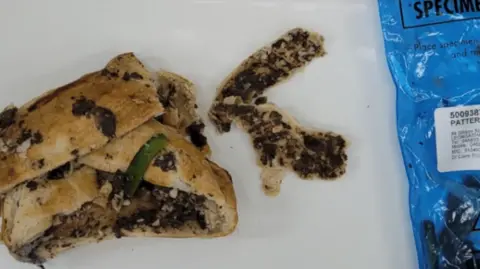
When questioned over her lack of symptoms, Erin put her health down to a long-term battle with Bulimia and a post-lunch binge on a whole orange cake her in-laws had brought with them and that she later brought back up in the bathroom.
With her relatives still suffering from relentless diarrhea and vomiting, leading to organ failure, Erin went about covering up any traces of evidence that might give away what happened that fateful day. Travelling to a local dump, she disposed of a food dehydrator that was later found to contain traces of poisonous mushrooms – an item that she claimed to never own, despite an instruction manual in her kitchen drawer and posts in a true crime Facebook group where she boasted about using it.
“I’ve been hiding powdered mushrooms in everything. Mixed into chocolate brownies yesterday, the kids had no idea,” she wrote in one.
She was also found to be using three phones around the time of the lunch (two of which disappeared shortly after the whole affair). The one handed in to police has been “repeatedly wiped”.
Erin struggled to answer questions about the source of the mushrooms. She said they were bought dried from an Asian Grocer in Melbourne – but couldn’t remember which one. She didn’t know the brand, and reportedly paid cash, leaving investigators swimming in a sea of red flags.
In scouring online posts and nature databases, detectives found that death cap mushrooms had been spotted in two nearby towns in the weeks prior to the meal. Erin’s internet history showed that she had been tracking the sightings, and her mobile phone location seemed to indicate that she was travelling to both areas.
Forensics experts later recovered photos on her phone showing what looked like death cap mushrooms being weighed on a set of kitchen scales.
Erin claimed that she had realised in the days after the lunch that she may have accidentally included dried mushrooms that she had foraged and mistakenly put in a container with store-bought ones, but admitted that she was too “scared” to tell anyone.
“It was this stupid knee-jerk reaction to dig deeper and keep lying,” Erin told the court.
Within a week of the whole affair, Gail, Don and Heather were all dead. Two months later, Ian awoke from a medically induced coma to discover his family were all gone.
In all the findings, however, what confused detectives was the apparent lack of a motive.
Erin’s ex-husband, Simon Patterson, testified that he and Erin remained friendly after their 2015 split; however, relations deteriorated in 2022 over financial, child support, and property issues. He noted Erin had once had a close bond with his family, especially his father.
However, Erin told the court she had felt increasingly isolated from the Patterson family. The prosecution presented evidence, including aggressive messages in which she called Simon a “deadbeat” and insulted his parents. Despite this, prosecutors didn’t offer a clear motive for the killings.
Erin’s defence argued there was no reason she would kill the only family she had left. They claimed her negative messages were harmless venting, and her behaviour after the deaths was that of a panicked woman fearing blame for an accident.
The prosecution countered that Erin’s lies were extensive and deliberate. They said she created a false narrative to align with uncovered evidence and rejected the defence’s claim of a mushroom foraging accident.
After a week of deliberation, the jury found Erin Patterson guilty. She awaits sentencing.
Can Fair Trials Survive The True Crime Era?
The verdict may be in, but the Erin Patterson trial leaves behind a much broader question for Australia’s legal system: how do we ensure a fair trial in an era when public fascination turns criminal cases into media frenzies?
Before Patterson even stepped into court, millions had already consumed hours of content analysing her character, behaviour and possible motives, not through evidence but via viral TikToks, true crime podcasts and tabloid commentary. With terms like “mushroom killer” cemented in the public lexicon and podcasts like Mushroom Case Daily soaring to the top of the charts, it’s difficult to imagine any juror walking into court truly unaffected.
This isn’t just a cultural curiosity; it’s a legal minefield. With major radio hosts under investigation for contempt, influencers dissecting courtroom transcripts in real time, and Facebook groups offering amateur theories, the Erin Patterson trial may be a case study in how the lines between justice and entertainment are increasingly blurred.
How can we expect jurors to put aside such saturation and base their verdict solely on what unfolds in court? And at what point must we rethink how juries are selected, or even how justice is served, when the public narrative threatens to overshadow the presumption of innocence?
Podcast Frenzy: Turning Trials Into Entertainment
It didn’t take long for the world to attach itself to the story of Erin Patterson. Within hours of the news breaking, the whole country was talking about the “mushroom killer”, each with their own unique opinion on just what could have happened.
Just four months after she was charged with the murders, the ABC made headlines with the launch of Mushroom Case Daily, a podcast that closely followed the case ad the trial that followed. Kristian Silva and producer Stephen Stockwell were on the ground every day, bringing audiences constant updates as the matter unfolded in the courts.

“From court recaps to behind-the-scenes murder trial explainers, the Mushroom Case Daily podcast is your eyes and ears inside the courtroom,” the description of the podcast details.
The success of the podcasts proves just how topical the affair was. Australians turned to the daily podcast in droves, pushing it up a staggering 136 places to land at #5 overall in the May Australian Podcast Ranker.
With 625,029 monthly listeners and more than 3.3 million downloads, the show became the ABC’s most successful podcast in a decade.
ABC’s Head of Audio on Demand, Jessica Radburn, said the podcast’s rise has been fuelled by strong audience engagement.
“This case is captivating Australia and the world, and the ABC has endeavoured to create a responsible and honest portrait of the trial as it unfolds,” she said. “Listeners are incredibly engaged with the show, with our team receiving hundreds of emails daily. I’m very proud that our team has been able to respond to this audience’s need and bring listeners as close to the court experience as possible”.
The ABC’s podcast wasn’t the only one to capitalise on the world’s fascination with the bizarre case, with The Mushroom Murder Trial and The Mushroom Cook also gaining traction globally.

When Commentary Crosses The Line
Alongside a wealth of podcasts discussing the matter, the case dominated our airwaves in all other forms, raising questions about contempt and the role the media plays in presenting evidence in an unbiased manner.
The Kyle and Jackie O Show has reportedly been referred to prosecution for contempt after Kyle Sandilandes said “You can tell by looking at her, just lock that bitch up” on air during the course of the trial.

On 16 June, Justice Christopher Beale told the Victorian Supreme Court in the absence of the jury: “This morning, the presenters of the Kyle and Jackie O radio show commented on this case during a news segment on their show.
“I have read a transcript of that commentary. I encourage all commentators to engage their brains before they open their mouths, as they may otherwise land themselves and their organisations in hot water. I will be referring this morning’s matter to the Office of Public Prosecutions for contempt proceedings.
“Our media unit will continue to closely monitor all media in relation to commentary on this case, whether the commentary be shock jocks, so-called influencers, social media commentators or legacy media”.
ARN declined to comment on the matter.
Beale was also reportedly considering proceedings for sub judice contempt against Mamamia “at a more convenient time” after a podcast was released and was later deleted.
“The discussion was full of highly prejudicial expressions of opinion,” he said. “I won’t repeat them here. After being directed to remove the podcast, it has been taken down.
“I remind media and podcasters that ignorance of the law is no excuse, and I remind them that the court’s media team will continue to monitor coverage of this trial to safeguard the trial’s integrity.”
B&T contacted Mamamia for comment but did not receive a response prior to publication.
The TikTok Courtroom
Outside of podcasts, the affair has remained in the public eye thanks in part to social media. Influencers have taken to the platforms to discuss the trial in droves, each providing their own unique twist on what might have happened.
@sogrom Why they even wasting time at this point 😩 #erinpatterson #erinpattersonmushroom #mushroomtrial #beefwellington ♬ original sound – Sogrom
@justicematterspod Poisoning a family with mushrooms #fyp #foryoupage #truecrimetiktok ♬ original sound – JusticeMattersPodcast
The Australian Communications and Media Authority declined to comment on the matter.
The Erin Patterson case will be remembered not just for its chilling details, but for the way it unfolded in the glare of modern media.
What began as a family lunch in regional Victoria became global headline fodder, dissected in real-time by radio shock jocks, true crime podcasters, and TikTok commentators alike.
As the justice system grapples with its verdict, Australia must now confront a more pressing question: in a world where every courtroom moment can be replayed, reinterpreted and reshaped online, how do we safeguard the integrity of a fair trial? Because in this case, the jury may have been twelve people, but the audience was millions.


