
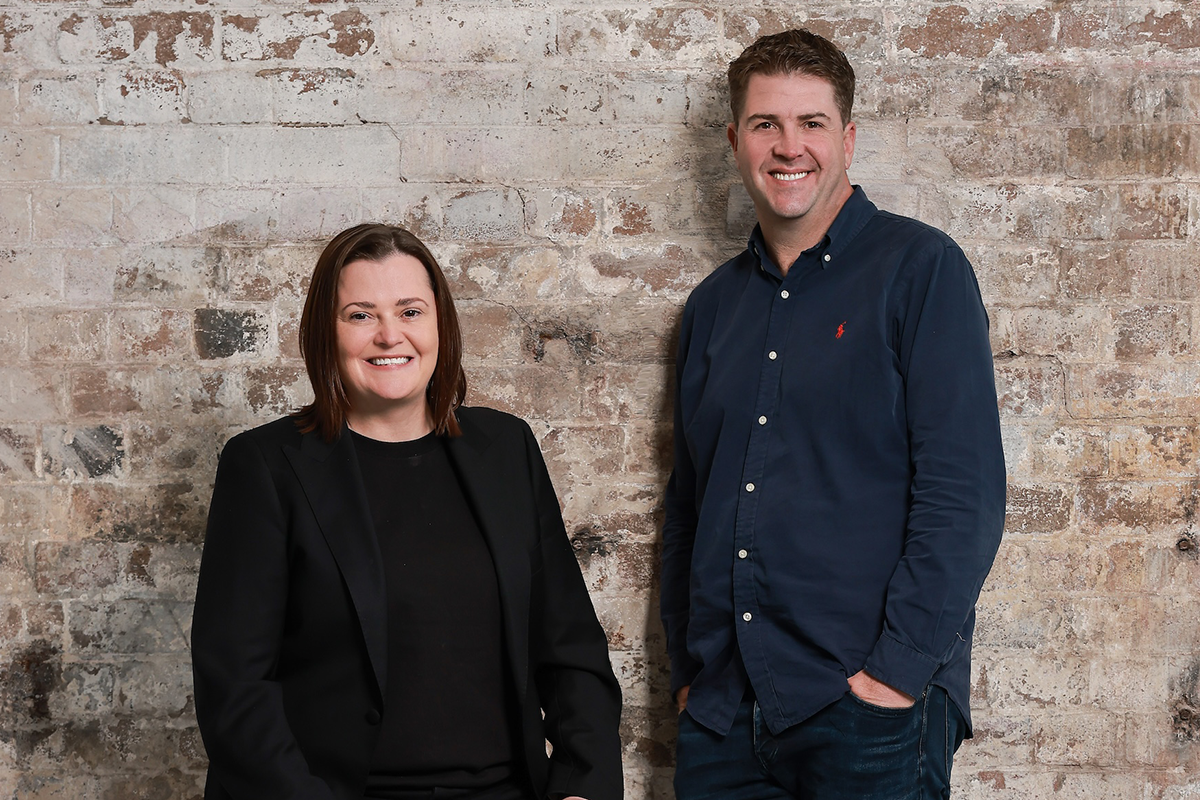
MiQ’s leaders are on a mission to educate the market and change how the adtech platform is perceived. In their most successful year to date after the launch of Sigma, MIQ managing director Fiona Roberts and chief revenue officer Chris Freel sat down with B&T to talk about how the business is evolving and its plans for the years ahead.
At the top of the agenda is shifting industry perceptions that, B&T has independently verified, still persist about the business.
“There’s a narrative steeped in history out there that MiQ is a black box or expensive or that it’s purely a performance-based business,” Roberts said.
“We’re just no longer that business and when we sit down and show people exactly what we do, how we do it, how we commercialise and partner with clients, more often than not their ideas about what we do completely shifts.
“We’re super transparent with our clients around the campaigns that we’ve run, where inventory is run, and the performance of those campaigns.”
So what does MiQ do, exactly?
The adtech platform, which first launched as Media iQ in Australia in 2018, enables marketers and agency partners to curate audiences and personas to target, plan, activate and measure campaigns across digital media channels, whether that’s digital video across multiple formats, TV, digital out of home, YouTube or elsewhere.
“Today, less than 20 per cent of our business is performance-based. The majority is actually brand-based programmatic, and largely in the screen space. I would say our biggest competitors now are those technology companies who are DSPs or SSPs,” Roberts said.
MiQ has recently increased the size of Sigma’s data spine to more than 600 feeds and 2.5 petabytes of information from global providers like Circana, TitanOS, Evertune and expanded AI architecture integrations with Databricks.
In Australia, it has strategic partnerships with OzTAM, Lifesight, Samba, Creatalytics and Google.
The “game-changer” for the business, according to Roberts, has been the roll out of its platform Sigma, which arrived in Australia last Spring.
Using AI technology, this allows clients and agencies to gather intelligence on brands and categories, build audiences, plan campaigns and to create ads for different formats in a single platform.
B&T road tested the tool to compare how much airline brands are spending across multiple channels, how to plan and optimise media investment in the right channels, and was shown how to create and execute campaigns.

“The benefit of Sigma, outside of all the insights it provides, is this idea of data democratisation,” explained Roberts. “If you think about how much the marketplace is consolidating, being able to have access to the type of data that we have invested in globally and also locally, and the resource to connect that data and make sense for clients, means we are literally putting that at the fingertips of people who are able to make faster decisions for better outcomes.
“With the click of a button, you can take everything that you’ve learned from an insight perspective and go straight through to a campaign being live within 60 minutes, which in programmatic is completely unheard of.”
MiQ works with holding company media agencies (which accounts for around 50 per cent of its client portfolio), independent agencies (30 per cent) and directly with clients (20 per cent).
The business, which has grown its revenues around 25 per cent in the past year due to Sigma, has found the most rapid growth among direct clients, although it’s still agencies that are its heartland.
“What we’ve found recently when we’ve been rolling out our Sigma demos is that it’s the strategists and planners within the agencies that are really grabbing hold of this tool,” Roberts added.
“They’re using it at the very early stages of trying to really uncover and discover what audiences are doing across multiple channels, and then building their strategy from there.”
Just over a year ago Chris Freel, the former CEO of UnLtd, Fairfax sales lead and adland veteran of more than 20 years, joined MiQ as chief revenue officer, his first adtech role.
Freel told B&T he has been “blown away” by the capabilities of the MiQ platform and the “smarts of the people” of his local team, which now numbers around 55, and global colleagues, including founders Gurman Hundal and Lee Puri.
Last October, MiQ invited clients and agency partners to a series of showcase events at MiQ’s Sigma House—situated in the penthouse of Sydney’s Crown Casino (see below).
“Interest in Sigma has been really growing, and it’s mostly in those small to medium businesses that are in-housing their own digital activity but need help as well,” he said.
“When we show them how we can help them with Sigma. In particular from a planning to an activation to an optimisation and reporting perspective; having everything unified under one roof is something that’s really compelling for them.”
In fact Sigma’s AI technology is not only benefitting clients, but is sharpening MiQ’s internal efficiencies, allowing staff to carry out tasks much more rapidly, freeing up time for MiQ support staff and client facing teams to spend in market.
“Previously, there was so much reporting and manual tasks, meaning that people were stuck at their desks. AI is helping MiQ to spend more time with clients understanding and solving their biggest challenges,” Freel said.
“Our traders can be in market more, talking about trading technical capabilities and strategy. Our account service people can be in market more, talking about campaign delivery, insights and what they would recommend to optimise. Our focus for the back half of this year and moving into 2027 is about having all of our people be much more client facing.”

Recently, MiQ restructured its commercial leadership team under Freel.
Experienced sales leaders Paul Bates was promoted to general manager – sales for Victoria and South Australia, and Hannah Cooper appointed to the newly-created role of general manager – sales for NSW, Queensland and New Zealand.
Madison Wappett was promoted to national commercial strategist. They will join group account director of Western Australia and South Australia, Trent McKeown, and key account director, Darren Perreira.
Another key member of the leadership team is head of product and analytics solutions Vishal Shah.
MiQ’s Roberts and Freel said that a combination of Sigma, a more client facing team and an outcomes-based approach is already yielding a retention rate north of 90 per cent and different conversations with clients.
“Although our core business remains managed services, we’re certainly seeing a big shift in the way that our customers are briefing us, what they’re briefing us on, and the conversations they want to have with us that are being unlocked just through demoing Sigma,” Roberts said.
“We have gone from single digit million dollar technology partnerships to double-digit technology partnerships, many of which are actually not even tied at all to activation. They’re tied to us building data analytics hubs for clients, and being able to build bespoke versions of Sigma that they can potentially white label within their own businesses.
“Some of our biggest agency partner deals in the history of MIQ have come off the back of Sigma.”
Looking ahead, MiQ wants to continue on its current growth trajectory, while evolving the Sigma platform to become more omnichannel.
There is another short to medium term goal that Freel would like to tackle.
“There’s obviously a revenue growth target from an MiQ revenue perspective…but beyond that, it’s around changing perceptions and educating around who we are and what we do,” he said.
“The more people get under the hood of MIQ and how that can help them as agencies and as clients, then the more we’re going to drive success for their business and ours. We want to shift the narrative and show people exactly what we can do.”