



Wearable tech brand ŌURA has said it will “vigorously defend” allegations that it misled consumers through marketing claims about the accuracy of its sleep tracking technology.
The lawsuit, filed on 20 August in the US District Court for the Northern District of California by plaintiff Madison Surber through the Clarkson Law Firm, alleges that ŌURA overstated the accuracy of its sleep tracking capabilities and deceptively marketed its smart rings as being able to accurately measure different stages of sleep.
The case argues that sleep staging requires monitoring brain waves, eye movements and muscle tone, rather than relying solely on the heart rate, movement and temperature data detected by a ring.
The allegations specifically target ŌURA’s marketing claims, including assertions that its devices achieve between 79 and 95 per cent accuracy in sleep staging compared to clinical sleep labs.

The plaintiff alleges that ŌURA’s rings lack neurological and ocular sensors, such as brain wave or eye movement monitors, and instead rely on peripheral data and artificial intelligence (AI) and machine learning estimates. The lawsuit contends this approach can be no better than a coin flip under certain conditions.
The filing accuses ŌURA of misrepresenting “faulty AI-based inference as reliable science” and taking advantage of consumers who struggle with sleep or have health concerns.

The lawsuit claims the marketing messages were spread across several channels, including ŌURA’s websites, retail partners and social media, with the plaintiff alleging the brand presented its sleep tracking capabilities as offering near-clinical levels of accuracy.
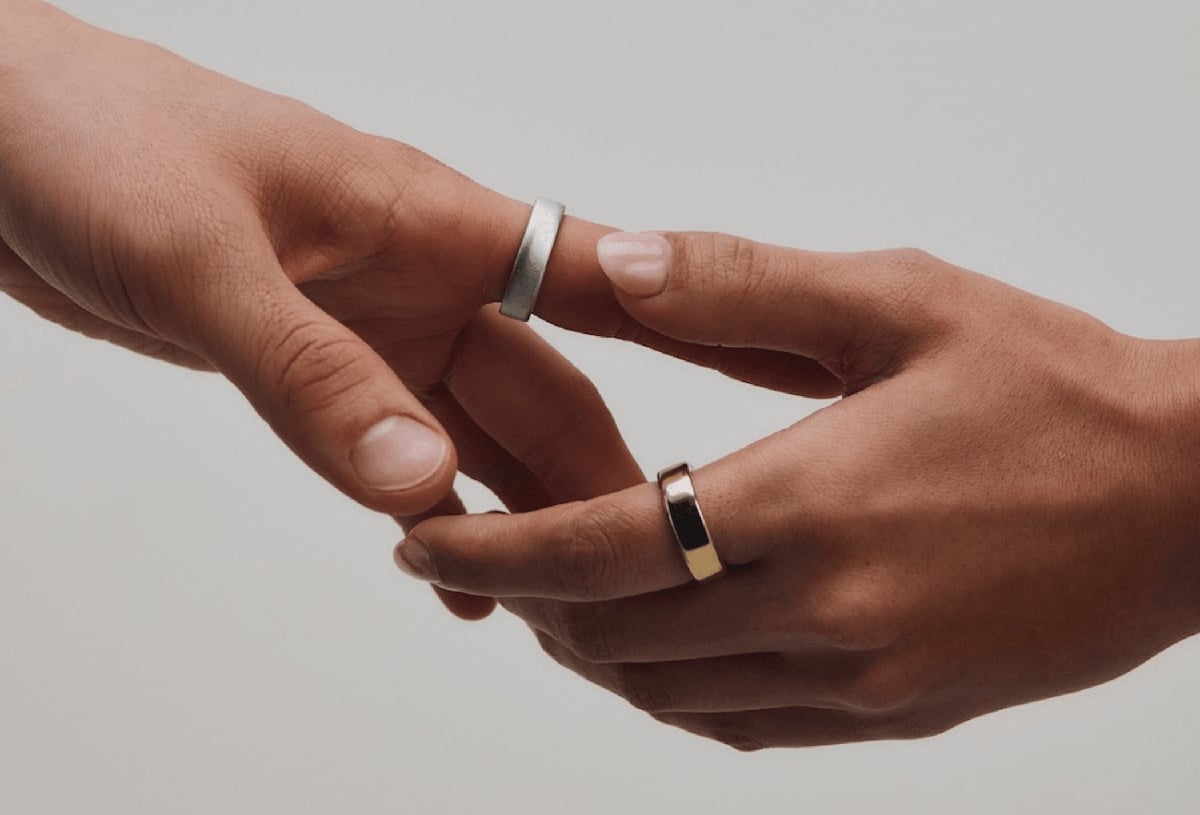
ŌURA officially launched in 2013 and released its first-generation ring in 2015. Its fifth-generation ring was launched in June this year. In Australia, Oura Ring 5 in Gold, is currently being sold for A $799 on their official website.
The case explains that the ŌURA Ring 4, ŌURA Ring 4 Ceramic and ŌURA Ring 5 models at issue, contrary to the defendants’ marketing claims, merely “infer sleep stage data” based on heart rate, physical movement, peripheral skin temperature and, depending on the model, blood oxygen trends. None of these measures neurological activity.
According to Surber, accurately tracking sleep metrics must involve, among other things, electrodes connected to the scalp and sensors on the eyes and chin, which are typically used in a hospital or laboratory setting.
The case emphasises that “sleep happens in the brain, not on one’s finger” and argues that the “unparalleled accuracy” claims touted by ŌURA are unfounded in light of the rings’ limitations.
It adds that “Oura did not just claim to measure a heartbeat or a temperature, but the exact stage of sleep the wearer is in — which in reality requires electrodes in the scalp and sensors on the eyes, as only a hospital or other clinical setting can do. Yet Oura claimed that their ring — which uses no such technology — delivers ‘unparalleled accuracy’.”
In the filing, Surber also alleges that marketing messages promising near-100 per cent accuracy in sleep stage tracking “were spread across every channel Oura controls”, including its websites, retail partners and social media.

In an interview with The Daily Telegraph, Ricky Bloomfield, ŌURA’s chief medical officer (CMO) said ŌURA stood by its data and accuracy claims, highlighting the release of publicly available research supporting its technology.
“We will vigorously defend against those in the appropriate legal forum,” he said.
Bloomfield said ŌURA did not make diagnostic tools, and its devices were designed to provide customers with information that raises awareness about various disorders and leads to more informed discussions with doctors and other health professionals.
“We don’t have enough primary care physicians, and those that we do have feel like they’re overworked and they don’t have a lot of time to spend. And so, oftentimes, when someone comes in with a very specific concern supported by data, it often helps to short circuit a lot of the discussion for clinicians, so that they can focus in on the questions that they need the answers to then get to a diagnosis,” Bloomfield added.
In a similar case earlier this year oral healthcare brand Hi Smile was forced to cough up $138,600 in penalties by Australian Competition and Consumer Commission (ACCC) as a result of misleading social media advertising.
An official trial start date has not yet been scheduled for the Surber v. Oura lawsuit, with legal proceedings remaining in the early stages.


