




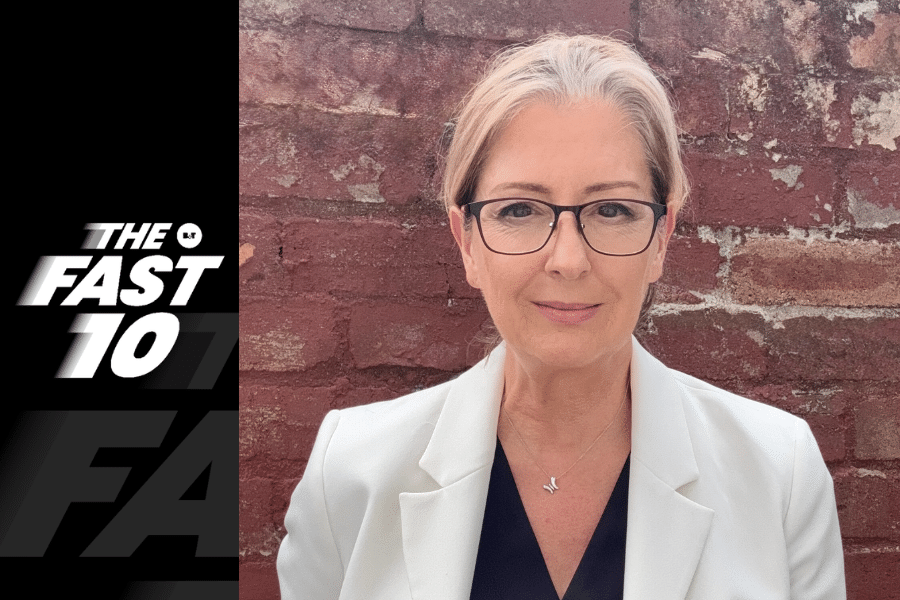
Kerren Morris began in marketing before a career transition into the not-for-profit sector in 2011. Since then, she has built one of the more quietly remarkable careers in Australian fundraising.
As the executive director for the Emergency Action Alliance, she represents 15 international aid charities, unifying them under a single emergency appeal when there is a major humanitarian disaster.
In this week’s Fast 10, B&T’s very own Greg ‘Sparrow’ Graham and Kerren Morris unpacked leading multi-million dollar appeals and the career path that prepped her for it.
1. You’ve had a brilliant, diverse career from International Masters Publishers in Japan, to client side, and now as the Executive Director of the Emergency Action Alliance. If you had to pick only one, what would be your career highlight so far?
Kerren Morris: Launching our first appeal – for the Ukraine humanitarian emergency. We jumped in the deep end and it was a huge success, raising $4.3 million for the people displaced by war. And ever since, we’ve built on that. It feels like all of the different bits of my career to date was preparing me for this one!
2. I love your depth of experience, including Head of Direct Marketing at Foxtel, various charities, e.g., Cancer Council, Red Cross. You are literally saving lives; how do you measure a positive outcome?
KM: Reading our member impact reports, telling us how many people were assisted as a result of the funds raised, and the way in which they were helped. We share this with our donors, they are inspired to give again, and the virtuous circle continues.
3. You represent 15 charities as part of the EAA. Currently, how is the current Middle East appeal resonating?
KM: It’s one of our toughest appeals – particularly at a time when Aussies are also struggling with the cost of living and a fuel crisis. Key to a successful appeal (so far it has raised $3.4m) is strong media coverage on the humanitarian aspect of a crisis or emergency. In this crisis the reports are focused more on the conflict itself, the leaders trying to do a deal, and the impact on fuel security here in Australia. As part of the appeal we received an incredible $2 million contribution from Minderoo Foundation which has since inspired others to give as well.
4. As a young girl, what did you want to be when you grew up?
KM: Ask a kid growing up on a farm in regional NSW, I was desperate to move to the big smoke. I was keen to become a journalist or a newspaper editor. I’d proof-read everyone’s projects on the school bus on the way home. It was a two hour journey each way so I needed something to pass the time.
5. How does your marketing background inform your current leadership role?
KM: Marketing is one of those nexus roles – you’re across product, budgets, communications, sales. Exposure to the breadth of an organisation’s work is incredibly helpful and puts you in a great position to lead an organisation.
6. As an industry, in marketing, what’s one thing you would change to make us all better?
KM: To do even more of what the people in this industry already do – connections, collaboration and innovation. And if there is the opportunity to do so, elevate corporate social responsibility in the strategic roadmap.
7. In tough times, does that impact donations? Do the majority of funds come from big entities such as the Minderoo Foundation?
KM: Yes we’re seeing this right now. So many Australians are doing it tough, and there’s a lot of uncertainty. As a result of this we are seeing fewer donations, but the average donation value has gone up significantly. Those who can help are digging deep. We’re seeing a lot more support from institutions and corporations and our media partners have been amazing.
8. What’s the best career advice you’ve been given?
KM: Always be clear about what you want your next career step to be. Keeping that in focus, the things you do each day will nudge you closer to taking that next step.
9. What’s one thing that’s not on your LinkedIn profile?
KM: My first paid job was a farm labourer on my parent’s farm. I have a strong knowledge of crop management from soil preparation through to harvesting.
10. Important last question: Do your parents really know what you do?
KM: I once did a 5am radio interview for one of our appeals, safe in the knowledge no-one I knew would be listening. Dad was listening (of course) and called seconds after the interview ended to say he now realises what it is I do! Something about hearing it on the radio finally made it make sense…


