



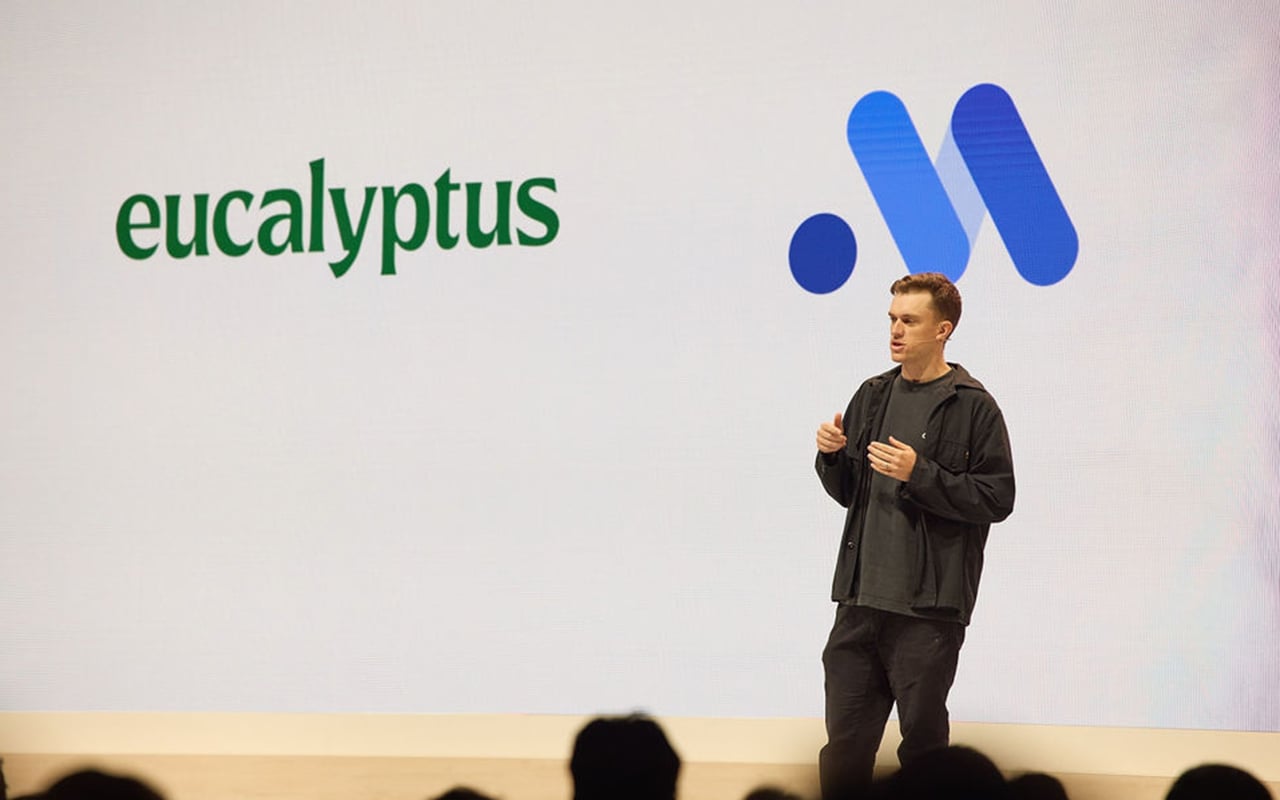
As debate continues over the long-running disconnect between CMOs and CFOs, Eucalyptus co-founder and CEO Tim Doyle has said it’s time to stop expecting marketers to translate their work into finance language and start expecting CFOs and CEOs to better understand marketing.
Speaking at Google’s Marketing Live event in Sydney on Wednesday, Doyle argued that modern marketers now have access to more data, measurement tools and attribution models than ever before, leaving little excuse for c-suite executives to remain disconnected from how marketing drives growth.
Marketers have sometimes been accused of using ‘fluffier’ metrics like “brand love,” while CFOs often demand ‘hard financial data’ such as profit margins and customer lifetime value.
In a recent B&T interview with Tesltra’s former CMO Brent Smart, as part of B&T’s CMO Power List, presented by atn, he admitted it’s important for leaders to have that mix of being commercial and creative.

“It’s so important to be commercial and to understand how marketing can solve business problems, deliver commercial results – and I think that that is misunderstood,” he said.
“Most great marketing leaders are creative and commercial. Left and right brain. And they have serious, serious, commercial chops and I think that’s misunderstood by too many people.”
And while marketers are frequently encouraged to learn the language of finance to secure budgets and executive support, Doyle believes “we should be expecting better of our CFOs and CEOs” instead.
“We have all of the data now,” he told the audience of marketers. “The job that we have is to ensure and force our CFOs and our CEOs to get up the level of understanding of that data.”
“For instance, our CFO sits in every allocation meeting,” he said.”If he doesn’t understand medium-term attribution problems, that’s his fault, and if he can’t engage properly with that material, then he shouldn’t be the CFO of a marketing-oriented company.”
The Eucalyptus CEO said while marketers must also raise their own standards around analytics and measurement, the burden of understanding should not sit solely with marketing leaders.
“As marketers, we have to be more analytically sound than we’ve ever been,” he said. “But I actually think we’re mostly there.”
“We should have higher expectations of those in the C-suite to be able to do the same.”

The founder helped build Eucalyptus into one of Australia’s fastest-growing health technology businesses, and in February this year it was announced Eucalyptus Health was being acquired by New York-listed health and wellness giant Hims & Hers Health in a deal valued at to US$1.15 billion (A$1.6 billion).
During his session, Doyle also warned marketers shouldn’t assume brand growth comes from simply increasing spend.
“I would hate for you to go away and think, ‘just spend more money on search’,” he said.
“It is every single piece of the infrastructure that you have to get right along the way that allows you to spend more money, because otherwise you’re actually going nowhere.”
Central to that infrastructure is measurement.
Eucalyptus partnered with Monks and Google to implement Meridian, Google’s open-source marketing mix modelling platform, but Doyle stressed that no tool alone can solve the problem.
“Measurement is a culture more than it’s a tool,” he said. “There is no perfect measurement solution. Measurement is ugly.”
Instead, he argued marketers need to embrace constant testing and experimentation.
“If you aren’t running A/B tests, if you aren’t running incrementality, if you aren’t running holdouts, if you aren’t willing to turn off a channel for a month, then you’re actually not doing measurement.”
While measurement forms one half of the equation, Doyle said the other is creativity, particularly as digital channels become increasingly crowded and efficient.
“There isn’t some new channel that’s going to drop tomorrow and be the key to scaling your brand,” he said.
“The truth now is that if you’re not getting creativity right and you’re not pushing the boundaries of creativity, you’re going to really struggle to grow.”
And YouTube plays a role in this, according to Doyle.
Doyle pointed specifically to the platform as an “underutilised growth channel”, arguing many marketers misunderstand how consumers engage with the platform.
“If you aren’t watching the insaneness of MrBeast videos (the most-subscribed channel on YouTube) and asking yourself, ‘How does my brand fit into this format?’ then you’re not doing it properly,” he said.
He also criticised marketers who remain “overly focused” on short-term attribution metrics.
“I came up as a performance marketer,” Doyle said. “Now we have too many performance marketers in the room and they’re all grubby and they care about one-day attribution. That’s actually as bad.”
Instead, according to Doyle, sustainable growth requires balancing long-term brand building with short-term performance activity, supported by robust measurement frameworks.
“There are only really two parts to marketing in my view,” he said. “Get measurement right and take big creative bets. That’s how you scale.”


