




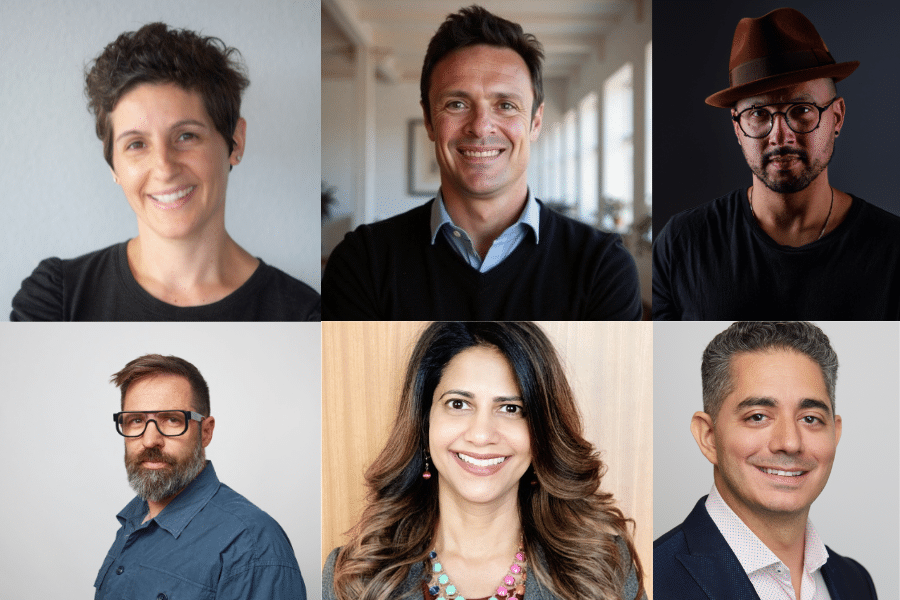
In celebration of AI Appreciation Day, AZK Media tapped brand, technology, retail, marketing and data leaders about some of the emerging trends, challenges and opportunities opened by the rapid shifts in AI adoption.
More brands experimenting with AI and GenAI
A recent Digital, Marketing & eComm in Focus 2025 report, produced by Arktic Fox in collaboration with Six Degrees Executive reveals 59 per cent of brands are now experimenting with or scaling efforts around generative AI and AI more broadly to drive personalisation efforts.
Despite this trend, only 13 per cent of leaders believe their organisation is advanced in leveraging predictive analytics, with these mostly being brands with revenues in excess of $100 million.
“But while adoption is growing, most brands still face barriers to unlocking AI’s full potential. Only 14 per cent have a mature, unified customer view, despite it being a key investment area. Without strong data foundations, efforts to use AI for personalisation and experience delivery will fall short,” Teresa Sperti, founder and director at Arktic Fox said.
AI as the cornerstone for future-proofing personalised customer experiences
Further research from The Australian Loyalty Association (ALA) highlights the growing tension between brand’s personalisation expectations and customer comfort with data use, with 58% happy to share their data in exchange for more relevant offers, while 53 per cent remain concerned about the volume of data loyalty programs hold on them.
“AI is undoubtedly a powerful agent of change in the loyalty ecosystem as it evolves to accelerate processes and customer experience outcomes, strengthen personalisation and shape wider strategic decision-making. As AI tools become more sophisticated, the pressure is on loyalty leaders to stay informed about technology advancements to maintain their competitive edge,” ALA founder and director Sarah Richardson said.
So topical is the issue, that the ALA recently announced the future of retail AI, personalisation and customer loyalty will be the major topics of industry discussion and debate at its upcoming 2025 Asia Pacific Loyalty Conference from 29–31 July 2025 at QT Resort, Gold Coast.
AI augmenting traditional SEO to generative engine optimisation (GEO)
The rapid transition from traditional search engines to AI-powered language models represents a complete restructuring of the discovery layer between brands and customers. And many businesses haven’t noticed they’re already losing.
According to Marty Hungerford, Chief Innovation Officer at BRX, this trend has given rise to what is being called ‘generative engine optimisation (GEO’), the new discipline of optimising content for AI-powered responses rather than traditional search rankings.
“The shift from traditional search engines to AI-powered language models represents a complete reshaping of how consumers discover, evaluate, and engage with brands. Those that fail to recognise and respond to this shift risk becoming invisible at the moment of decision,” Hungerford said.
“Brands that are not surfaced in LLM-generated responses will see a significant decline in visibility, resulting in downstream impacts on customer acquisition, brand relevance, and market competitiveness. Those that delay will not merely fall behind, they risk being excluded from the AI-powered discovery layer entirely,” Hungerford added.
“Meanwhile brands that embrace this reality early by adapting content, enhancing structured data, and embedding themselves in trusted digital ecosystems, will establish a lasting competitive edge”.
AI: The new frontier for solving fragmented customer data issues
Customer data issues like fragmentation, poor quality and identity confusion have really hindered business and marketing performance over the years. According to Billy Loizou, APAC Area vice president at Amperity, AI is now changing the equation by making sense of the data that already exists and unifying it accurately.
“One of its biggest impacts we see lies in identity resolution. Instead of relying on rigid rules, AI can detect patterns across billions of records to unify customer profiles with far greater speed and accuracy. It reduces manual effort while improving precision,” Loizou said.
“AI also improves data quality by learning from the data itself, flagging inconsistencies, filling gaps and adapting to behavioral changes. This leads to more trustworthy, actionable datasets over time”.
Unlocking deeper customer data insights and reporting with Gen AI
Another great example of gen AI deepening the impact of customer data insights and discovery for business is the latest innovations from Nexxen, a global, flexible advertising technology platform with deep expertise in data and advanced TV.
They recently announced their newest advancement, nexAI: the introduction of generative artificial intelligence (“AI”) to the Nexxen Data Platform, including a UI assistant within its proprietary insights tool Nexxen Discovery.
“The Nexxen Data Platform has always been powered by advanced machine learning to help our clients navigate the fragmented media landscape. With the introduction of generative AI and the nexAI Discovery assistant, we’re taking that foundation to the next level — turning complex datasets into clear, strategic guidance in an instant,” Karim Rayes, chief product officer, Nexxen said.
Helping brand leaders step off the ‘technical treadmill’ with AI assistants
According to Sangeeta Mudnal, chief technology officer of pioneering GenAI platform Glu, AI-powered assistants from Google, Meta, and Perplexity are redefining how consumers engage with brands, creating an entirely new canvas for creative expression. These developments aren’t merely technical innovations but rather a fundamental reimagining of the creative producer’s role.
“As AI assistants increasingly mediate the relationship between brands and consumers, we’re witnessing a profound shift in how creative work is conceptualised, produced, optimised, and delivered. With the rapid rise of these industry trends platforms like Glu.ai are now showcasing a deep commitment to customer-centric innovation, while being dedicated to helping e-commerce merchants seamlessly adapt and thrive in this new era of AI-facilitated ecommerce,” Mudnal said.
AI is moving from experimental to augmenting the future of marketing
This fresh wave of AI-powered transformation is prompting deeper reflection on how AI will reshape professional roles. Jonathan Reeve, vice president APAC at Eagle Eye, has been considering this personally.
“I’ve been thinking about AI advancement a lot lately as we watch AI and automation start to reshape our working lives. It’s not easy to imagine large parts of my work being automated, but I recognise I need to start asking: What problem do I solve for people? Could that problem be solved differently? And how might I evolve to stay relevant and valuable? It’s challenging, but it also gives us a chance to step back, reimagine, and maybe evolve to improve our prospects,” he added.


