There are three certainties in life: death, taxes and clients demanding more from agencies.
While much of the industry has spent a great deal of time discussing the growing confluence of media with data and technology, the creative and production arms of agencies have, at times, felt like the odd ones out.
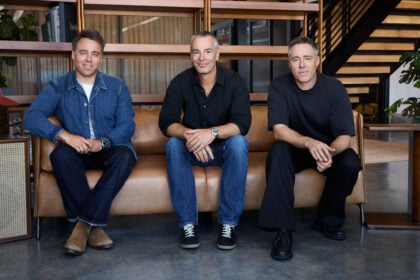
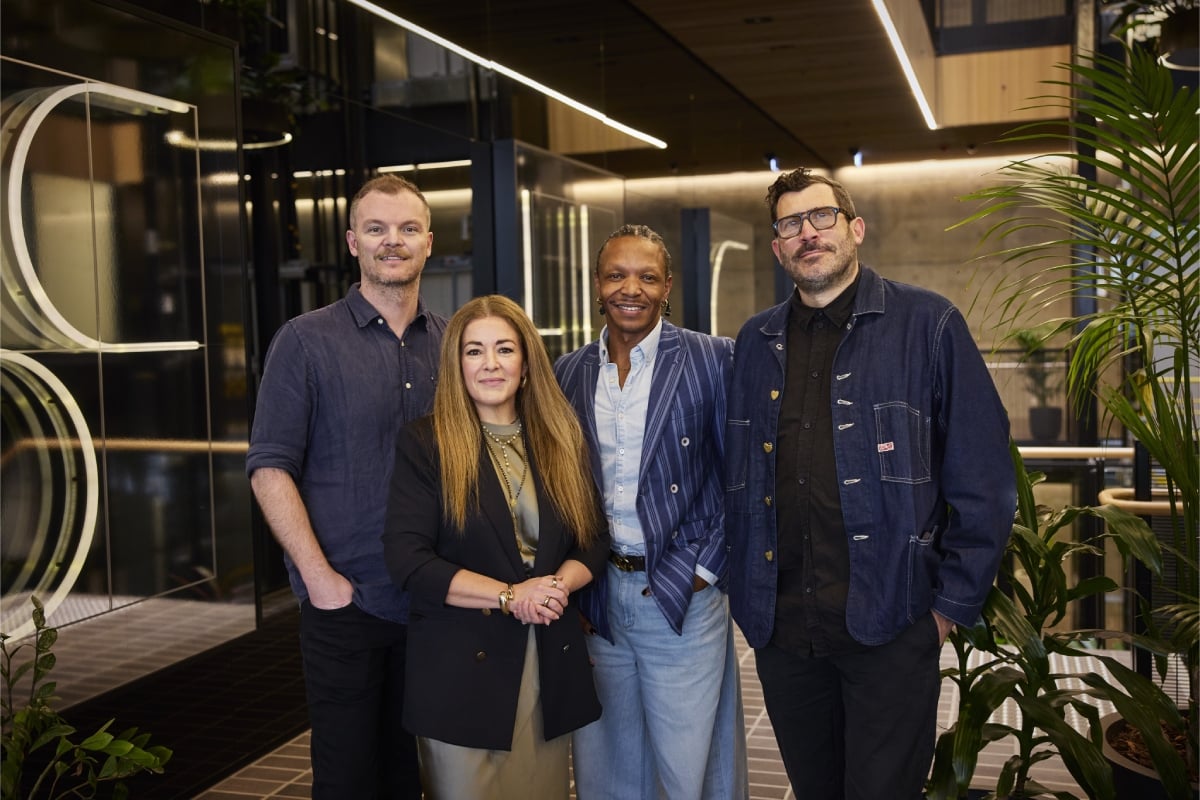
That has changed. And it’s changing more rapidly than ever at Publicis, according to the holdco’s ANZ practice leads — chief creative officer Dave Bowman, chief media officer Imogen Hewitt, chief data officer Maurice Riley and Neil Duncan, MD of Publicis Production.
Clients are facing more complicated demands and, as such, are asking more complicated questions of their agencies. But the answers to these questions, in turn, are more energising and rewarding for staff.
“We get fewer questions where communications is the answer,” Hewitt told B&T.
“We get more that are communications plus business transformation being the answer. That means we’re increasingly getting briefs that are way too complex to be answered in silos. The baton can’t be passed. It can’t be that you answer your piece and I’ll answer mine. They have to be collectively answered.
“I think we’re in a really good position to do that.”
The Holdcos
The world’s holding companies are rapidly reorganising themselves to meet these changing client demands — but also protect their own businesses.
Publicis Groupe, as has been noted many, many times, has been ahead of the pack for more than a decade in removing the silos within its own operations.
“Businesses all over the world, no matter their industry, are continuously faced with the upheavals brought on by digital and the constant evolutions affecting our society, the way we work, communicate and consume,” the French holding company wrote in a press release in 2015.
“Publicis Groupe has decided to radically modify its business model by putting the client at the heart of its organisation,” it continued.
“The idea consists of reversing its current structure, built around the concept of worldwide networks, by breaking down silos in order to offer clients the Groupe’s entire know-how and expertise through the ‘Power of One’: all Publicis Groupe capabilities will be available to each of its clients – in a simple, flexible and efficient way.”
A decade on, that idea is still shaking out in the market and, almost invariably, being copied by its rivals. We spoke to Riley, Hewitt, Bowman and Duncan a month ago on 7 August.
That same morning, WPP announced its Q2 2026 financial results. It said it is preparing to move to the “build” phase of its transformation following the launch of its WPP Creative and Enterprise Solutions arms earlier in the year. Earlier in the year, it announced that its Elevate 28 transformation plan would see it lead with an integrated proposition.
Omnicom, particularly so in Australia and New Zealand — or Oceania in the holdco’s parlance — is trying something similar. Omnicom Oceania was launched in July last year and aligned all of its practice areas in Australia and New Zealand, bringing creative, media and PR agencies under a single operating structure, along with performance marketing, production and more.
“No single [agency] brand or network brand can offer all the marketing services they need,” Omnicom Oceania CEO Nick Garrett told B&T last year.
“Even a creative and media partnership isn’t going to be able to go far enough and deep enough. They’re looking for end to end marketing partners, ecosystem designers, partners in marketing transformation, way beyond simply what a creative and media agency can do.”
But do the local Publicis leaders believe that the holdco’s first mover advantage still holds, a decade on?
“Absolutely. Without any doubt,” said Hewitt.
“It’s taken the best part of 10 years to make sure that we understand how to do that in a seamless way. The biggest surprise for me is how much of it is cultural and behavioural, not just structural.
“You can release a statement and say that you’re going to organise yourself in this way. But unless you have the muscle memory, the trust and the people who understand that it delivers better results for all the agencies and all their clients, it’s a harder journey to navigate. We’ve navigated the pitfalls. Our top 20 clients work with, on average, four to five capabilities, and have stayed with us a median of eight years. And that’s not eight years and gone. That’s eight years and counting, still here.”
“It’s really hard to catch up on culture,” said Bowman, “it takes time and it takes people who want to do it. Even in the climate when we did it — which was no pressure, an active decision by the business to see what it would bring our clients — it still took time and a lot of change. It took people warming to the idea. Some were straight into it, some took longer than others to see the merits and feel liberated by it.”
For what it’s worth, all four have been with Publicis for a while and have seen the transformation first-hand. Bowman for six-and-a-half years, Hewitt for seven, Riley for 14 years and Duncan for 20.
Publicis has continued to win business on its Power of One model, including Lego (Publicis One), Spotify (OneVibe), Aldi (Aldi One) and, most recently, Samsung.
Efficiency as the Opportunity?
Another regular topic of discussion in the industry is the shrinking budget. Telstra, for instance, cut its advertising and promotion spend for the second consecutive year, with investment falling 6.6 per cent year-on-year, according to Mumbrella.
In this context, the industry has started to talk about “efficiency as the opportunity,” according to Bowman — particularly as it relates to media and production.
But that’s somewhat misdirected, in his view.
“That’s part of what’s happening,” he said.
“One of the obvious places that we cross over is in creative and production. Increasingly, though, it’s happening in the data world and in the media world. That’s where things get particularly exciting. And it’s not a learnt behaviour from people on our side of the tracks.”
The temptation with technology, Duncan said, was to “create more content for less” but as he said, “that’s a bad temptation”.
“The more effective solution is to think about the assets that are going to work for our audiences, taking away the stuff that’s unlikely to work, reducing that wastage, and then optimising what works,” said Duncan.
“You can see how audience insight, media context and creative idea all need to work in harmony. The Publicis Production approach is to combine all of those capabilities into one environment.”
The speed of change, Bowman said, is helping bring these ideas to life. Suncorp’s ‘Haven’ created by Leo, which won the Dan Wieden Titanium Grand Prix in Cannes (and the Best Tech & AI Campaign at the B&T Awards six months prior) was a perfect example.
“AI allowed at the end of that production process for us to make it real. At the beginning of the production process, it was not possible,” he said.
“In that two-year period to go from an idea that we can’t find a way to realise to launch it live in the market, is having a huge impact. There’s excitement around it, rather than fear.”
The investments that Publicis has made in its Connected Identity proposition — acquiring Epsilon, Lotame and most recently LiveRamp — allow for this kind of disruptive work, said Riley. However, he was at pains to point out that these are not reservedly solely for media targeting.
“It’s our starting point for all of our teams. That culture is now connected… Working from that shared understanding of the audience is so important to how we solve problems. That’s what Connected Identity gives us — census-level insight to about 18 million Australians. We know what they’re going to purchase. We know if they have an affinity for something. Are they in market? Did they purchase something? It’s a joined-up view of what Meta, Amazon or Google see separately. We can see that insight and push it to paid, owned channels and our production systems as well.”
This allows Publicis to do more and do more, more effectively.
Expanding the Parentheses & Negative Consequences
Finding staff to fill roles within a business operating in this manner is not difficult, the quartet said. Though they can be particular.
“It’s one of the things that I hear from my team about why the love working here,” said Riley, “the big exposure to the other parts of the business, different ways to attack a problem.”
“It’s people who are excited about expanding the parentheses about where they work,” said Bowman.
“That’s always been the type of person that I’ve liked working with, well before any of this came up… People who are naturally inquisitive and optimistic about what’s possible.”
“That’s why culture is so important,” added Duncan. “If you have a strong enough culture, which we’ve earned over 10 years of working together as an organisation, then the individual is brought along with that culture, as opposed to an individual dictating a culture.”
As demands on agencies change, so do the ways in which they must charge for their services. At Publicis, Hewitt said the agencies taken on a variety of remuneration models that are “bespoke” to a client.
However, its single, country-wide P&L model, according to Duncan, gives it the “flexibility” to talk to clients about their individual needs, particularly so when it comes to combining the multiple practices.
“It means there’s no barrier to any of our agency or capability leaders saying that a problem needs to be fixed elsewhere,” added Hewitt. “There’s no negative consequences for their own business. It opens the entire organisation to be entirely client-centric, not agency-centric.”
The agencies within Publicis, according to Bowman and Hewitt, still attract certain types of clients with their proposition — “we’re not building one big homogenous agency,” said Hewitt.
The world is not demanding more, it’s demanding sharper. But sometimes in order to go deep, one must go broad.