
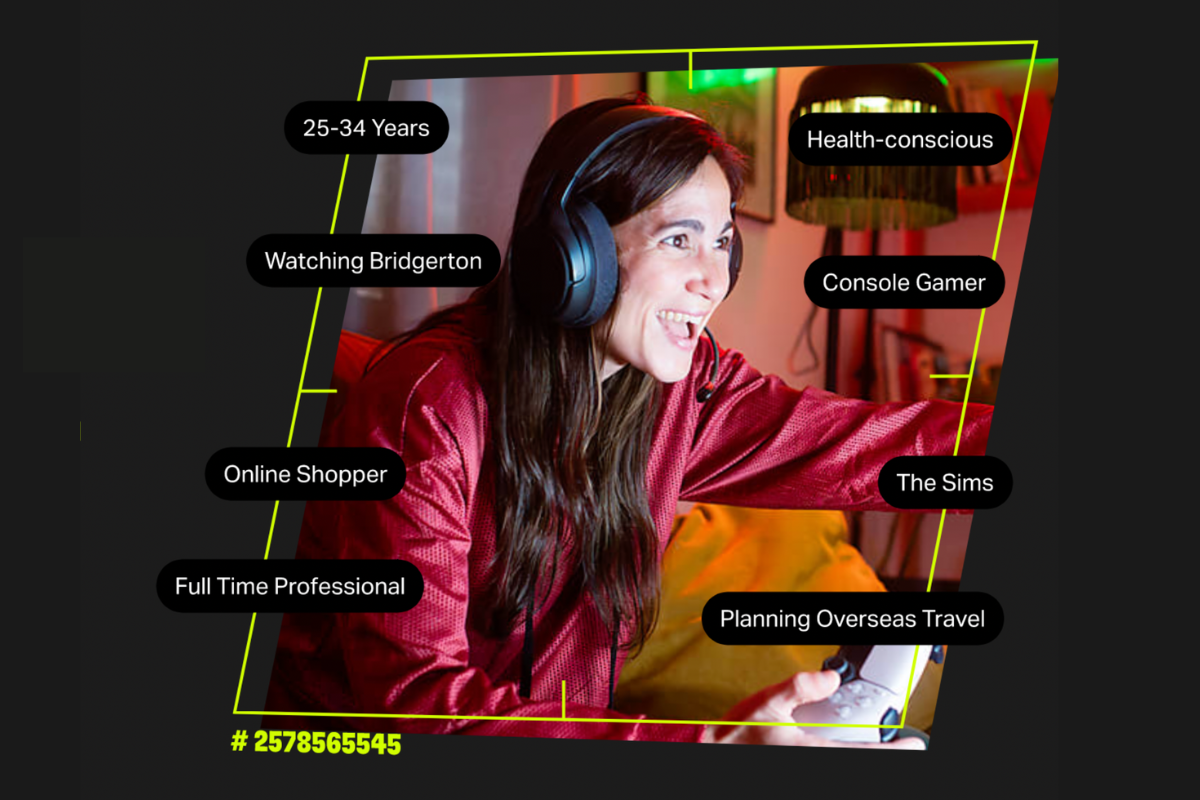
Most media plans still treat gaming as a vertical, writes Rebecca Heng, head of adtech and media operations, Livewire.
It sits in the deck next to tech and entertainment, gets pitched to the same handful of endemic brands, and rarely makes it onto a serious cross-category buy.
However, the audience data tells a different story.
Today’s gaming audiences look like the consumers every major category is already trying to reach. QSR. Auto. Travel. Retail. Finance. Lifestyle. The challenge for planners is no longer proving gaming scale. The challenge is reaching gaming audiences with the same precision, consistency, and confidence they expect from more mature channels.
That challenge is solvable. The infrastructure to solve it exists. The work now is in convincing the market it does.

Who gamers actually are
Start with who is actually playing.
According to GWI, global, 2026, 44 per cent of gamers are parents. Forty-seven per cent regularly exercise and train for fitness. Thirty-eight per cent intend to switch to an electric or hybrid vehicle for their next car. Ninety-six per cent frequent fast food restaurants. Sixty per cent prefer beach and resort holidays. Sixty-one per cent consider themselves home lifestyle enthusiasts.
These are not gaming-only consumers. They are the audiences QSR brands target around dinner planning. The auto brands building EV consideration. The travel categories competing for holiday spend. The retail and lifestyle categories competing for everyday share of wallet.
Gaming is the channel where these consumers spend meaningful attention. It is not a niche adjacency to anything.
The addressability problem
Knowing an audience exists is not the same as reaching it.
Three pressures are hitting planners at once.
Cookie deprecation continues to erode third-party addressability. Privacy expectations have raised the bar on what consented data looks like. Interest-based and contextual segments offer breadth, but they lack the behavioural precision modern campaigns demand. Inferred third-party signals produce reach without confidence in who is on the other end.
Privacy-first is no longer a differentiator. It is the baseline. The question is what gets built on top of it.

Why Livewire’s Gamer.ID outperforms standard audience data
Gamer.ID is what we built at Livewire. It is the identity and behavioural layer the gaming category was missing.
It runs on first-party, consented gameplay data – hashed, privacy-safe, and built on real behavioural signals. No cookies. No inferred third-party guesswork.
It resolves identity across mobile, console, PC, CTV, and web. The same player is recognised across every device and environment. The behavioural view does not fragment when the consumer changes screens.
The behavioural depth comes from real gameplay. Platform, genre, title, engagement, interaction, and session duration. We segment players by what they actually do, not what a model assumes about them.
Activation is omni-channel by design. The same audience is reachable in-game, around-game, and across social, CTV, podcasts, display, video, and retail media. Gamer.ID extends gaming audiences well beyond gaming inventory itself.
Audience segments are discovered and dynamically updated using AI, and activation is increasingly powered by agentic buying infrastructure – meaning the right audience finds the right buyer automatically, at speed.
The proof
The performance data tells a clear story.
When Livewire campaigns activate against gameplay behaviour through Gamer.ID instead of standard interest-based or contextual segments, rewarded video lifts video completion rate by 26 per cent. Programmatic preroll lifts video completion rate by 14 per cent, as per Livewire campaign data, 2026.
Behaviour outperforms inference for a simple reason. It describes what consumers actually do, not what a model assumes about them. When audience definitions move from probability to certainty, every downstream metric improves.

Where this leaves planners
For planners and buyers working outside the usual gaming roster, the question is no longer whether gaming audiences are relevant to the brief. The data answers that.
The question is whether the activation partner can reach those audiences with the identity infrastructure, behavioral depth, and privacy posture the category now requires.
That layer exists. It works. The proof is in the numbers.
The next era of media will be defined by who controls audience identity at scale, in a privacy-first way, across every environment where consumers actually spend their attention. Gaming had to build that layer first.
Every category that wants to reach modern consumers can use it now.