



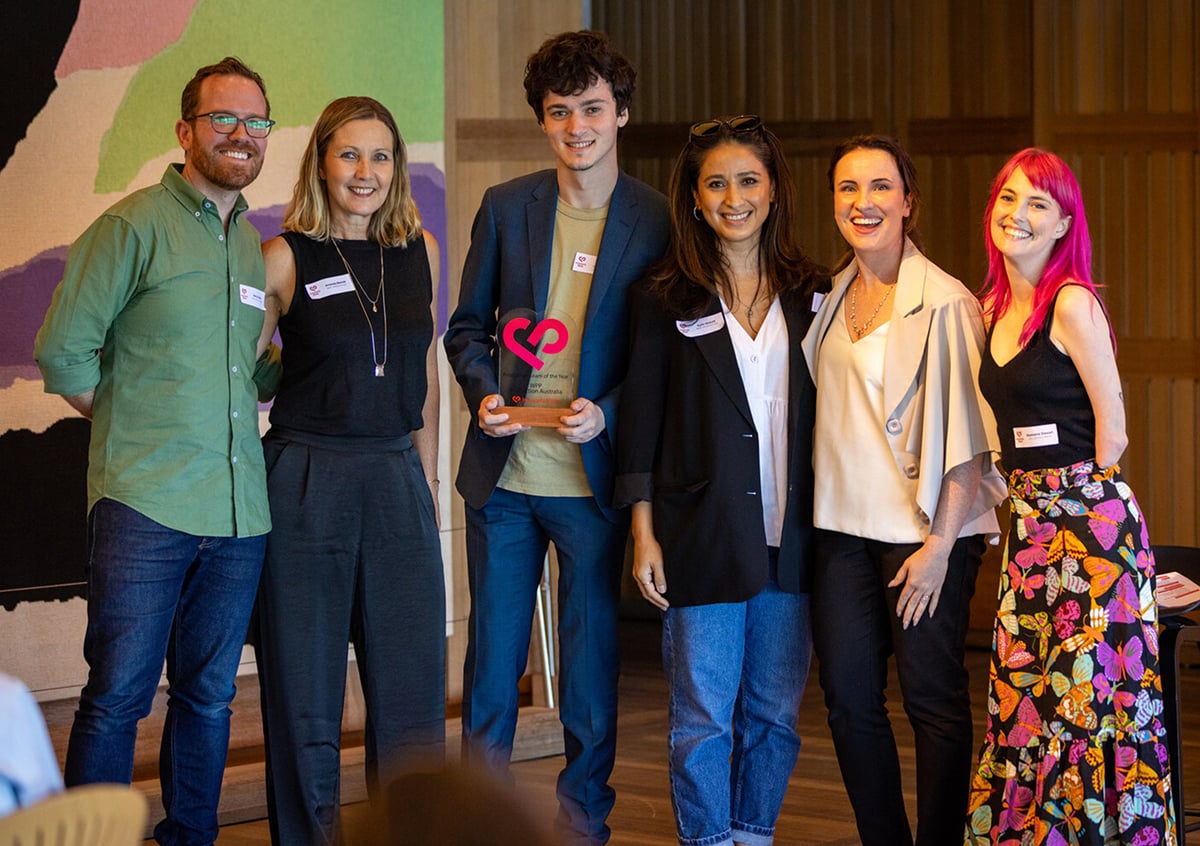
Several of Australia’s biggest brands and media networks, including Mastercard, Telstra, Woolworths, Nine, Australia Post, BIG W and Westpac, have thrown their support behind a new accreditation designed to make accessible content standard practice across the industry.
The Inclusively Made Accreditation, also backed by agencies including Thinkerbell, WPP, Atomic 212° and Publicis, is being billed as Australia’s first whole-of-organisation operational standard for disability-inclusive content.
Unveiled at an industry roundtable at the Sydney Opera House, the accreditation aims to move accessibility beyond individual campaigns and productions, instead embedding it into the everyday content operations of businesses.
Unlike Inclusively Made’s existing certification, which independently verifies individual productions, the new accreditation assesses how an entire organisation approaches inclusion across the content it creates and distributes.
The framework covers five core content streams: motion, static, audio, digital and copy, with media planning and strategy also incorporated into the process.
The aim is to give marketing and business leaders a repeatable framework for making accessible content part of standard production practices, rather than an optional extra or a consideration reserved for specific campaigns.
“Eighteen years ago, we saw there was no standard for what inclusion actually meant across production, so we built one,” said Genevieve Clay-Smith, co-founder of Inclusively Made.
“Certification proved the mechanism works on individual projects, but inclusive content can no longer belong only to big campaigns. From a 15-second social video to an enterprise digital platform or a major television commercial, accessible production has run out of excuses.”

Henry Smith, co-founder of Inclusively Made, said the accreditation would help ensure disability inclusion was considered across every type of content.
“Inclusion can no longer be justified for a certain type of project. Every piece of content should be inclusive, whether motion, still, audio, digital or copy,” he said.
The accreditation process involves five stages, beginning with an assessment of an organisation’s existing content operations and output to establish a baseline score.
Businesses are then given a tailored roadmap outlining the changes needed to meet the accreditation requirements, alongside a structured inclusive content training session for their teams.
Once the organisation meets the required operational benchmark, it is awarded accreditation and can display the Inclusively Made trust badge across its communications.
Accredited organisations must also undergo an annual audit against the framework’s eight Pillars of Inclusion to maintain their status and demonstrate ongoing progress.
Mastercard’s vice president of marketing and communications, Australasia, Alex Sloane, said accessibility needed to be considered from the beginning of the creative process.
“Accessibility shouldn’t be something we think about at the end of the creative process. It should be considered from the start,” Sloane said.
Thinkerbell CEO Margie Reid said the framework would help make accessibility a more consistent part of agency workflows.
“Accreditation gives creative and production teams a clear, repeatable standard so accessible work happens automatically rather than as an afterthought,” Reid said.


