



Many column inches have been dedicated to trying unpacking Gen Z’s cultural mores and social dynamics. However, new Snapchat research has found that they are not perhaps the uber-online generation that many predicted.
Nearly half, for instance, Gen Z are visiting physical stores more often — the highest of any generation, and more than four times higher than Baby Boomers. It also found that 44 per cent are increasing the amount they spend in-store and more than three-quarters, however, said that they typically discover products online before purchasing in-store.
Those figures are important, given Gen Z’s rapidly increasing prominence in the economy.
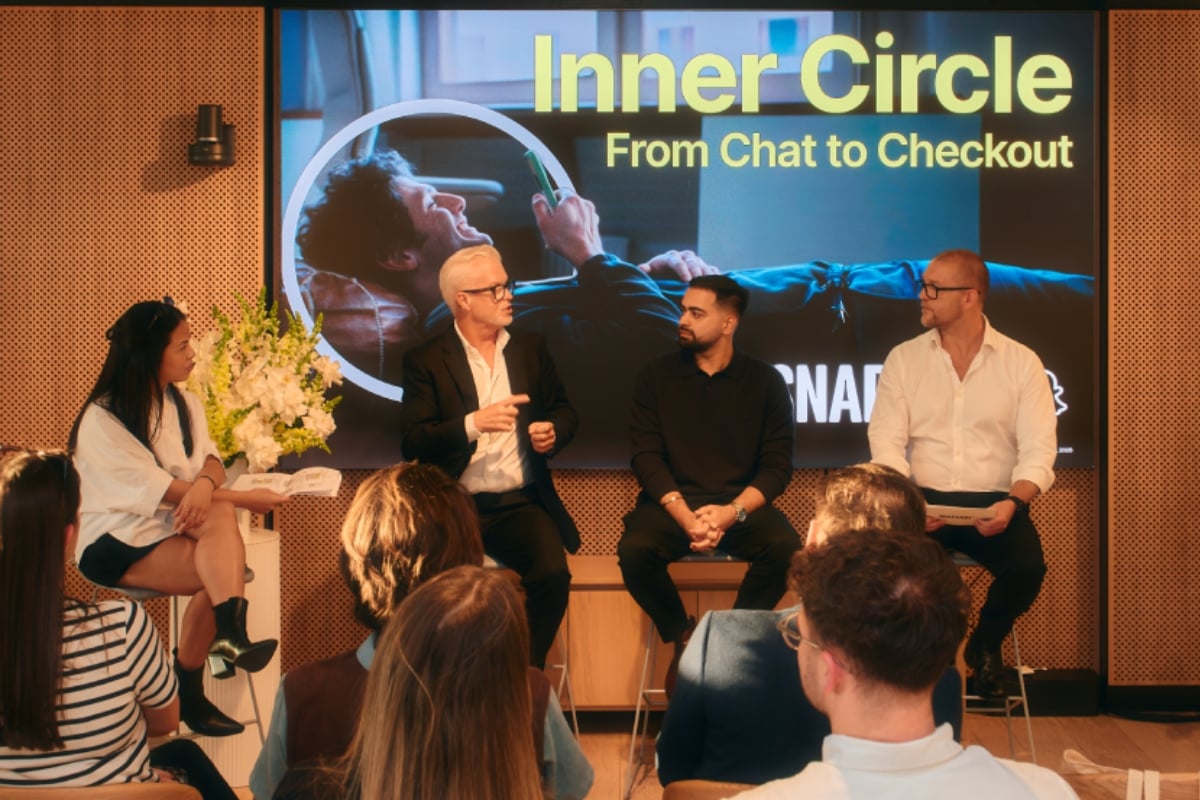
“They make up around 20 per cent of the Australian population,” Snapchat ANZ MD Ryan Ferguson told an intimate crowd at an event in Sydney last night.
“They’re going to make up about 30 per cent of the workforce by the end of this decade… They will be outspending baby boomers by 2029… Brands that are winning this generation today, are not only building top-line sales and net new customers, they’re also building a pipeline of loyalty for the next five to 20 years… Accenture and Afterpay predict that Gen Z will make up 48 per cent of total retail sales by the end of the decade.”
At the same time, however, Ferguson said that Gen Z was hard for brands to reach through traditional and non-traditional media alike — three-quarters of the nation’s zoomers, according to Ferguson, have “total digital exhaustion”.
The answer, according to the platform, is to be found in the group chat. Not in the algorithmically driven feeds. Gen Z are using the group chat not just to discover products and experiences — and increasingly these are in-person — but also for validation on purchase decisions. This change is directly linked to Gen Z’s experience during the pandemic, being unable to socialise in public spaces.
“If we look at a mall or shopping centre 30 years ago, it was underpinned by a big department store, it would have had a discount department store, a supermarket and probably 40-50 specialty stores and the dreaded international food court,” said Professor Gary Mortimer, a consumer behaviour and retail expert at Queensland University of Technology, during a panel discussion at the event.
“It’s fundamentally shifted from that. They’re now shopping precincts. Centres are moving away from structural square metreage retail to green spaces, areas where people congregate to meet. It’s almost becoming the new town centre.”
Snap’s survey of 2,000 Gen Z supports this. More than three quarters, it said believe that physical retail creates memories that online shopping cannot replicate, while nearly two-fifths visit shopping centres specifically to spend time with friends. It has termed this phenomenon “mall-maxxing”.
Their purchase journeys, Mortimer said, increasingly start online and finish in-store. But they also go the other way, with online-only brands such as The Iconic or Shein, organising pop-up stores that allow punters to try items on in-store before then completing the purchase online.
“We call it the ROBIS customer,” said Rohan Kohli, head of digital media at Chemist Warehouse.
“It’s research online, buy in-store. In the two plus years I’ve been at Chemist Warehouse, the frequency of the term being used has increased dramatically. We realised that the in-store growth comes from that Gen Z customer researching online and buying in store. But they’re in-store for two reasons and they’re on their phones a lot in store.”
Kohli said that some of Chemist Warehouse’s studies have said that as many as 90 per cent of customers during peak periods are using their phone in-store to compare prices online or communicate with friends. Brands can directly control, or at least influence the outcome of the first behaviour. But the latter is nearly impenetrable.
Nearly two-thirds of Gen Z shoppers said in Snap’s research that a positive response in a private group chat has led them to buy in-store.
More than three-quarters say they share photos or videos with friends while trying on clothes in fitting rooms. Nearly a third say a private group chat is the first place they share an exciting new purchase. Just six per cent post publicly on social feeds following a purchase.
“I don’t think brands and marketers understand how to get into that discussion,” said Ferguson.
“Brands have to enter into the conversation to generate trust,” he continued pointing to Chemist Warhouse’s social media personality Jess as one way that brands can attempt to create content to infiltrate the group chat. Jess, incidentally, sits just behind Kohli in Chemist Warehouse HQ.
@jessfromchemistwarehouse What’s new Wednesday – ✨August Edition✨ It’s so hard to keep up with all the new products landing at @Chemist Warehouse Official top picks for the month! #chemistwarehouse #whatsnew #sabrinacarpenter #fragrancetok #new ♬ Funk Lounge Vibes (Lo-Fi House) – Ausku Studio
“As marketers, we’re struggling because attention levels on some media channels are so low, you’ve gone one, one-and-a-half seconds to get the message across. What’ we’re seeing is getting into these conversations is that attention levels are higher, it’s stickier and there’s amplification. It’s a completely different technique.”
“The younger cohort of shoppers aren’t particularly influenced by brands, advertising or marketing,” added Mortimer.
“But they will believe their friends or peers in that group as an authentic message channel. And then a loop takes place, I’ve been recommended a brand or product, I’ve gone and I’ve touched it, felt it, purchased it, thanked the friend and then loop continues. The friend becomes a credible source of information and they get some social validation from it.”
Everything old is new again, and word-of-mouth is back, it seems. But through photos, messages and emoji reactions.


