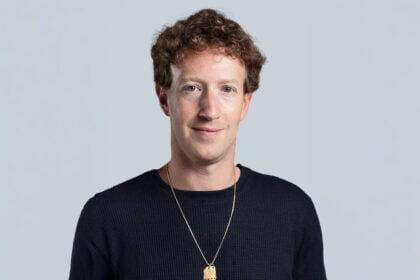
With a career spanning some of the UK and Australia’s leading agencies and campaigns, Ant Melder has established himself as a creative leader with a knack for turning strong ideas into distinctive work.
Now co-founder and creative partner at independent creative agency Cocogun, he brings decades of experience across McCann, Saatchi & Saatchi, M&C Saatchi, DDB and Host/Havas. He has worked across a broad range of brands and campaigns throughout a career defined by creative ambition and a willingness to challenge convention.
In this week’s Fast 10, B&T’s very own David Hovenden and Melder get into the business of doing things that matter, embracing the cringe and Liverpool FC dreams.
1. You’ve had a brilliant career, from creative and creative director at some great agencies in London and Sydney, to co-founder and creative partner at Cocogun. If you had to pick only one, what would be your career highlight so far?
Ant Melder: When I look back on my career so far, I like to think the snotty, impossible-to-impress know-it-all 17-year old Ant Melder would actually be pretty impressed. I’ve managed to combine doing stuff that’s put a dent in the universe with having a lot of fun.
From making ads with sport, music and movies megastars to creating a life-saving p*rn film (15 million views and counting!), co-writing a rap track, co-founding (with UTS) the Cocogun Creative Scholarship for Indigenous Students, exhibiting my ‘art’, and rebooting the iconic Economist campaign.
However, the highlight has to be co-founding (alongside Chiquita King) an independent creative agency that actually stands for something, and has consistently walked it like we talk it.
2. As a young boy, what did you want to be when you grew up?
AM: I wanted to either play in the Liverpool team of the ’80s, alongside legends like Kenny Dalglish, Graeme Souness and Ian Rush, or beat Steve Ovett’s 1500 metre world record (3:31.36 at the time). The closest I ever got was 4.30, which is less than a minute away…but a lifetime in 1500m terms.
3. What’s a lesson from your years in London that still shapes how you work in Sydney?
AM: The legendary creative leader (and fellow East Londoner) Dave Trott has been a kind of mentor to me along my journey. One of the key things he instilled in me is that genuine impact is on the other side of cringe mountain.
His words: “However big you think you’re thinking, it’s too small. If you’re being remotely safe, or sensible, or responsible, it’s too small. If you’re not cringing with embarrassment, it’s too small. If you think it’s risky, multiply the risk factor by 10. Scare yourself stupid at the enormity of what you’re about to do. And, if you’re lucky, they might just about notice.”
4. What’s a value or principle you and Chiquita agreed on early that’s never changed?
AM: We’re both proud ex-DDBers and always loved that Bill Bernbach quote, “A principle’s not a principle until it costs you money.” Which is easy to nod along to in the abstract, but a much realer yardstick to live by when you’re running a business.
5. You’ve talked about your career splitting into two eras “BC “and “AC”. Before Cocogun and After Cocogun. What’s different about you as a creative now, on the AC side of that line?
AM: I think of ‘Before Cocogun’ as a more creatively selfish, me-focused period. Prioritising what would be best for Ant Melder, the agency and the client – in that order.
‘After Cocogun’ is a different mindset, with the order of priorities switched around. And guess what? Approaching things that way leads to ideas that work equally brilliantly for each of those cohorts.
6. What’s one creative rule you refuse to break, no matter the brief?
AM: I always apply the WWTGAF lens – Why Would They Give A F**k? Because people are busy getting on with their lives, doing important stuff like spending time with their loved ones, worrying about paying their bills, or watching that cool new music video/Netflix series.
Why would/should they stop doing that to engage with our thing?
7. You’ve spoken about wanting Cocogun’s creativity to do good in the world. What’s one piece of work you’re especially proud to have your name on?
AM: Our campaign for Palliative Care Queensland and the Queensland govt health dept – especially the film we made, ‘The Cassette’. The strategy, writing, storytelling, visual craft, and use of music, all came together to create something really beautiful, powerful and effective.
8. What’s the best career advice you’ve ever been given?
AM: Dave Trott told me to see the things that are different about me, the things I felt insecure about, as my unique superpower. For a part-Bangladeshi, part Anglo-Indian, part white working class mongrel copywriter, that was a game-changing perception shift.
9. What’s one thing not on your LinkedIn profile?
AM: I speak proficient Cantonese. I’ve been learning the language for 25 years but I have to admit that when I say ‘proficient’, I mean crappy, broken, janky…just enough to get through a conversation with a fast-talking native Hong Konger by the seat of my pants.
10. Important last question: Does your mum really know what you do?
AM: Kind of. TBH I could do the most wretched, inconsequential and cliché-ridden mobile banner of all time, and my mum would think it should put me in the running for “one of those lion thingies they give out at the Cannes Film Festival.”
Love you mum!