




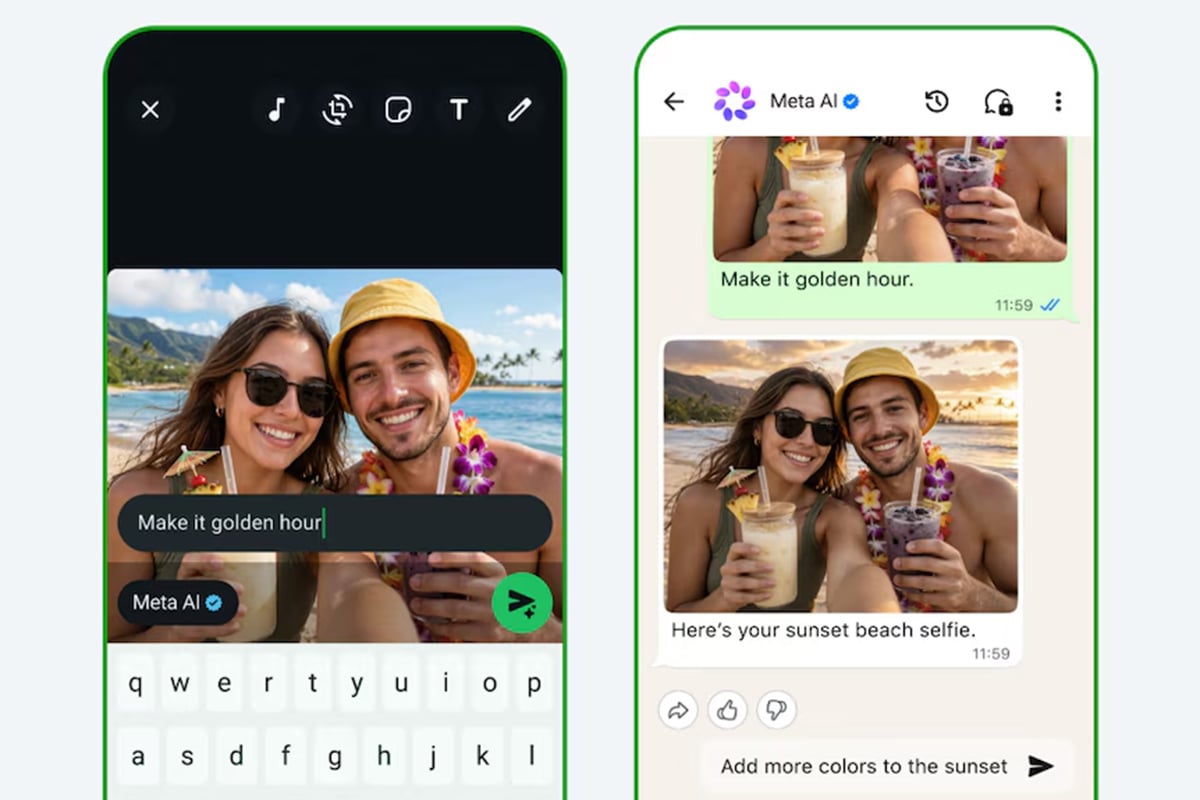
Meta has pulled its recently launched AI image-generation feature allowing users to create images based on public Instagram accounts just days after its release.
The feature, powered by Meta’s new Muse Image model, was launched on Tuesday and enabled users to generate images by tagging any public Instagram account as a visual reference. Meta said the capability was designed to enhance “the social experiences billions of people already love”.
The rollout quickly drew criticism from politicians and legal experts, who questioned whether allowing anyone to reference a person’s public profile without explicit consent created significant legal and reputational risks.
In a statement to B&T this morning, Meta acknowledged the feature had fallen short and confirmed it had been removed.
“Earlier this week, we announced that one way for people to generate images in Meta AI is by @-mentioning public Instagram accounts that they want to reference,” a Meta spokesperson said.
“Our intent was to provide a useful creative tool and to give people control over whether their public content could be referenced in this way.
“We’ve heard the feedback that this feature missed the mark, so it’s no longer available.”

“Meta’s decision to withdraw the feature demonstrates just how sensitive the market has become to issues surrounding AI, consent and digital identity,” Azadeh Williams, managing director of B2B technology PR agency AZK Media, told B&T.
“From a reputation perspective, the backlash was inevitable.”
Williams said brands, executives, public figures and creators invest heavily in building their image and intellectual property, making the prospect of AI-generated content based on their likeness a significant brand safety concern.
“It raises legitimate concerns around consent, misinformation, impersonation and brand safety,” she said.
“We are now in an environment where trust can be lost far faster than new technologies can be adopted. Consumers and businesses are becoming increasingly sophisticated in their understanding of AI, and they expect technology companies to build ethical considerations into products from the outset, not as a reaction to public criticism.”

Williams said the incident should serve as a reminder that AI governance is no longer solely a legal or compliance issue, but also one of communications and corporate reputation.
She called on Australian organisations to develop clearer policies around synthetic media, executive likeness, intellectual property and crisis preparedness, warning similar controversies are likely to become more common.
“Public content does not automatically equate to public permission,” Williams said. “As AI capabilities accelerate, companies that prioritise transparency, consent and trust will ultimately be the ones that maintain stronger relationships with consumers and brands alike.”

Meanwhile, Ryan Slipakoff, president and commercial lead at agentic delivery platform, United Logic, described the image tool to B&T as “dangerous” — adding it was something that would have had him and his family “opting out of the platform”.
“Manipulation of someone’s likeness could do irreputable harm to someone’s reputation, career, life and mental health,” he said.
“I would imagine and hope that the intent is that likenesses will be fed into LLMs that enables AI to do image generation that will be a composite of many humans to create something new and not based on any identifiable individual. That said, the way this is written, you could use someone’s likeness to create content doing acts or making statements that the individual is fully against, which is dangerous and should not be allowed.”
“Refinement of use permissions is critical to protect users’ rights and well being, whether driven by legal mandate, making Meta aware of potential legal consequences if bad things do happen, or rejection by the user base.”
Last week, B&T spoke with Charlotte Hale, practice leader of disputes and litigation at LegalVision, who warned the technology exposed the widening gap between rapidly advancing AI capabilities and Australia’s existing legal framework.
She said businesses using AI-generated images that falsely implied endorsements or commercial relationships could face legal consequences under Australia’s consumer laws.
“If businesses use these images in a way that makes consumers believe public figures are associated with them or have sponsored their products or services, there’s potential for misleading and deceptive conduct,” Hale said.


