
Australians are spending more on media and entertainment subscriptions than ever before, but less time on screens and scrolling through social media feeds. That’s according to Deloitte’s 14th annual Media & Entertainment Consumer Insights report, which polled 2,000 Australian media consumers across five generations.
Monthly average digital entertainment spending rose 24 per cent from $63 to $78 between 2024–2025, as Australians added more subscriptions and platforms successfully pushed through price increases.
Households now hold an average of 3.7 subscriptions, up from 3.3 last year and 2.3 in 2021. It represents the biggest surge in subscriptions since the COVID-19 pandemic. In addition:
Gen Z households pay $101 monthly for their subscriptions – the highest number to date – with 98 per cent having at least one paid subscription, compared to 90 per cent across all households
Subscription video on demand (SVOD) streaming platforms and music services are driving growth in subscription volumes and remain the leading categories with households holding an average 2.3 paid SVOD subscriptions and 0.7 paid music subscriptions
More than a third (36 per cent) of Australians say their subscription spending is over budget and 78 per cent are worried about the total cost of subscriptions.
“The number of streamers in the Australian market has continued to expand, with the content Australians want to watch increasingly spread over multiple providers. Overall, 65 per cent of respondents feel they need multiple subscriptions in at least one entertainment category,” Deloitte Australia Telecommunications, Media and Technology lead partner Peter Corbett said.
“The complexity and expense of managing multiple subscriptions means almost half of consumers say they are interested in an aggregation service, but many told us they were not aware of any providers or feel there are gaps in current offerings. It suggests there is an opportunity in the market.”

Time spent consuming falls
Despite subscriptions and spending shooting up, Australians are increasingly switching off and are spending less time engaging media and entertainment for a second consecutive year, illustrating an overall shift towards more conscious consumption.
Australians spent an average of 42 hours and 45 minutes every week engaging with media and entertainment in 2025, compared to 44 hours and 15 minutes in 2024 – a decline of 3.4 per cent
This year’s decline in consumption time is smaller than the 10 per cent drop between 2023 and 2024 and was driven by falling rates of engagement with news/magazines (down by 26 per cent), social media (-16 per cent), and video (-13 per cent)
Audio is the only media category with significant growth in consumption time (+34 per cent), with music platforms doing most of the heavy lifting. Audio now accounts for 29 per cent of total digital entertainment consumption/.
“To adopt Gen Z parlance, Australians are ‘learning to touch grass’ or disconnect from technology. Time spent engaging with media and entertainment has fallen for a second year in a row as Australians become increasingly choosy about what they consume. Audio is the noticeable exception, with younger Australians spending more time streaming music and podcasts while older Australians still prefer the radio,” Corbett said.
“What’s driving Australians to switch off or put the phone down isn’t quite clear. It could be a mix of factors, including – after a peak in screen time during COVID, consumers our choosing more ‘in person’ entertainment forms, or changing preferences for the content mix offered across media categories.”

Social media usage tanks
Social media remains incredibly popular, but Australians are logging off in greater numbers. Following a slight decline last year, average social media consumption has plummeted by a full hour every week, with only mature-aged Australians recording an increase in use.
The fall in social media comes as platforms brace for the provisions of the Australian Government’s Online Safety Amendment (Social Media Minimum Age) Bill to come into force in December. Concerns over the effect social media has on children means most Australians back social media age restrictions, but questions remain on enforcement and age thresholds. The data also shows:
- Australians spend an average of 5 hours and 20 minutes on social media every week, a 16 per cent decline on the 6 hours and 20 minutes spent scrolling in 2024. Boomers recorded the sharpest drop (27 per cent) while Gen Z and Millennial usage dropped by 13 per cent and 13 per cent respectively.
- Among parents, 64 per cent are concerned about social media’s impact on children and half use parental controls to limit what their children can access online, with trust in existing regulations low.
- 67 per cent support age restrictions on social media platforms to better protect their children and 50 per cent would like to see age requirements extended to dedicated messaging apps.
The most popular proposed social media restriction is banning parent-run social media accounts for individuals under 16, followed by regulating the amount of time individuals under 16 can spend on social media.
“The decline in average social media use has eclipsed the broader media and entertainment consumption decline, although the extent of this decline is inconsistent across demographics as different age groups use social media in different ways for different purposes,” Corbett said.
“What is clear is that parents want stronger rules and regulations governing children’s access to social media as well as greater support from government and industry in the form of education, accessible tools and trustworthy safeguards.
“That being said, digital platforms are neck-and-neck with established media when it comes to their perceived positive impacts on society. But when it comes to news consumption, Australians trust domestic publishers the most: more than three in four consumers consider national and regional Australian news publishers moderately or very trustworthy.”

AFL is Australia’s ’national game’
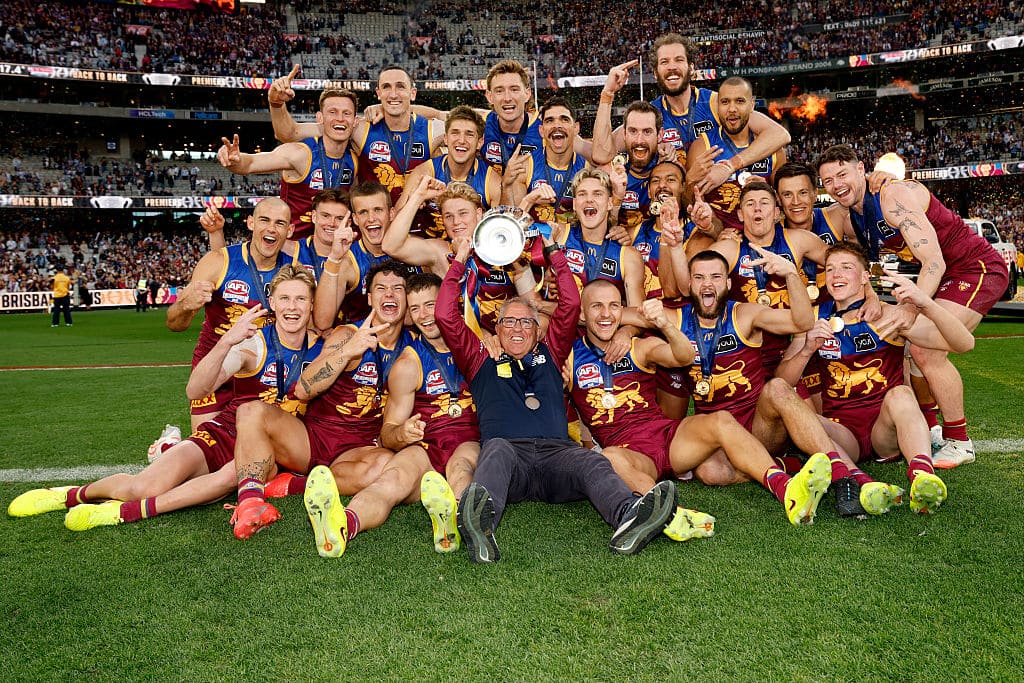
The question of whether Australia has a national sport may finally have its answer: AFL is Australia’s most-followed sport across every generation, with 42 per cent of the population considering themselves a fan. It comes in well ahead of the runner-up tennis, which is followed by just under one-third of Australians. Meanwhile, interest in women’s sports continues to grow, with men making up the majority of fans. In addition:
- 84 per cent of Australians consider themselves a sports fan, with the average fan following four different sports
- 57 per cent of Australians are willing to pay for sports content (up from 53 per cent in 2024) at an average of $22 per month (up from $20)
- 65 per cent of Australians are women’s sport fans, with men making up the higher share of the fanbase in all codes except netball and equestrian.
“Australia is unquestionably a sports-mad nation. The average sports fan follows four different sports, but one game has emerged as a true national favourite: AFL. However, the code should not rest on its laurels and needs to continually engage young fans because its popularity is virtually neck-and-neck with soccer among Gen Zs and Millennials,” Corbett said.
“Australians – and particularly Australian men – are now enthusiastically embracing women’s sport. Overall, tennis leads as the most popular women’s sport even though its fan base is smaller than the AFL’s.
“The difference? There has been backing and female representation in women’s tennis for a long time. While tennis has had a head-start, the core to growth in other codes could be accessible viewing and global reach, as well as continued investment into female athletes to ensure strong talent.”