



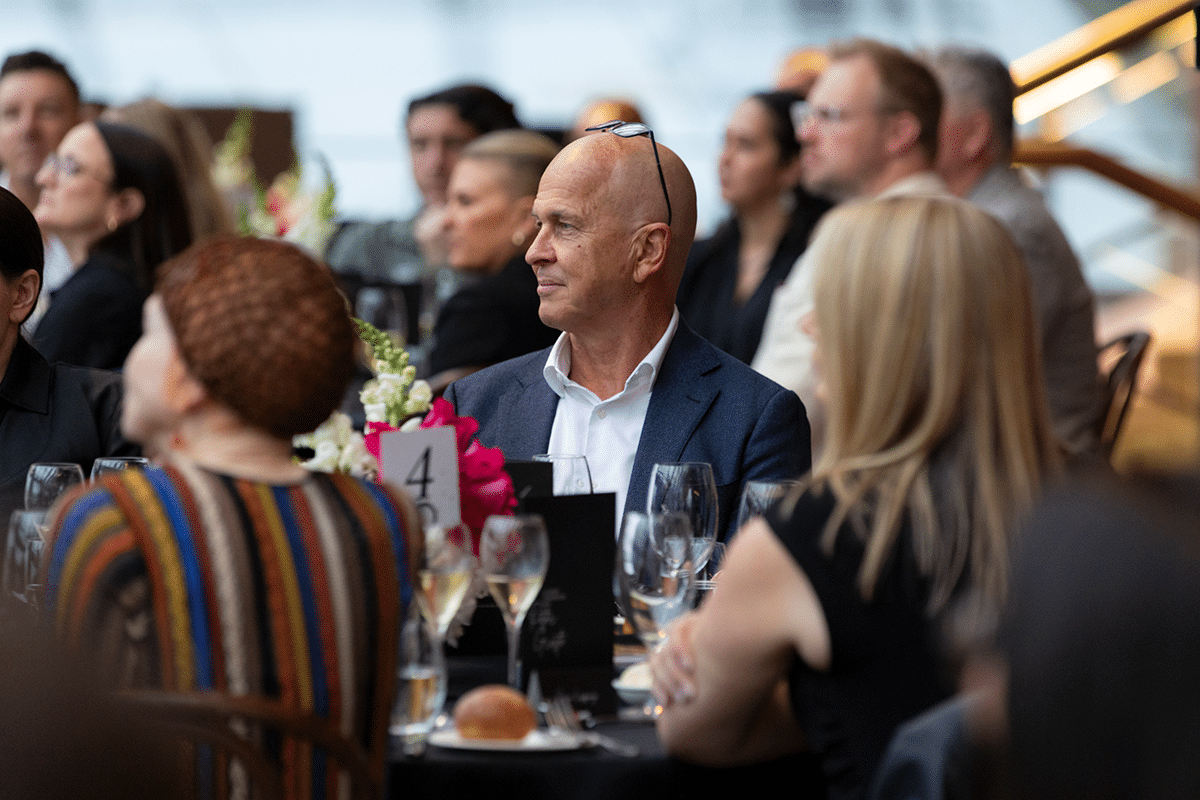
One of Australia’s most famous foreign correspondents—who spent more than 400 days in Egyptian prisons for covering protests during the Arab Spring—believes that journalism, and by extension democracy, is being threatened by the Australian government’s obsession with secrecy and passing national security legislation.
Peter Greste, who worked for 25-years as a foreign correspondent with the BBC, Reuters and Al Jazeera, warned that newsrooms are dropping investigations into government corruption due to “overbearing” national security legislation, and Australia’s timid whistleblower protections are scaring away sources.
Unlike the UK and US, where press freedom is enshrined into law, Australia does not have any constitutional protections for journalists.
Compounding matters is that since the terror attacks on 9/11, which fuelled an erosion of civil liberties across the world, Australia’s government has passed nearly 100 pieces of national security legislation, which has been been used to stifle investigative journalism into government and the military.
“The political and social pressures that created that war on terror and have imprisoned so many journalists around the world are the same forces that are driving things here in Australia,” he said in a presentation about media freedom at SXSW Sydney.
“In Australia since 9/11, we have become, quite literally, the world champions when it comes to passing national security legislation.
“I’m not suggesting that we don’t need to update our legislation to cope with the new threats that we’re facing today. But so many of those pieces of legislation, directly or indirectly, undermine our civil liberties. From my perspective, they also target the ability of journalists to do their jobs.”
Shutting down journalism
In 2019, the Alliance for Journalist’s Freedom—an organisation where Greste is executive director—published white papers that analysed the state of press freedom in Australia.
It found that years of overbearing national security legislation had exposed journalists’ work and data to “intrusive investigation” and that journalism had become criminalised by these new laws.
It also found that journalists’ sources were vulnerable to investigation and prosecution, and this has led to whistleblowers going cold.
Weeks after the white papers were published, the Australian Federal Police raided the home of News Corp journalist Annika Smethurst and the ABC’s offices seeking to expose confidential sources.
In the case of the ABC, the story was about alleged war crimes committed by Australian special forces in Afghanistan. The raids led to the arrest and imprisonment of David McBride, a military lawyer who shared classified documents with the ABC about war crimes under the belief that he would be protected.
“Research by the University of Queensland has found that newsrooms are closing down a lot of stories, a lot of investigations into government, because they can’t afford the litigation that will inevitably follow if they go through with those stories,” Greste said.
“We know that journalists are telling sources that we can’t protect your identity because our communications are exposed to intrusive investigation by the police. We know that a lot of vital sources are also drying up because they saw what happened to David McBride and are making a calculated decision that the cost of going to the press…is simply too dangerous.
“We have a really deep seated culture of secrecy in this country. After the AFP raids, the New York Times published a story which famously said that Australia might well be the world’s most secretive democracy. I don’t think that was hubris.
“Our governments at all levels are obsessive about controlling the flow of information.”

A ‘broken’ FOI system
Greste was discussing media freedom less than a week after the Albanese government threatened to overhaul freedom of information legislation. Under the new proposals, table by Attorney General Michelle Rowland (the former Communications Minister), public servants would have the power to issue blanket refusals to act on FOI applications they say would take more than 40 hours to process. It’s almost unheard of FOI requests being processed within that timeframe.
Labor’s plans would also expand the existing exemption used to keep cabinet documents secret, which might include ‘future’ information considered sensitive by cabinet ministers.
Journalists, including Greste, already grapple with an FOI system that is broken, lengthy and opaque.
“We’re seeing FOI refusals going through the roof in recent years. We’re seeing that the system has become vastly more complicated. I’ve even tried to FOI my own files in relation to the government’s campaign to get me out of Egypt. I received a thick file and most of it was blacked out because the government said that if they released certain pieces of information, it would risk Australia’s foreign relations,” he said.
“I used to think that we had a unique opportunity for press freedom reform with the Labor Government, with such a strong majority, because politically I think that they can make some uncomfortable or unpopular decisions.
“The fact that the government is so secretive worries me enormously.”
To tackle this issue, Greste wants the Australian government to introduce legislation that protects media freedom in a similar way to human rights legislation in Queensland, the ACT and Victoria.
“We are not suggesting that you have to privilege media freedom over and above everything else,” he said.
“What we are saying is that there has to be a positive obligation to consider a legitimate public interest in the kind of information that journalists are publishing.”
Greste said that the laws should be underpinned by professional journalism standards and ethics. He would like journalists to join a professional association that holds them accountable to high ethics and standards, irrespective of whether they work for established legacy media organisations or publish news content on Facebook and TikTok.
“The thing that we need to protect is the process of journalism, rather than a particular type of individual,” he said.
“This is not a barrier to entry. We’re not saying that you have to be a member of our professional association before you can publish. What we are saying is that if you are a member of a professional association, your work is being accountable to a code of conduct. We can assume that your work has a certain quality that sets it apart from everything else.”

Algorithms & red meat
It’s not just government regulatory overreach that is threatening journalism. Greste believes that credible news media business models that are largely funded by advertising, are no longer sustainable in a media landscape “driven by algorithms”.
“The only news business models that have really been successful are those that have weaponised or lent into the algorithms. They’ve created tribes and throw red meat to those tribes,” he said.
“News Corp is spectacularly good at this. Fox News was built around the algorithms. Fox creates content for a particular group of conservatives in the United States, and it then routinely throws red meat at those groups.
“Even the Guardian, I think, has created something similar left wing tribe that it then feeds with content that confirms that community’s particular political ideas.”
Greste said this is a problem because it creates content that is driven by “the need to grab hold of your attention” rather than the need to provide important and impartial credible information.
To overcome this race to the bottom of the clickbait pile, Greste believes that news organisations need to be funded differently.
He proposes asking the public to pay a “data levy” to underwrite and subsidise news services, although accepts this would be politically difficult to push through.
Nonetheless, it might be easier than overhauling a tax system that allows global social media companies to avoid paying tax on the revenue that they make from advertising in Australia, while most local media companies take a tax hit of the dwindling profitability they don’t have the luxury to send to Singapore or the Cayman Islands.
“In my view, journalists, like any member of staff in any organisation, will serve the people that pay their wages, and that’s the news proprietors,” Greste said. “If we, as a society, become proprietors through a levy, then [journalists] serve us, rather than their bosses, the corporate shareholders. We need to have a stake in the news that gets provided to us.”

The threat of AI
News media business models are also being eroded by Generative AI answer machines that have spent years training large language models on news—often without the permission or compensation of news organisations—to provide search users with answers rather than links.
Greste believes this is going to have a “devastating impact” on news services that depend on search traffic and clicks to make money.
“We need to find a way of making sure we get revenue to those publishers. We haven’t figured that out, and I know a lot of news organisations are really desperately worried about the impact of AI on their bottom lines,” he said.
“This is not a small problem, because if we end up degrading the source of the information that ChatGPT relies on for the answers, then the stuff we’re going to get from ChatGPT ultimately will be garbage as well.
“We also need a way, and this should be part of any code of conduct, to be very transparent about the way that journalists use artificial intelligence in creating their content.
“At the moment, there’s no ethical obligation from the Press Council’s general principles to be transparent about the way that AI is used. I would like to see that embedded in a code of conduct for a professional association.”
Greste realised during his harrowing ordeal as a hostage in Egypt that he had a renewed purpose to fight for media freedom.
He accepts that his battle for greater government transparency, higher ethical standards in journalism and sustainable news media business models could take many years. But the cost of inaction is too great; our idea of a democracy depends on it.


