



Telstra’s head of external channels and media, Oren Fixler, has revealed how the telco raced to get accurate information in front of Australians during its July outage.
As with other network provider outages, Telstra’s network downing was a high-profile story. The brand, he said, was up against a rapacious media to get the right answers to customers.
Telstra’s strategy focused on getting its own updates in front of audiences searching for information, including through Google and AI, where the company believed many people would turn for answers during the unfolding disruption.
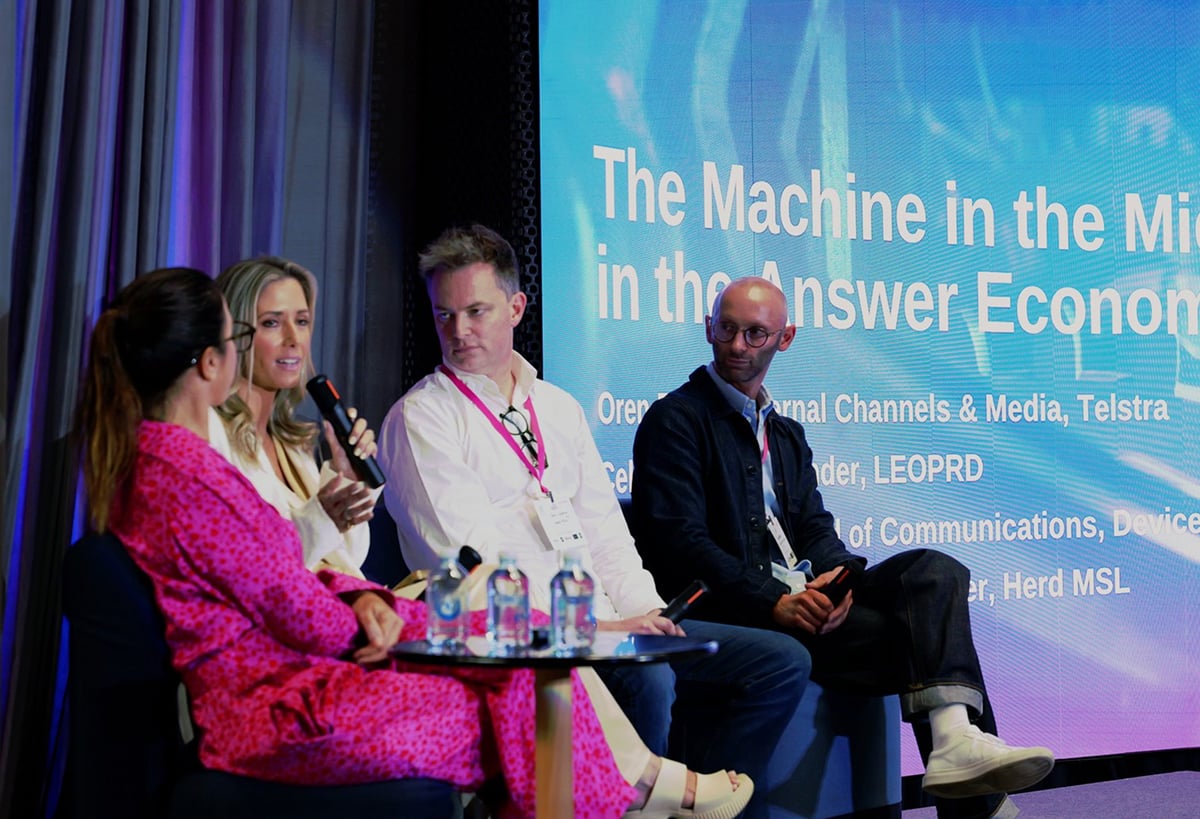
Speaking at the recent humAIn conference in Sydney, Fixler, who leads Telstra’s activity across social, owned editorial and media relations, appeared on a panel alongside Amazon’s head of communications, devices and services, Megan Ormsby; Herd MSL’s chief strategy officer, Stu Wragg; and LEOPRD founder Celia Harding.
During the Telstra outage on 8 July this year, Fixler served as acting head of communications.
The network issues began in the early hours of the morning and were not resolved until that afternoon, with secondary fixes completed the following day.
The disruption affected phone calls and internet access, while payment systems, regional train networks and emergency services were also impacted.
Reflecting on the communications response, Fixler said the key to addressing the narrative was to be first to report on the situation, while ensuring the information was accurate.
“I had the great benefit of being the acting head of comm at the time we had our delay outage, but my boss was on an island, and so one of the first things we did right out the gate was determine that our job was to make sure every Australian had the right information about us,” he said.
“We knew increasingly that was going to come from AI. They would be hopping to Google, asking Google a question, and most of them would just accept the answer at the top.”
“So if we let the media alone tell that story as quickly as the issue was evolving, it’s likely that answer would be wrong.”

Fixler said the situation was changing so quickly that relying on media coverage alone risked leaving Australians with information that was inaccurate or out of date.
Instead, Telstra published its own updates through its established newsroom, Telstra Exchange, while continuing to communicate with the media.
“We’ve had [our newsroom] for about 20 years, and we built up a lot of domain authority there,” he said. “So every moment that we talked to media, we went out on other channels – we would announce via our newsroom what we were doing and how things were being managed.”
The approach began delivering results quickly, with Google referencing Telstra’s updates within minutes.
“Within about 15 minutes, we saw Google referencing our answers, and we continued to do that all the way through the adage,” he said.
“It became this really cool part of the way we were addressing the narrative, but also allowed us to reinforce what the media was saying.
“All of these pieces of content, social, media, community, all came together and aligned in the audience and gave our audience, whether it’s customers or the broader public exactly what they needed to know.”

Fixler also addressed a broader challenge facing Australian marketers and communications professionals: failing to match the language customers actually use.
The importance of meeting audiences where they are is not a new conversation for the industry. In a recent Reddit x B&T series, we explored the benefits of stripping away “marketing speak” in community conversations and speaking the customer’s language.
Fixler said that principle is just as important when brands are trying to make sure their information reaches audiences through search.
“I think that as comms people, we have a terrible habit of forming internally how we want to position something, and then we go out and communicate it internally,” he said. “But we forget to think about how the audience is actually talking about it.”
“And so one of the things we do with the content now is we spend a lot of time reworking the publisher moment in the words of the customer, and answer the questions they directly ask you” he said.
That means looking beyond a company’s preferred messaging and paying attention to the exact language people use when searching for information.
Fixler said Telstra uses Google Trends to identify “exactly the phrasing they are using” and “uncomfortably, regularly” adopts that same language in its responses.
“We’ll answer the question they’re answering, and increasingly that means that we are sighted in the response because we’re framing our response to match the language they’re using.”
He admitted however that this is “an unnatural shift for marketing and communication people” due to them sitting around and getting comfortable with the way they want to articulate something.


