



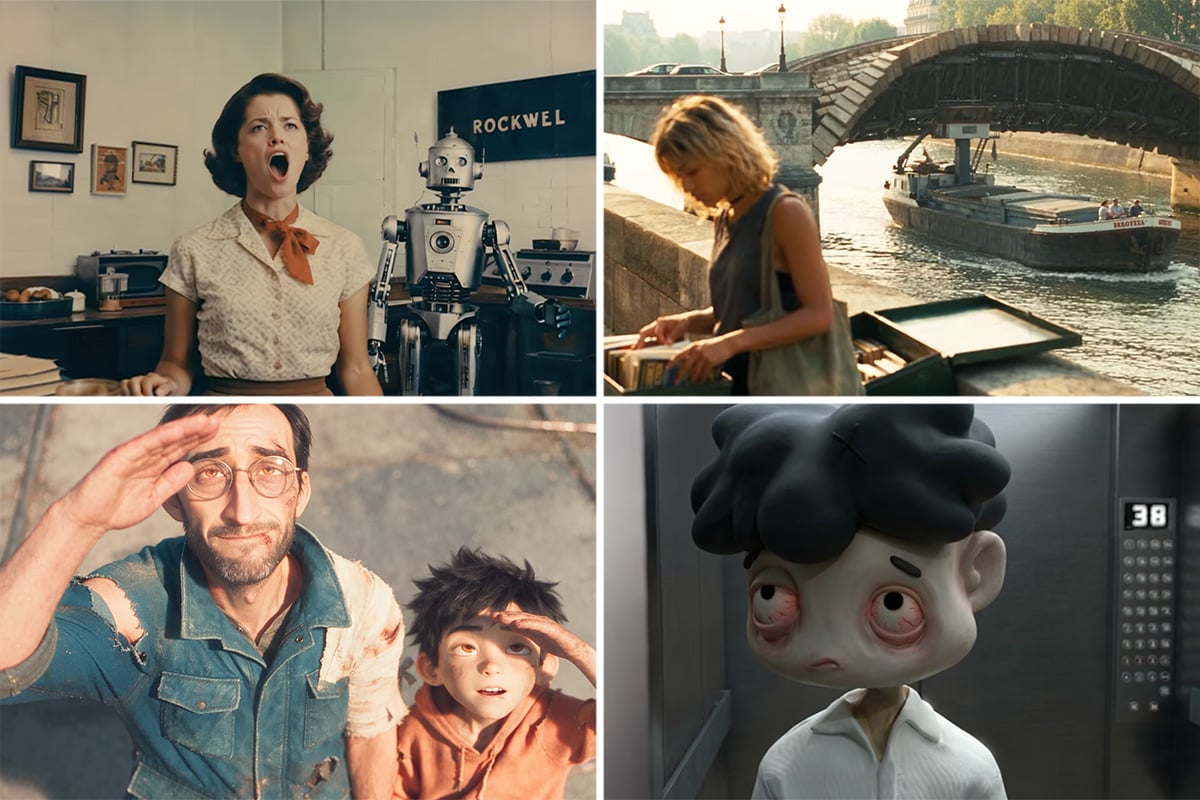
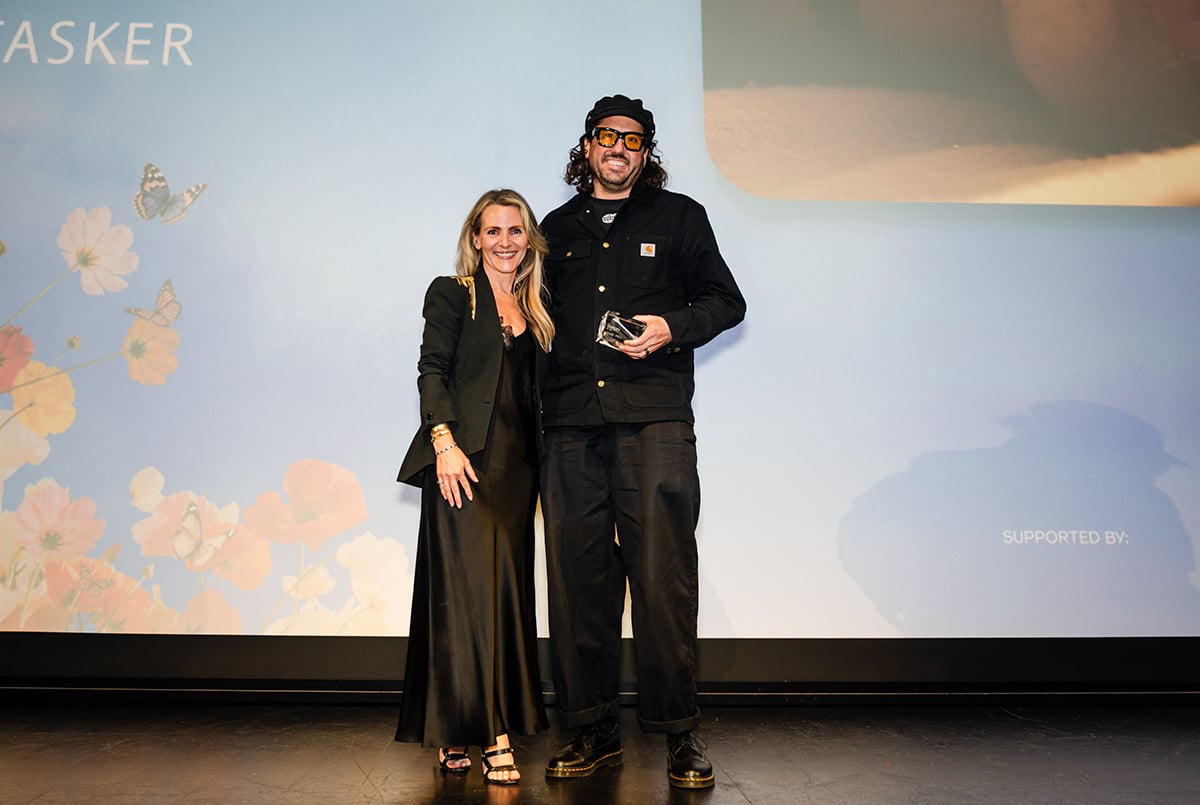
Jamin Tasker’s four-minute film, Everything Soft, won the Grand Prix at this year’s DISRUPT AI Film Festival, coming out on top of a 45-film shortlist.
Tasker, who comes from a traditional filmmaking background, told B&T that AI tools allow indie filmmakers on small budgets to create bigger worlds and stories previously only possible through Hollywood-sized budgets and production houses.
“It has actually pushed my imagination further than what was possible for a small independent filmmaker,” he said on the sidelines of TBWA’s Disrupt AI Film Festival screening in Sydney this week.
“Coming from traditional filmmaking, you usually scope those films out that you can produce within the parameters of a small budget…but AI allows you to create much bigger worlds and stories that would usually require a lot more people and money.”
Everything Soft is a romance narrative piece between a couple who ponder what the world will be like in the future.
There are clearly advances in technology, such as a bridge that could twist over to let a boat pass through, insects that robots and futuristic buildings meshed into a beautiful and traditional Parisian setting.
Taskin utilised AI tools to create hints of a bigger fantastical, futuristic world, as the two lovers make their way around Paris.
Tasker’s four-minute film was selected from the 45-film shortlist, from a record number of second-year entries in which the average number of prompts used behind shortlisted films fell by 12 per cent to 1,357.
Tasker said that he was inspired by Spike Jonze and the project allowed him to experiment with AI tools in a human and grounded way.
He told B&T that AI has helped him produce more polished work on a cheaper budget for clients, especially on the visual effects side.
“Now with experimenting with the narrative piece, it’s opening opportunities for telling some stories that maybe I wouldn’t have been able to tell, or I would have had to wait a longer time and get more people involved,” he said. “For an indie filmmaker it’s empowering.”
Tasker admits that AI technology is still in its early phases of development and that there are pros and cons to the tools.
“It’s getting better as far as the realism and pulling actual filmmaking tools into the tech, but it’s not totally there yet,” he said, adding that it has room to improve for delivering human dialogue.
Then there is AI slop when the tools “get put in the hands of everyday people”.
“There’s a lot of work that gets produced that’s just very average. The good is always going to be the smaller percentage,” he said.
“But I would equate that to traditional filmmaking in that there have been some terrible films created.”
How will AI impact filmmaking jobs?
Tasker believes that it is inevitable AI tools will have an impact on the filmmaking industry and has already seen evidence of AI tools undercutting “great careers”.
“AI is affecting all industries, and it absolutely will affect filmmaking. I know that’s one of the big concerns me and my peers talk about a lot, and it has already and has ramifications for the industry,” he said.
“That’s always tough. I love to see filmmakers thrive and tell good stories.”
In the advertising sector, he believes the biggest impact will be on lower to mid-level clients who are most cost-conscious and looking to cut production budgets. This is already occurring.
Although he doesn’t know the extent of AI’s impact on the film industry, he has seen some “fantastic” AI films with proper storytelling, and believes the tools have the potential for “something great to be made in the right hands”.
The three other finalists at this year’s Disrupt AI Film Festival are examples. Check out the films below.


