



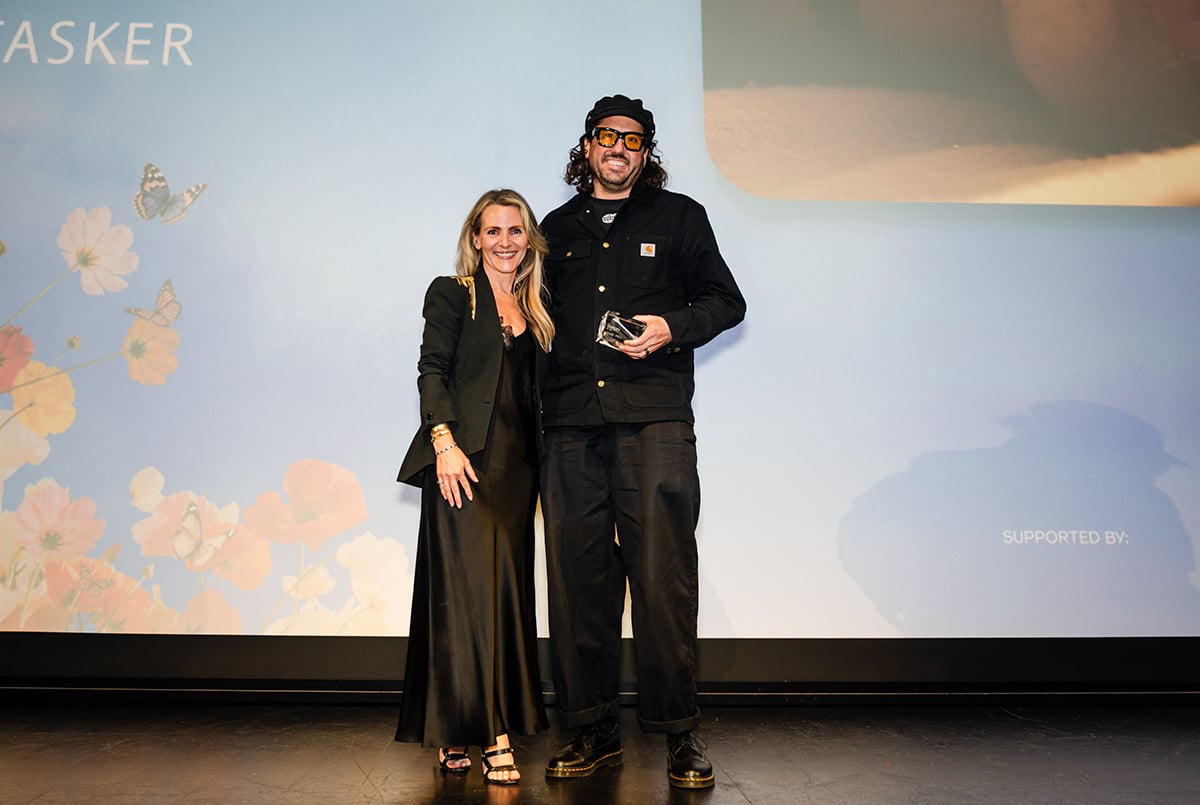
Jamin Tasker has taken home the Grand Prix at TBWA\Australia’s DISRUPT AI Film Festival for his four-minute film ‘Everything Soft’, beating 45 shortlisted entries in the festival’s second year.
The winning film, Everything Soft, is a quiet, four-minute-and-20-second short film about two lovers spending a sun-drenched afternoon together and dreaming their future out loud.
The festival, which took place last week, saw a total of four awards handed out across the competition’s Grand Prix, Student, Short Film and Long Film categories.
Sydney was also invited to a private screening of this year’s winning films on Tuesday evening, following the festival’s expansion from a one-night screening in 2025 to a broader program of events across Sydney and Melbourne.
Alongside Tasker’s Grand Prix win, Qian Deng took home the Student Award for DING!, Jonathan Heath won the Short Film category for QWERTY, and Genki Yamasaki was awarded the Long Film prize for Daylight Saving Time.
This year’s festival attracted a record number of entries, with 40 per cent of Australian entrants identifying as first-time filmmakers.
But beyond recognising the winning films, TBWA says the second year of DISRUPT offers a glimpse into how AI-assisted filmmaking is evolving, including the changing tools and creative decisions shaping the work.
According to the festival’s 2026 report, the average number of prompts used to create shortlisted films fell 12 per cent, from 1,357 to 1,197.
The tools themselves also shifted considerably. Google NanoBanana and Seedance, which were absent from last year’s shortlist rankings, became the most-used tools among shortlisted filmmakers this year. Midjourney, previously the leading tool, dropped to equal ninth.
The findings point to what DISRUPT calls the ‘distillation premium’: as AI generation becomes cheaper and more accessible, creative value increasingly comes from knowing what to pursue, what to reject and what deserves to make the final cut.

Lucio Ribeiro, co-founder of DISRUPT and chief AI and innovation officer at TBWA\Australia, said the festival was established to move conversations about AI and creativity beyond speculation.
“When we launched DISRUPT, there was no shortage of opinions about what AI would mean for creativity. What was missing was a way to test those ideas in practice, to shift the conversation from assumption to evidence,” Ribeiro said.
“Tools change, but in our second year we have proof that human skills are the constant of great work: intention, taste and critical judgement.”
The judging process also deliberately prioritised filmmaking over the technology used to produce it. Films were assessed against six questions, four of which focused on the work itself, including originality, storytelling, emotional human connection and whether judges would choose to watch it again.
Paul Reardon, co-founder of DISRUPT, chief creative officer at TBWA\Australia and jury chair, said the improvement in the quality of entries between the festival’s first and second years was significant.
“The jump in quality from 2025 was impossible to miss. Yet the conversation that kept coming up in the jury room was one of creative distillation,” Reardon said.
“While the tools allow you to create almost anything, great filmmaking has and always will be about making confident creative choices.”
He added that the strongest films were defined less by the capabilities of the technology and more by the decisions behind the finished work.
“We’ve all spent a lot of time talking about the human in the loop. What this year’s entries make a case for is something different: the human in the lead,” Reardon said.
“The creators who rose to the top had a clear point of view, a clear intention and the confidence to direct the technology rather than simply react to it.”


