



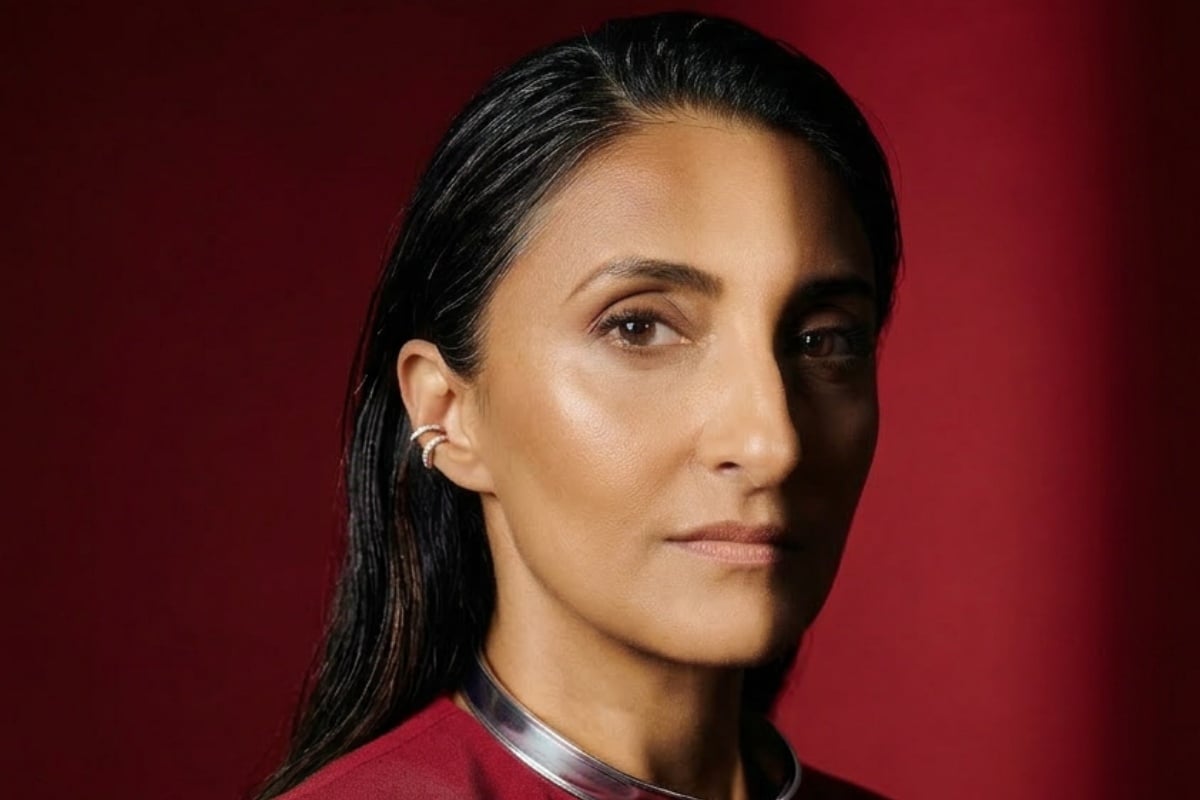
The era of the copywriter-art director duo may be behind us as AI reshapes the composition and function of creative teams, according to Resh Sidhu, Adobe’s global VP of creative.
Instead, creatives of all stripes must get ready to move from “fixed roles” to “fluid craft” where anyone can (and everyone should) be ready, willing and able to share ideas and work as part of a flatter, more collaborative team.
“It’s such an interesting time,” Sidhu told B&T at Adobe’s MAX conference in Miami.
“A writer can now visualise and idea, a producer can prototype something early, a marketer can have a visual concept and hand it over to a creative… We’re moving from fixed roles to what I’m calling ‘fluid craft’.
“It might not be for everyone. But what we’re seeing is teams are collaborating differently. When more people can collaborate, you have got to get rid of those fixed roles. You’ve got to allow people to bring ideas in,” Sidhu continued.
“What remains is the craft and the discipline to be able to execute those things at a standard. As the speed changes, as the ideas get better, the standards also have to rise. For me, it’s so important that deep craft remains in your teams. Those agents that you’re building, those models that you are training, they still need a human to know what good looks like. AI doesn’t know what good looks like or what will cut through for your brand.”
Sidhu’s comments followed Adobe announcing a raft of AI-focused product updates at its MAX conference.
AI assistants have come to Illustrator, Premiere, InDesign, After Effects and Frame.io. Adobe said it will help creatives direct and execute complex, multi-step tasks in their own words.
It has also previewed local MCP integrations for Creative Cloud tools that will allow users’ third-party agents make changes to native project files in Photoshop, Illustrator, Premiere and After Effects. Also new are features such as Generative Restyle and Relight in Photoshop, a first-of-its-kind colour grading system with Colour Mode in Premiere, Open Eyes in Lightroom, and Co-editing in InDesign.
Research has found that graduate marketing roles are shrinking. Several studies from this year have indicated that entry-level hiring in Australia has fallen significantly, with junior job postings dropping 29 percentage points since early 2024.
“At the junior level, graduate hiring has softened and there is a stronger expectation for commercial awareness from the outset,” said James Handley, founder of recruitment agency FLOW Recruitment, told B&T in March.
A US study in May found that 30 per cent of HR professionals are shifting their hiring practices, opting for more mid-level workers at the cost of junior staff, saying that AI was being used to complete tasks previously reserved for junior staff.
Be that as it may, Sidhu believes that humans are becoming more important, not less.
“We need the next generation to continue learning, to continue exploring, to get lived experience. That has never changed… All of those skills are very valuable. If they weren’t valuable before, and they have been, they are now even more valuable,” Sidhu said.
“For me, that’s what you over-index on. That’s what I’m looking for in the next level of talent at Adobe.”
Sidhu joined Adobe in March after spending some four years at Snap, leading its creative studio among other roles. Before that, she was the chief creative officer of New York-based agency Barbarian and spent a long portion of her career with tech-focused agency AKQA and LBi, which later rebranded to Digitas.
“People think the importance [of human experience] is going away, so they think the roles are going away. The creative role is actually going to be the most fundamental role going forward because machines are not going to solve it all for you,” Sidhu said.
“At Adobe, within our teams, that junior craft coming in is partnered with seasoned writers and producers. I call it a creative renaissance, I feel like we need to go back to the craft of what creativity used to be but match that with the power of technology.”
There is, however, the brutal reality of economics, shrinking marketing budgets and inflating production costs — something that affects agencies more than in-house teams. Just today, full-service agency The Hallway announced a reinvention and repositioning around CERTNTY OS, a new AI operating system that promises better work, delivered faster and for less. Sidhu, with significant experience on both sides of the fence, know that this squeeze is coming more than most.
“I’ve spent a lot of my career in agencies. It’s forcing a radical shift in the old operating world… Stop having layers upon layers upon leaders upon leaders upon managers. We don’t operate like that at Adobe. We removed the layers,” Sidhu said.
“The agency model hasn’t been revolutionised in many years. One of the reasons that I went to Snapchat is that I got tired of agencies. You go from one to another and it’s the same old layers. You don’t need it. The more layers you have, the more distant they are from the work. I’m using Photoshop, Adobe Firefly and Note every day. Everybody at Adobe is not only a leader in their field and an expert, they’re practitioners who are in the work.
“To me, it’s about changing the agency models. How can they become more valuable to a brand? That’s where their value comes from: their taste, craft, judgement and expertise. We look for that in our agency partners and agencies have to re-think because the distance on production is now being reduced. Agency models can be created to do the work while you sleep,” Sidhu said.
“So what does the role of an agency become? I think that is a much more exciting and interesting conversation because we are hitting a shift in how brands, marketing teams, creative teams, in-house but we’re also seeing a fundamental shift across all agencies.
“To me, there’s nothing more exciting than change because when technology changes it forces the value to move and the value is in creativity. That means rethinking the old ways of working.”


