



Cause-related campaigns can be a powerful force for good in the industry. But brands should engage more deeply and think more critically about the way people with cancer and other serious health issues are represented in advertising.
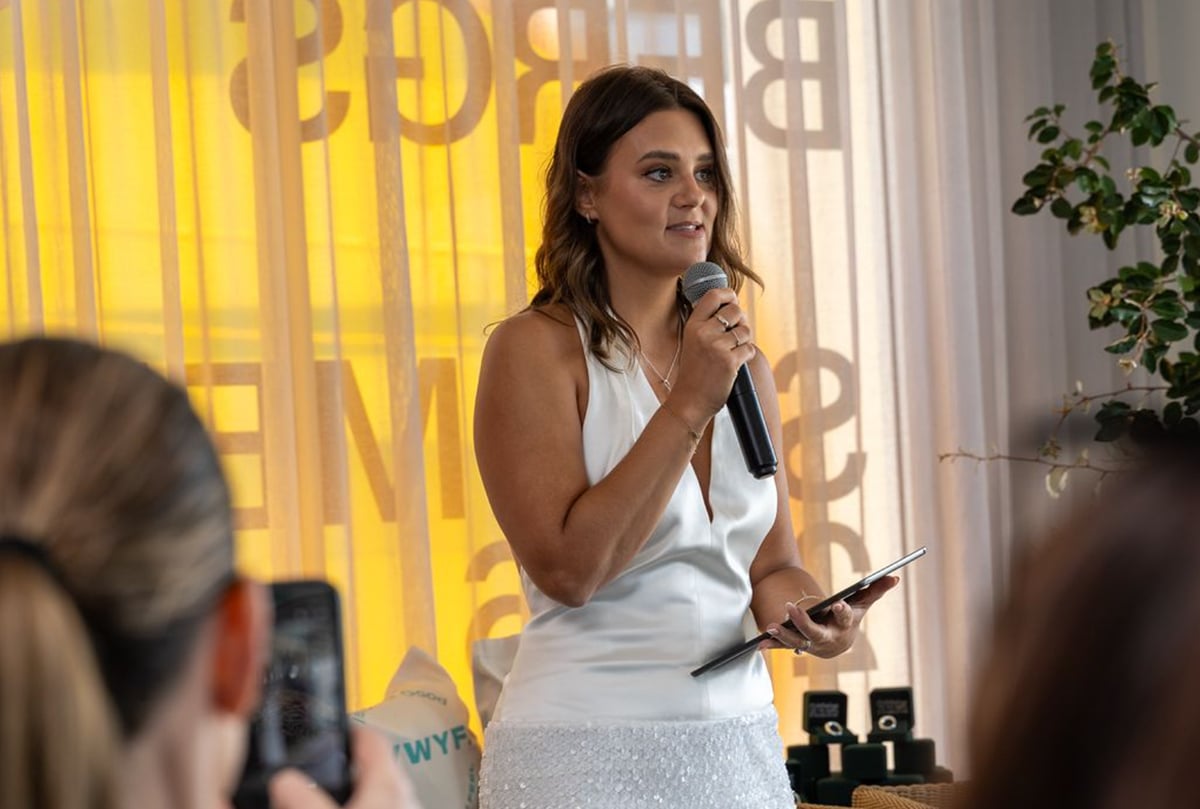
Speaking to B&T at an event hosted by martech platform Partnerize at the Bondi Icebergs on Thursday, supporting the Ovarian Cancer Research Foundation (OCRF), Partnerize APAC vice president and general manager Vanja Wilson stressed the need for brands to use their “significant power of their platforms” to raise awareness and support causes.
“I think it’s really important for us to think about the power that every brand has with their audience and the voice,” Wilson said. “Especially those with massive audiences.”
Wilson said supporting a cause did not necessarily require a major campaign or investment.
“For Australian brands, it could be as simple as raising awareness, and doing it properly,” she said.
Fashion and retail brands that have used products and promotions to support cancer research, include Witchery’s White Shirt Campaign and JAGGAD’s ovarian cancer research initiative.
The Witchery White Shirt Campaign launched its 18th consecutive year in 2026, where it has partnered with the Ovarian Cancer Research Foundation (OCRF) since 2008.
The annual campaign has successfully raised almost $18 million to fund critical research into early detection, prevention, and treatment.
But Wilson said the opportunity for brands, when possible, should reach well beyond awareness and fundraising, arguing that advertising itself could play “a huge role” in changing perceptions of what illness looks like.
‘I was told I didn’t look like someone who had cancer’
Wilson said cancer was frequently portrayed through images of people who were older, frail, pale or visibly undergoing treatment — imagery that did not reflect her own experience.
“I was 38 when I was diagnosed, which isn’t a spring chicken. But it’s also not when you’re thinking about cancer with any urgency or risk,” Wilson said. “My situation was different. Yes, I can show up and be the general manager for a tech company, I can be a mother of two young kids, but I’m still living with this disease.”
Wilson said she had been told she did not “look like” someone who had cancer, despite having stage four cancer.
“I just don’t look the way people expect cancer patients to look,” she said.
For Wilson, that gap in representation could have consequences beyond advertising itself, particularly when people do not recognise symptoms because the person experiencing them appears healthy.
Wilson also called on brands to think more carefully about who they choose to feature in campaigns, particularly as marketers increasingly invest in influencers and content creators.
She pointed to fashion brand Shona Joy dressing her alongside an influencer for the Partnerize event as an example of brands combining reach with lived experience.
“No one’s going to have a closer relation to it than the people who have lived it,” Wilson said.
Her advice was for marketers to look beyond follower numbers when selecting talent and consider whether someone genuinely represents the story a brand is trying to tell.
“Marketing comes down to authenticity,” she said.
Why Camilla has ‘baked’ cancer awareness into its strategy
For fashion brand Camilla, using its platform to support causes is already part of its broader brand strategy, according to head of marketing Jade Ku-Chih.
Ku-Chih said philanthropy was a “really quite significant part” of the business, with Camilla working with seven or eight charities on an ongoing basis.
The brand was supporting the Partnerize event through product for a lucky door prize, dressing talent and attending the event, while Ku-Chih said its founder Camilla Franks’ own experience with breast cancer had also created a personal connection to the issue.

For brands looking to enter the space, Ku-Chih said there were “relatively simple ways to begin”.
“If you have a really natural fit with a charity, you could do a pop-up at one of their events,” she said. “Or brands could also invite charities into their own retail or customer events, she added, allowing the organisation to speak directly with the brand’s audience.
“You can then invite that charity to come to one of your retail events or a customer event,” Ku-Chih said. “And that puts the platform back over to the charity.”
Wilson also urged brands to move beyond one-off awareness moments and instead find a sustainable way to support causes.
“I just think it’s the consistency that matters, and actually understanding the why behind it,” she said.
While a personal connection can often motivate brands to get involved, Wilson said it should not be a prerequisite for action.
“It shouldn’t have to take a personal connection. It’s affecting everyday women,” she said.
‘It’s collective action that will change a disease like this’
The event also brought together a panel of speakers to discuss the journey of battling cancer.
Speakers included Emily Jol, Ovarian Cancer Research Foundation (OCRF) ambassador (and 2024 Witchery White Shirt ambassador, Associate Professor Liz Caldon – OCRF-funded researcher and Robin Penty, the CEO of OCRF.

Jol said the growing volume of media coverage around ovarian cancer had “given her hope”, particularly compared with when she was first diagnosed.
“I think the volume of media that I’m also seeing about ovarian cancer and what you’re saying with the research applications, like it’s just grown exponentially over the past few years,” she said.
“It also gives me a sense of hope that better treatments are coming.”
Penty added that greater public awareness would be critical to shifting outcomes, arguing that ovarian cancer remained an “overlooked” women’s health issue.
“Every dollar counts,” she told the room of brand leaders. “It is collective action that will change a disease like this, particularly in overlooked women’s causes like ours.”
She also highlighted the need to normalise conversations around ovaries and other gynaecological cancers.
“We don’t yet have a language for asking these questions,” she said, encouraging women to simply ask their GP: “Could it be my ovaries? I’d like you to check my ovaries just for my peace of mind.”
“Normalising terms such as ovarian, vaginal, vulval and uterine cancers is incredibly important to improving awareness.”
Aside from brands including Witchery, JAGGAD, Shona Jay and Camilla who are honing in on cancer awareness, other organisations making impact include the likes of Publicis Groupe who leads the global ‘Working with Cancer’ initiative to remove workplace stigma and support employees diagnosed with cancer.
Launched in 2023 by Publicis Groupe CEO Arthur Sadoun after his own cancer diagnosis, the movement asks companies to promise full job security, salary protection (for at least one year), and tailored career support for employees facing cancer.
Another includes Cancer Council Australia which is leading public health campaigns like Australia’s Biggest Morning Tea (supported by agency 303) and sun-protection messaging.
B&T also participated in the Cancer Council’s Daffodil Day Dip in August 2026, where we teamed up with industry partners to support the Working With Cancer initiative, an effort aimed at building supportive workplace environments for people living with cancer.
View this post on Instagram
Seperately, other brands backing cancer awareness also include activewear brand LSKD which frequently runs focused Breast Cancer Awareness Month campaigns in partnership with the National Breast Cancer Foundation (NBCF) and underwear brand Boody which specializes in pink underwear ranges during October (Breast Cancer Awareness Month), donating a large percentage or all of the profits to the McGrath Foundation.
However, as the speakers shared at the event, there is always more that can be done.


