



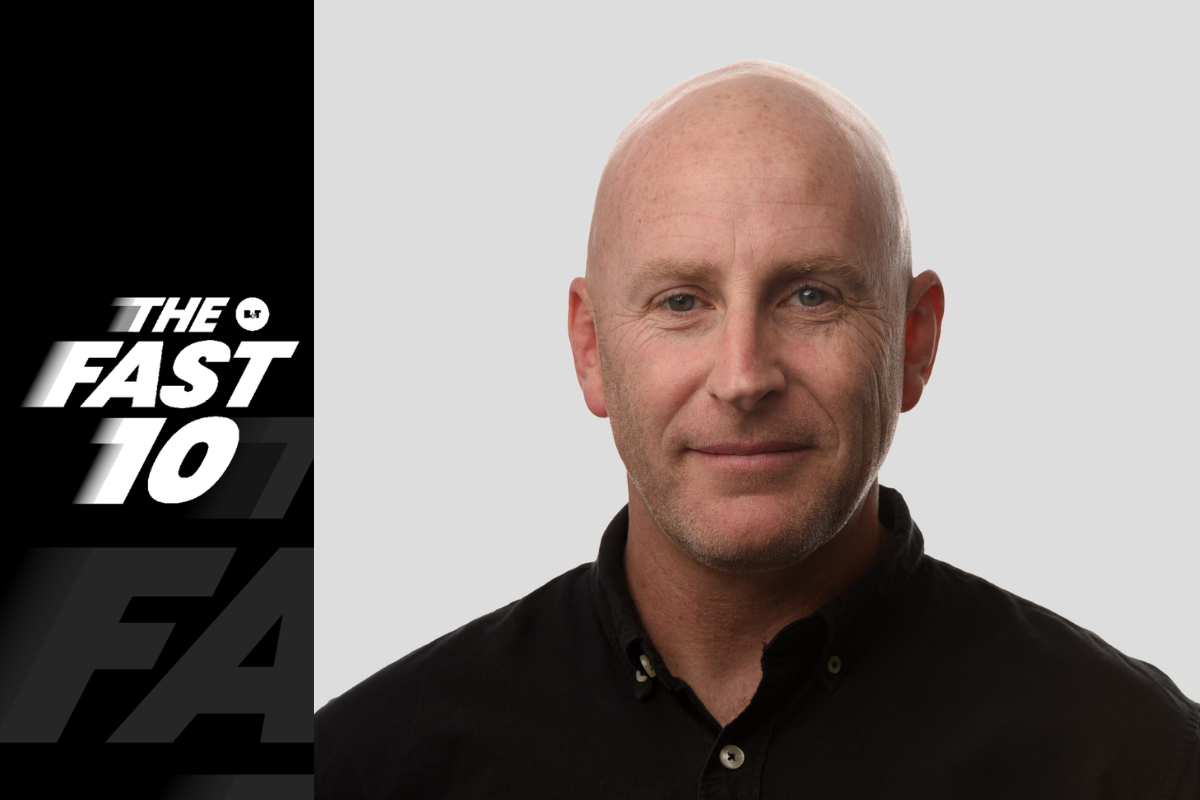
Dan Copsey is an entrepreneur, investor and agency leader who has founded more than ten businesses spanning marketing, technology and the not-for-profit sector.
As the driving force behind Admosis, Creative Converters and Willow & Blake, he’s no stranger to bringing businesses together, but his ambitions extend well beyond the advertising industry. In 2022, he co-founded The Health Collab, a free healthcare initiative in Pakistan, while closer to home, he serves as president of the Redesdale Rural Fire Brigade and volunteers with the CFA.
In this week’s Fast 10, B&T’s very own David Hovenden and Copsey discuss what makes an agency worth buying, the industry’s accountability problem and how a childhood obsession with Tom Cruise led to a career in advertising.
1. You’ve had an amazing career founding more than ten businesses and now run a portfolio across performance, creative and brand. If you could only pick one career highlight, what would it be?
Dan Copsey: On the business side, it’s bringing Admosis, Creative Converters and Willow & Blake together under one group. Performance, creative, and brand each have their own founders, culture, and clients, but now they can work as one. Getting three agencies to collaborate instead of compete, without flattening what made each of them good, has been the hardest and most satisfying thing I’ve done in the industry.
Outside of Admosis, as I wear a lot of hats, my biggest career highlight is co-founding The Health Collab in 2022, a free basic health clinic in Faisalabad, Pakistan, run with Partners in Progress. Watching a community get access to care that wasn’t there before beats any pitch I’ve won. We’re now working on the next stage, a maternal health clinic with a mobile team.
2. You’re known for building, buying and backing businesses. What’s the first thing you look for when you size up an agency you might buy?
DC: How much of the business is the founder. If every client relationship, every pitch and every big decision runs through one person, what I’m really buying is that person. What that means is, the moment they exit, the clients walk. I want to see a business that would survive the founder taking three months off.
3. Admosis offers SEO, social, content and paid under one roof. How do you grow the offering without losing the quality that won you clients in the first place?
DC: Don’t add a service until you’ve got someone who’d rather die than do it badly. Every new capability at Admosis has started with a person who lives and breathes it, not a line on a rate card.
4. As a young boy, what did you want to be when you grew up?
DC: A race car driver or fighter pilot. I was a big Tom Cruise kid, so it was Days of Thunder or Top Gun, nothing in between. Turns out I was too tall for both, which is how I ended up in marketing.
5. As an industry, what’s one thing you would change to make us all better?
DC: Accountability. We need either proper regulation or an industry body with real teeth. Right now, anyone can call themselves an agency, over-promise, under-deliver and move on to the next client with no consequences. The good operators get tarred with the same brush, and clients end up not trusting any of us.
6. Platforms change the rules every few months. How do you keep a performance team sharp when the ground keeps moving?
DC: Stop teaching the platform and start teaching the principles. Google and Meta can change the rules every quarter, but good targeting, clean measurement and knowing what a customer is actually worth don’t change. If the team understands why something works, they adapt in a week. If they’ve only memorised the buttons, every update sends them back to square one.
7. You’ve done due diligence on plenty of businesses. What separates an agency that can scale from one that’s stuck?
DC: Repeatability. A stuck agency has great people doing great work that lives in their heads. A scalable one has turned that into process, so the fifth hire delivers like the first. The other tell is client concentration. If two accounts are half your revenue, you’re not scaling, you’re one bad renewal from a very bad year.
8. What’s the best career advice you’ve been given?
DC: ‘You don’t know you’re getting bad advice until someone gives you good advice’. It took me far too long to realise that many of the people I listened to early on had never done what they were advising me on. Now I’m very picky about whose opinion I listen to.
9. What’s one thing that’s not on your LinkedIn profile?
DC: I’m President of the Redesdale Rural Fire Brigade in regional Victoria and a CFA volunteer, which is probably one of the most grounding things I do. Being a volunteer CFA leader is completely different from being an agency leader, though some skills transfer.
10. Important last question: Do your parents really know what you do?
DC: I like to think so. My dad’s a crime novelist and ex-policeman, so I’m fairly sure he just tells people I’m “in advertising” and leaves it there. I’ve long since stopped trying to explain the holding company to my mum!
Do you know a great agency executive who’d like to get their very own 10 quick questions? Email [email protected].


