



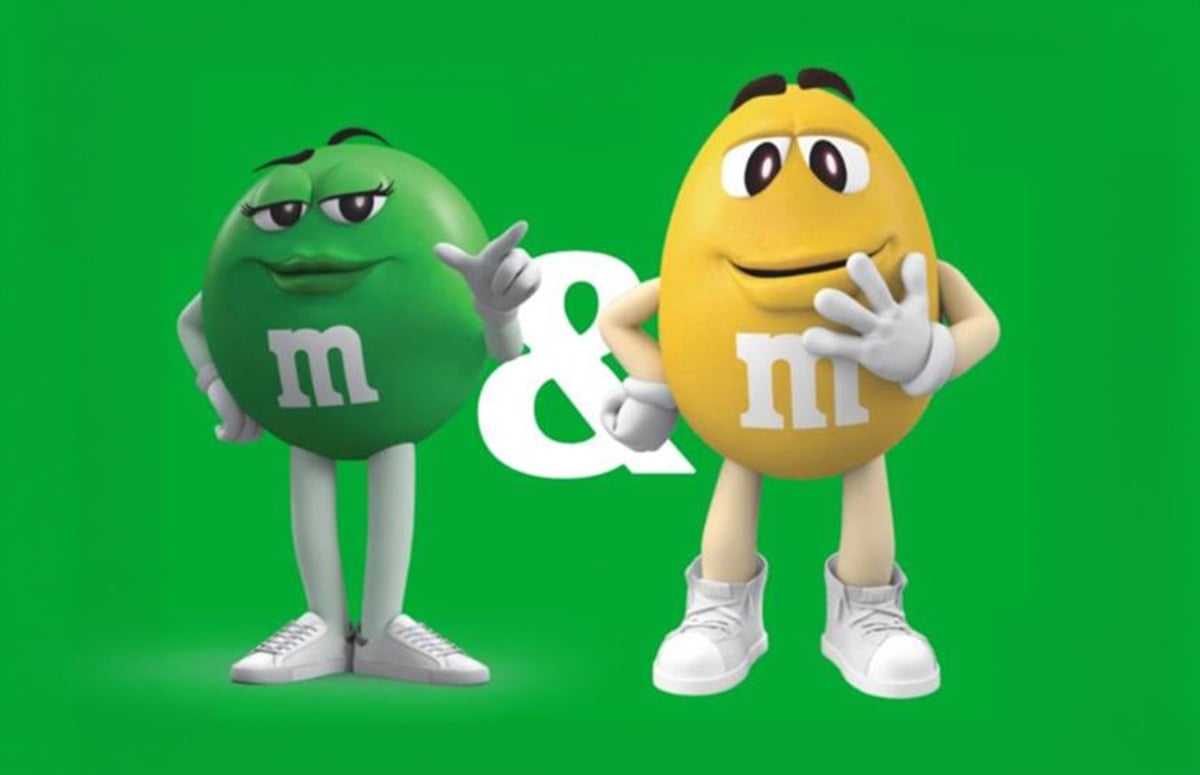
Earlier this week, the UK’s Advertising Standards Authority (ASA) banned an advert for chocolate brand M&M’s for breaching rules restricting the promotion of foods high in fat, salt and sugar (HFSS).
For one Australian brand marketing leader, the move has sparked concerns over what brands are left to advertise with, if they can’t use recognisable and well-known characters.
The ruling centres on the brand’s famous yellow mascot, which the ASA determined represented Peanut M&M’s specifically because of its distinctive yellow colour and oval shape.
Siobhan Spark, head of marketing at wellness lifestyle platform Wanderlust, said not being able to use mascots or characters “leaves brands in an impossible position”.
“A logo or mascot only has value if it works through the line, from ad to pack. If that same iconography is too closely tied to the product to use in advertising, what’s left for the brand to actually advertise with?” she told B&T.
“You’re asking brands to keep the asset on pack, but strip it from the channels that made it valuable in the first place.”
Spark argued the decision effectively penalises brands for successful brand building.
“Brands codify colours, shapes and characters across packaging and advertising for one reason, so people recognise on shelf what they’ve seen in an ad,” she said.
“If the yellow M&M is ‘too identifiable’ to use, that’s proof the branding worked. Sever that link and you’re not regulating advertising, you’re diluting the entire purpose of it, making it ineffective and not worth doing at all.”
She suggested the practical effect of the ruling could extend beyond individual campaigns.
“It becomes a de facto ban on brand iconography altogether, which perhaps is what the ASA wants. They want to make it near-impossible for ‘less healthy’ food and drink brands to advertise at all.”

In its ruling, the ASA said the yellow M&M’s character represented an “identifiable” less healthy product.
“We considered that, because of their distinct shape, the oval M&M’s characters, including the yellow one featured in the ad, depicted Peanut M&M’s,” the watchdog said.
The regulator acknowledged that the green mascot featured in the same campaign did not breach the rules, finding it represented a broader range of M&M’s products rather than a single identifiable HFSS item.
Mars, which owns M&M’s, argued the campaign promoted the overall M&M’s brand rather than any individual product.
“There were no visual or text elements in the ad that would enable a reasonable consumer to identify the ad as being for a particular ‘less healthy’ food or drink product,” the company said in its response.
Mars also pointed to the mascots’ highly stylised nature, noting they possess human characteristics including arms, legs, facial expressions and distinct personalities.
The company also argued the characters appeared independently, without product packaging, branding or descriptive cues that would link them to a specific confectionery product.
“The decision relates to a particular way the M&M’s characters were used in a specific advertisement, under the UK’s new restrictions on the advertising of food and drink products,” a Mars Wrigley UK and Ireland spokesperson said.
“We welcome the clarity that the ASA’s ruling offers. We remain committed to using our brand assets responsibly and in line with all applicable regulations, and will continue to follow regulatory guidance closely.
“We are confident in our ability to adapt our creative approach where needed and to ensure our future advertising continues to meet expectations.”
It’s not the first time M&M’s has seen its mascots attract some unwanted attention, either.
Did my shoes really break the internet? pic.twitter.com/ZaisgZ9QYZ
— M&M’S (@mmschocolate) January 20, 2022
In January 2022, Mars announced that it would be redesigning the Green M&M, replacing ‘her’ high-heeled boots with casual sneakers to promote a “more dynamic, progressive world”.

The redesign was intended to make the mascot focus more on personality rather than gender, and to create a more “inclusive brand”.
In what became something of a farce, the move sparked debates across social media. M&M’s later announced a pause on using the beloved spokescandies.
Former Fox News host Tucker Carlson, for instance, devoted a ludicrous amount of his show to decry the popular candy as “Woke M&M’s”.

Today, the mascots include Red, who represents the Original Milk Chocolate M&M’s, Yellow, who represents Peanut M&M’s and Orange, who represents Crispy and Pretzel varieties.
Others include the iconic Green character, who represents Dark Chocolate, Mint, and Peanut Butter M&M’s, Brown, who represents Fudge Brownie and Dark Chocolate flavours, and Blue, who represents Almond M&M’s.


