



Political advertising experts are calling for an urgent overhaul of political advertising regulation as a wave of ‘alarming’ AI-generated political ads attempt to influence the Victorian election.
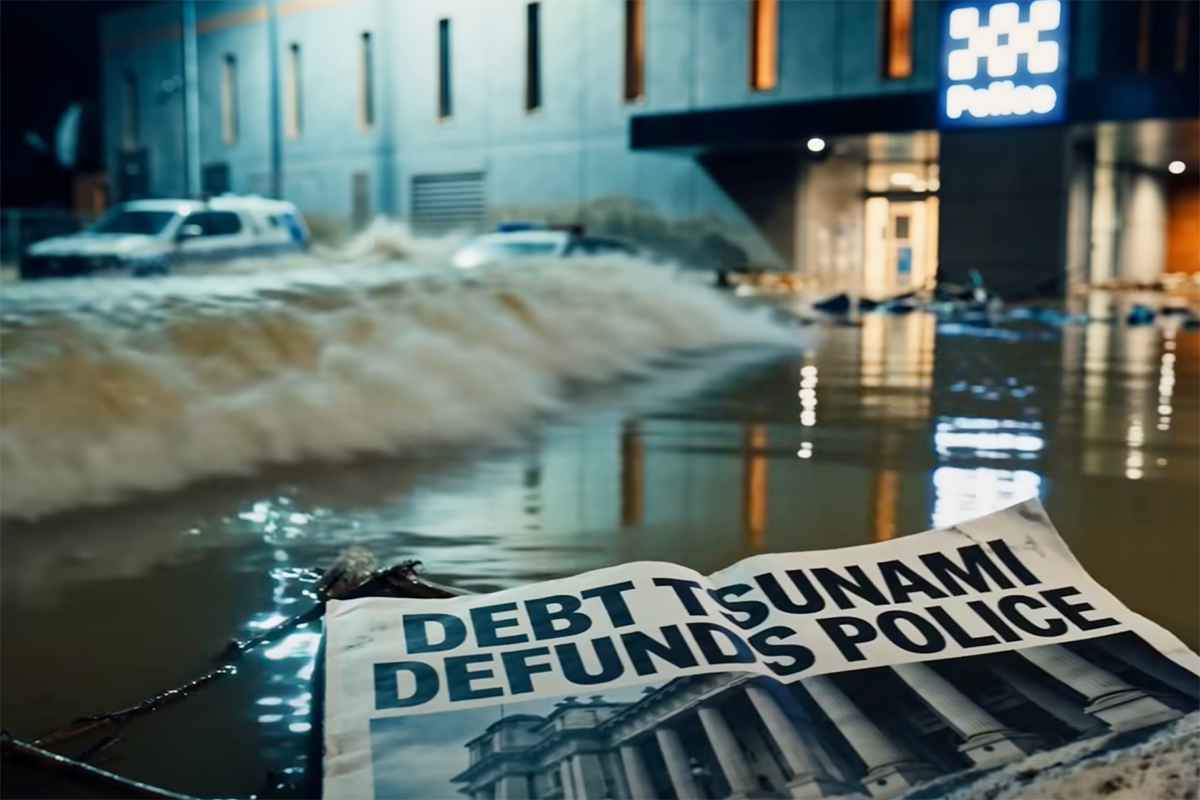
An investigation by The Guardian found AI ads featuring a man clad in a balaclava fire bombing a petrol station; a woman giving birth on the side of the road unable to reach a hospital; and, a flood attempting to symbolise Victoria’s “tsunami of debt” as examples of AI-generated content trying to influence voters ahead of the November polls.
The ads, created by a right-leaning group called Fix Victoria, are estimated to have cost up to $100,000 to publish in August, well above what the major parties and candidates spent that month.
Better Victoria, a left-leaning group, is also running its own AI-generated ads to try and sway voters to retain the ruling Labor government.
Victoria’s political advertising rules allow these ads to run online without any transparency of who these groups are affiliated to.
Andrew Hughes, a marketing lecturer at the Australian National University, is an expert in political advertising.
He told B&T that advances in AI technology and woefully inadequate regulation around political advertising is leading to an inflection point where AI ads could soon impact election results.
“I think we’ll have an election campaign in the future which will be decided on how people have looked at AI information online when it comes to advertising,” he said.
“The curse of political advertising has always been the money involved with it. Now AI’s there, it levels the playing field, but also makes it a scarier one.
“Because it is so cheap and because it is getting more effective—we’re seeing the end of the six-finger images and all that type of thing—we’ll start to see more direct impacts on how people vote and how they think about politics based on the AI-generated content they’ve seen.”
Hughes said that in Australia, to sway an election outcome often requires convincing 5 per cent of voters to swing their vote, which in a marketing context is not a high number.
“There’s a lot of really scary scenarios which are going to happen in the future if we don’t regulate AI’s use in politics now,” he added.
Hughes would like to see political advertising rules broadened to “communications”, not just paid ads, and disclosures about who is behind the content and the use of AI moved to the front to make it clear to viewers.
He warned that leaving regulation up to politicians, who stand to benefit by using AI-generated political content, will be ineffective, and is calling for independent regulation and oversight.
A ‘new era’ of political campaigning
Daniel Angus, a professor of digital communication at the Queensland University of Technology, believes the Victorian election marks a new ‘AI-powered era’ of political campaigning.
“In terms of elections that have happened in Australia this is probably going to be one of the worst when it comes to misinformation and particularly misleading election advertising,” he said.
Angus said that AI-generated content is already having an impact on electrons but is not in itself driving an election result. The declining trust in institution and media concentration are also contributing to the “poorest quality of national debate in decades”, giving rise to right-wing populism.
Angus believes that regulation is “woefully inadequate” and current disclosure rules are “plainly insufficient in a digital age”.
He would like to see a national ‘truth in political advertising’ regime, which exists in South Australia, expanded nationally and strengthened.
Angus would also like to see platforms held to account for profiting from political misinformation and disinformation, which he describes as “real and utter trash in the advertising ecosystem of the major platforms”.
“Very little attention has been placed to how these platforms make money, which is through advertising, and that really is the golden goose,” he said. “It’s the one thing that platforms will always bottle up and shut down when you start asking questions.
“If governments want to really act tough on platforms, and it feels to me like some do, that they would find the way to act tough is to actually toughen and tighten up the advertising regulations, as well issue massive fines over enforcement.”


