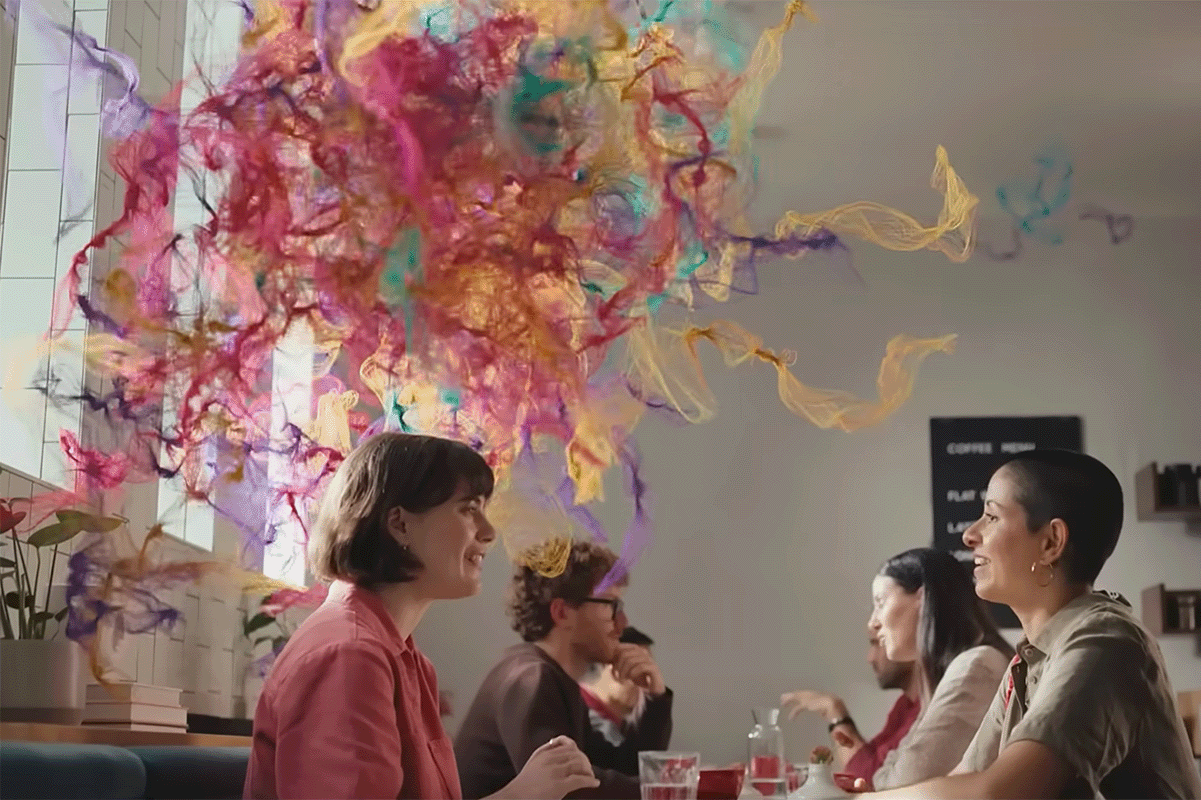

Influence, not just intelligence, will define the next era of B2B growth. According to Forrester’s 2026 Predictions report, three-quarters of enterprise B2B organisations will increase their budgets for influencer relations, marking a decisive shift toward trust-based marketing in a world saturated with automation and AI.
As B2B buying groups expand and become more complex, external influencers, from analysts and subject matter experts to industry luminaries, are taking on greater importance in shaping purchase decisions. Organisations will broaden their “buying signal universe” to include influencer commentary, social amplification, and third-party endorsements, recognising that credibility now flows through networks, not just owned channels.
But while influence rises, trust faces new challenges. Forrester warns that ungoverned generative AI in commercial applications will cost B2B companies more than $10 billion through stock declines, lawsuits, and regulatory fines. The proliferation of untested AI tools, paired with limited user oversight, is creating operational and reputational risk at scale.
Buyers, flooded with AI-generated information, will increasingly turn back to human expertise for validation and clarity. Product experts and trusted advisors are expected to play a larger role earlier in the buying journey, countering misinformation and reinforcing confidence in decisions.
Meanwhile, automation will continue to reshape the transactional layer of B2B commerce. Forrester predicts that 20% of B2B sellers will engage in agent-led quote negotiations, while AI agents will facilitate roughly a third of all B2B payments. The report points to a growing need for “intelligence for trust”, moving beyond efficiency toward systems that can validate, interpret, and reinforce credibility across every touchpoint.
In short, 2026 will be the year B2B brands learn that influence is currency, and trust is the new competitive edge.