



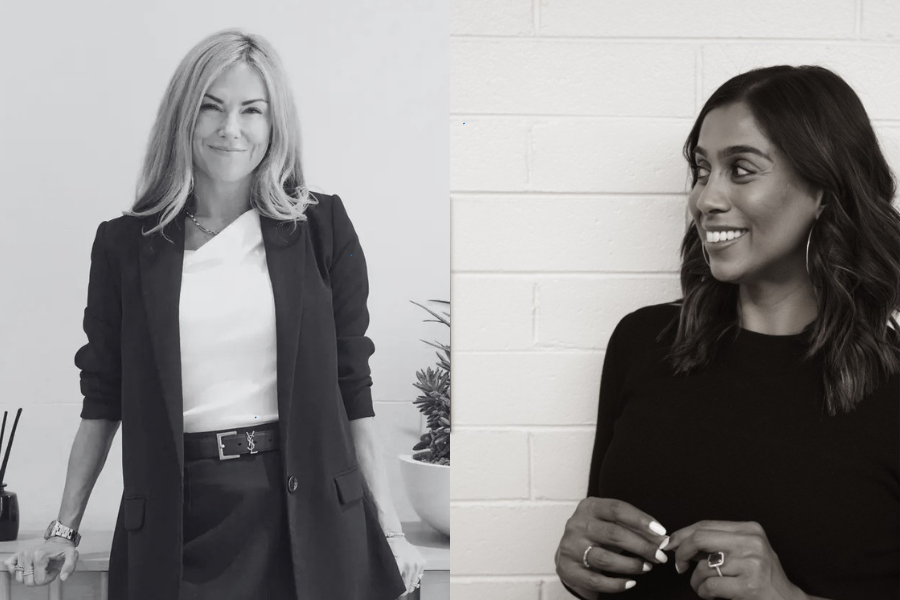
Independent agency MASH is betting that the future of agency work is not about winning the next big, outsourced brief, but becoming embedded inside the brands themselves.
The agency has shifted its model from predominantly project-based work towards contracted in-house agency partnerships across APAC, as brands increasingly look for marketing teams that operate closer to the business.
For MASH founder and board director Natasha Menon, the pivot was born out of necessity.
The agency had been growing at more a rate of more than 110 per cent year-on-year and had built a significant footprint across Southeast Asia. But, its plans to integrate technology into the business quickly became outdated as the market continued to change.
“We decided to shift our strategy ever so slightly to integrate technology as a key component of our business. Two thirds of the way into executing that strategy, we realised strategy was redundant,” Menon said.
The answer was instead to move away from its traditional project model and towards building bespoke teams that could sit within a client’s organisations. This approach has resonated with major bluechip clients, including Google, for which Mash operates through global contracts with an APAC specialism.
MASH had previously built teams from freelancers for individual projects, a model it internally called the “MASH Machinery”.
Its new structure instead is centred on a Singapore-based HQ that builds and manages embedded agency teams for clients across the region following the indie’s expansion into Australia, Singapore, Indonesia, Thailand, Malaysia, Vietnam, India and Taiwan, with Japan and Korea also underway.
The shift has required a different set of skills from the agency, with a far greater emphasis on marketing operations and local market knowledge across APAC.
MASH general manager Jolene Cornford said the model was not intended to make traditional agencies obsolete. Instead, the embedded team can operate alongside an agency roster, filling a different role within the marketing function.
“There are certain requirements that it really makes sense to build an in-house team to, lots of brands are trying to operationalise culture. But there are also briefs and scales of projects where it absolutely makes sense to work with an agency.”
“It’s not one or other. It can be both, and it often is both,” said Cornford.
That distinction is becoming increasingly relevant as many large brands look to bring more of their marketing capabilities in-house, while still relying on external agencies for larger creative or specialist briefs.
She also said that the rise of AI has only made the issue more pronounced, allowing global brands to adapt campaigns across markets faster, while creating greater risks around local relevance.
“You now have the ability to adapt global campaigns quicker, faster, not necessarily better, to distribute across multiple regions.”
“Where AI has presented opportunity, it’s also demonstrated real challenges that if you do not have a locally nuanced team who understand the creative process, who the audience are, what’s going to fly, then your campaigns, your content is not going to have the impact that you need them to have.”
For MASH, building those teams starts with understanding what a brand is actually trying to solve, rather than simply inserting people into an existing structure.
Cornford described the process as “discover, design, and deliver”.
She said the agency will then look at how organisation work before deciding what skills and people are needed.
“There is no point in bedding people into a workflow that already doesn’t make sense.”
The approach also reflects a broader change in how MASH views the role of agency talent.
For Menon, the shift represents a continuation of the thinking behind MASH rather than a complete departure from it.
“The foundations of MASH didn’t stem from, ‘We’re going to build a creative agency’. It was, this is a better way of doing something that’s always been done,” she said.
Cornford said the partnership combines a central leadership team with specialist teams embedded in local markets.
“It’s a very close relationship with the key point of contact at the business vertical at Google, specialist teams embedded in local markets, but supported by a consistent senior leadership team who understand how to activate knowledge sharing across programs and knowledge sharing across clients.”
The evolution of MASH’s business model comes as the wider agency industry grapples with how much of its traditional structure still works for brands.
“The industry’s had to relearn itself,” Menon added.
She pointed to the amount of time and resource agencies continue to put into pitching, particularly when the relationship may require a much more integrated operating model.
Rather than predicting the end of the traditional pitch, Menon saw the rise of alternative models as another option for brands looking to structure their marketing teams differently.
And while MASH’s own reset came after a period of significant pressure, Menon said the underlying principle remains the same.
“The environment brands and businesses are navigating today requires a mentality that is about how do you adapt with the times,” she said.
“There’s no set and forget anymore.”
For an agency model being increasingly tested by brands, that may be the larger shift: less emphasis on the traditional distinction between client and agency, and more focus on building the marketing capability around what the business actually needs.


