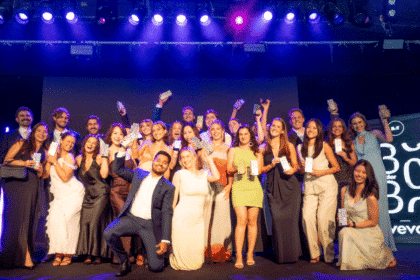

MFA’s NGEN Workplace Survey, The Gen Z effect explores how a new generation is reshaping work in the media, why it matters and how leaders can adapt reframes Gen Z not as a problem to be solved, but as an early signal of deeper structural shifts across the media industry.
Gen Z now makes up almost half (48 per cent) of Australia’s media workforce, yet much of the conversation about this generation continues to rely on outdated assumptions, according to a new whitepaper released today by the Media Federation of Australia (MFA).
NGEN is the MFA’s flagship training and development program for media professionals with less than five years’ experience. It delivers an extensive program of workshops, events and practical learning opportunities designed to build the skills and capability of the next generation of industry leaders. Participants come from both media agencies and media owners.
Gen Z is the first generation to begin their media careers during a period of constant disruption, with early professional experience dominated by digital-first workflows, virtual collaboration and limited access to in-person mentoring.
Never Not Creative’s Mentally Healthy 2024 Survey showed this has had a lasting impact on mental health, with younger workers reporting higher levels of anxiety than older cohorts.
Now building careers in an industry increasingly shaped by automation, AI and platform-driven workflows, Gen Z sees structured support and development as essential, not optional.
The whitepaper explores how the conditions Gen Z entered the workforce under have fundamentally shaped their expectations of work.
It identified four areas where these shifts are most visible – learning, communication, culture and careers – and provided insights for leaders navigating a workforce in which Gen Z represents a mass.
Gen Z sees learning and work as interconnected, seeking a balanced equilibrium. They should be integrated seamlessly for intensified efficiency and growth. Communication must be clear and constant with a heavy focus on clarity. For Gen Z, implicit communication results in uncertainty, they seek to transparency and directness.
Culture is at the forefront of Gen Z priorities. Their wellbeing must be nurtured and supported, it’s an organisations actions, not its words. Tangible support is essential. In the age of the influencer, Gen Z has been saturated with the notion that your career is customisation and should be personalised to you. They seek careers that align with their values and can deliver meaningful fulfilment and life purpose.
The MFA’s NGEN Workplace Survey aims to highlight that this generation is not simply “harder to manage” or “less loyal”, they are a signal of deeper, structural shifts in how work is learned, communicated, and experienced.
Melanie Aslanidis the MFA’s head of NGEN and MFA Foundations said: “Too often, Gen Z is framed as less resilient, less loyal, harder to manage. In reality, Gen Z is not a problem to solve, but an early signal of deeper changes already reshaping how work is learned, communicated and experienced.
“Understanding Gen Z isn’t about indulgence or accommodation. It’s about recognising how the foundations of work have shifted, and what effective leadership looks like now.”