



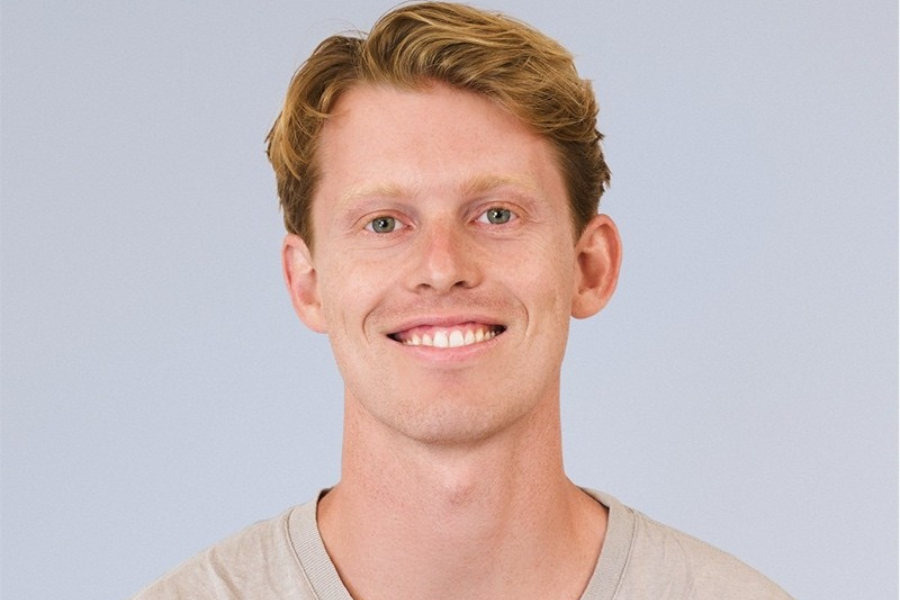
As AI makes it easier to replicate creative campaigns and ‘borrow’ successful marketing strategies, Tracksuit CMO Tom Mansfield believes the real advantage will belong to businesses that know what they stand for, and have the conviction to stick with it.
It is a problem he described as the “sameness trap”. As technology makes the mechanics of marketing increasingly accessible, brands risk falling into the same patterns, using similar tactics and producing work that becomes harder to differentiate from the competition.
The challenge is no longer keeping up with the latest technology. It is working out what makes a brand distinctive when competitors have access to many of the same tools.
For Mansfield, that distinction comes down to brand.
While AI can replicate the mechanics of a media strategy or reproduce creative formats, it is far less equipped to recreate the emotional associations audiences build with a business over time.
“Brands are extremely nuanced,” he told B&T.
“It’s a delicate combination of the emotional qualities that consumers get when they interact with your marketing, all the little details that are evident in your design and the way that you engage with people and physical spaces.”
It is those details, accumulated over time, that make a brand difficult to imitate. Mansfield believes brand will be among the last things AI can replicate because it is not a formula that can be lifted.
“It takes instinct, consistency and commitment,” he said.
“It’s not something you can just get an agent to do in the background.”
That long-term commitment is something Mansfield sees in the brands performing well in Tracksuit’s data.
The company tracks almost 20,000 brands and draws on hundreds of thousands of consumer surveys. He said the businesses that stand out are those that treat brand as a commercially viable asset, rather than a campaign outcome, and invest in it consistently.
But consistency alone is not enough. Mansfield believes brands also need to stand for something, rather than produce marketing messages that reflect what they sell.
“If you don’t deeply believe in something, it’s really hard to drive recall and brand love,” he said.
He pointed to wearable technology brand Oura as an example.
Tracksuit’s data showed Oura had made significant gains among women in the US Smart Watches and Wearables category, with brand awareness climbing from 18 per cent to 30 per cent. Consideration also increased from nine per cent to 14 per cent, while the number of women actively investigating the brand rose from 9 per cent to 13 per cent.
Mansfield attributed part of that momentum to the brands work around menopause and perimenopause research.
Rather than talking about an issue that matters to its audience, Oura took a position and backed it with action.
For him, it demonstrated the difference between a brand communicating a belief and actually doing something about it.
That distinction becomes more important as AI moves further into the marketing process.
Mansfield said teams across the industry have embraced automation, particularly in analytics, growth and optimisation. But he saw human taste as one of the things that will separate the next generation of marketers.
He was also wary of brands leaning too heavily on AI in their communications. While using the technology for practical tasks can go unnoticed, fully AI-generated campaigns can still feel off.
“When you go to the far end of too much AI, we’re very much still in a time where it’s easy to tell and the vibes a bit weird,” he said.
Rather than using AI to produce more marketing, Mansfield believes businesses should use the efficiencies it creates to invest in the people who can bring something original to the work.
“Go find people with taste and who know how to create novel stuff, and go pay them to do so,” he said.
As the tools become more widely available, the ability to produce marketing may become less of a differentiator. For Mansfield, the opportunity is to use that technology to make room for the kind of creative thinking that gives people a reason to remember a brand in the first place.